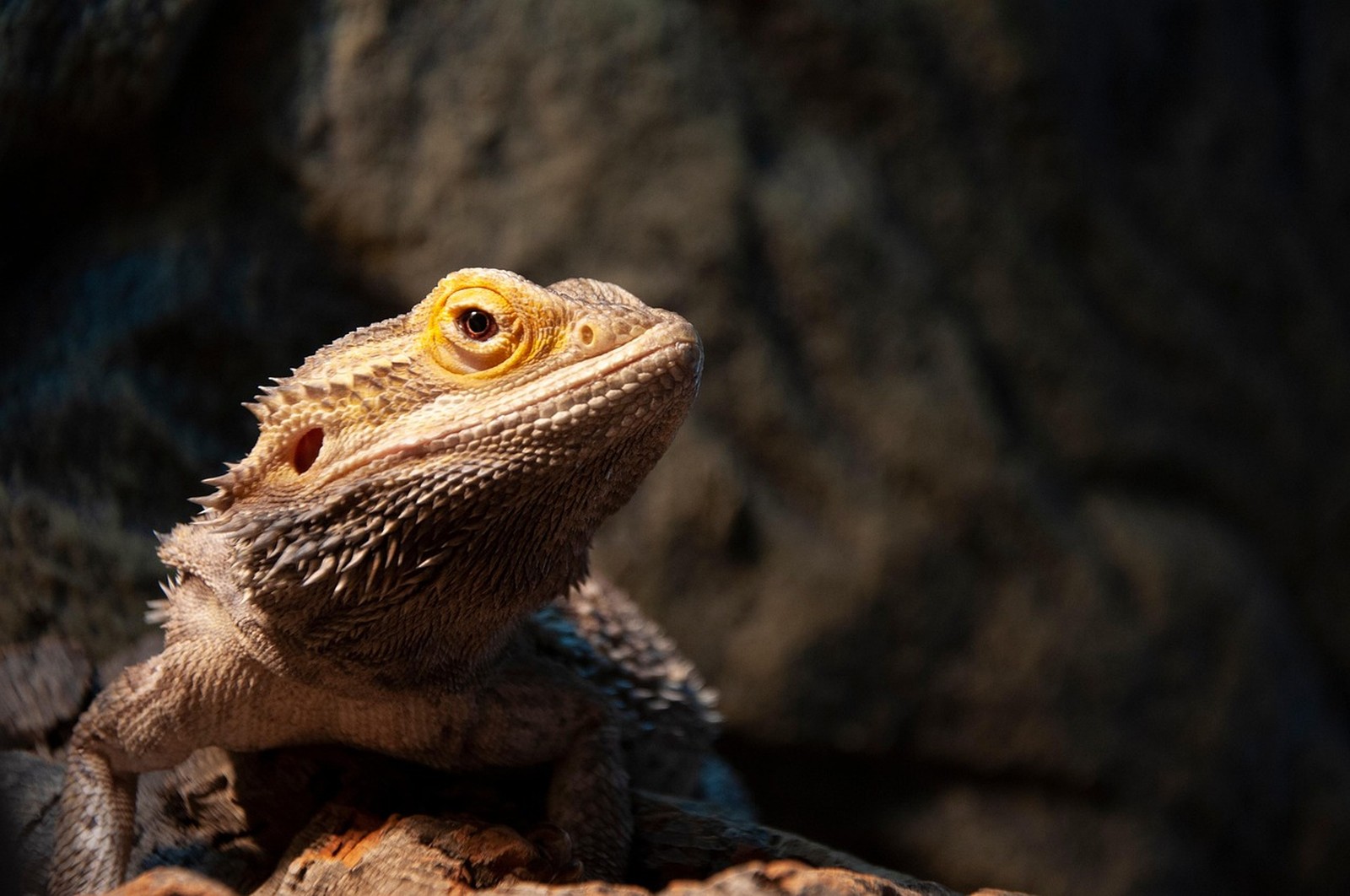
Free-roam time gives a bearded dragon exercise, exploration, and mental stimulation that an enclosure cannot match, but a living room is built for people, not for a fast, flat lizard that can vanish into a gap barely wider than its head. Safety is decided before your dragon touches the floor: one prepared room, every escape route closed, and a person whose only job for that session is watching the dragon. Treat roaming as a supervised activity from start to finish, never as leaving your dragon out while you get on with other things.
Prepare the Room Before the Dragon
Choose one small room rather than an open-plan space, close its door, and roll a towel tightly against the gap beneath it, because that gap is the escape route dragons find first. Push sofas and cabinets flush to the wall, or block the spaces behind and beneath them with cushions or boxes, and check low vents, gaps around pipes, and the space under appliances. Remove other pets entirely, even a gentle dog or a cat that usually ignores the dragon, since one startled dash or playful paw can cause a serious injury. Sweep the floor for hazards: hair ties, coins, dropped tablets, building-block-sized toys, and stray insects that may have contacted cleaning sprays can all be mouthed and swallowed. Lift charging cables and cords off the floor or unplug them, move houseplants with toxic leaves out of reach, and close any open water, such as a pet bowl deep enough to climb into and chill in.
Temperature, Timing and Session Length
A dragon that cools down becomes sluggish, darkens in colour, and may hide rather than return to you, so start the session after a good bask, when your dragon is warm, bright, and active. Feel the floor with the back of your hand: cold tile or a draughty hallway floor will drain body heat quickly, while a warm room at about 70°F (21°C) or above, with a sunny patch or a low basking rock, keeps your dragon comfortable. Keep the session to no longer than 45 minutes, then return your dragon to the enclosure to bask, and shorten the session if the belly feels cool to the touch or your dragon parks itself in a corner and closes its eyes. Offer a drink or a bath after roaming if your dragon looks dry, since many dragons drink more readily in a bath than from a bowl.
Supervision That Actually Works
Stay in the room, at floor level where you can, and keep your dragon in sight continuously; a bearded dragon is quickest exactly when you glance away, and the classic loss story is a dragon discovered hours later behind a bookcase or inside a recliner mechanism. Never let a roaming dragon near a reclining chair or a sofa bed, and check before anyone sits down, opens the door, or moves furniture. Pick your dragon up with two supported hands for the return trip rather than chasing and grabbing, which teaches it that roaming ends in a scare. If children are present, seat them on the floor with the dragon placed in front of them, instead of letting them carry it around the room.
If Your Dragon Does Slip Away
Search low, warm, and dark first: behind appliances that give off heat, under radiators, inside curtain folds, and along skirting boards, using a torch rather than moving heavy furniture blindly, which can crush a hidden animal. Lay a warmed tile or a heat source with a familiar hide nearby to draw your dragon out, and stay patient rather than dismantling the room. If a dragon slips through an open door you did not notice, KinsLe's Lost Pet Alert System puts the alert in the map view at no charge, so the person who spots it in a garden can contact you straight away.