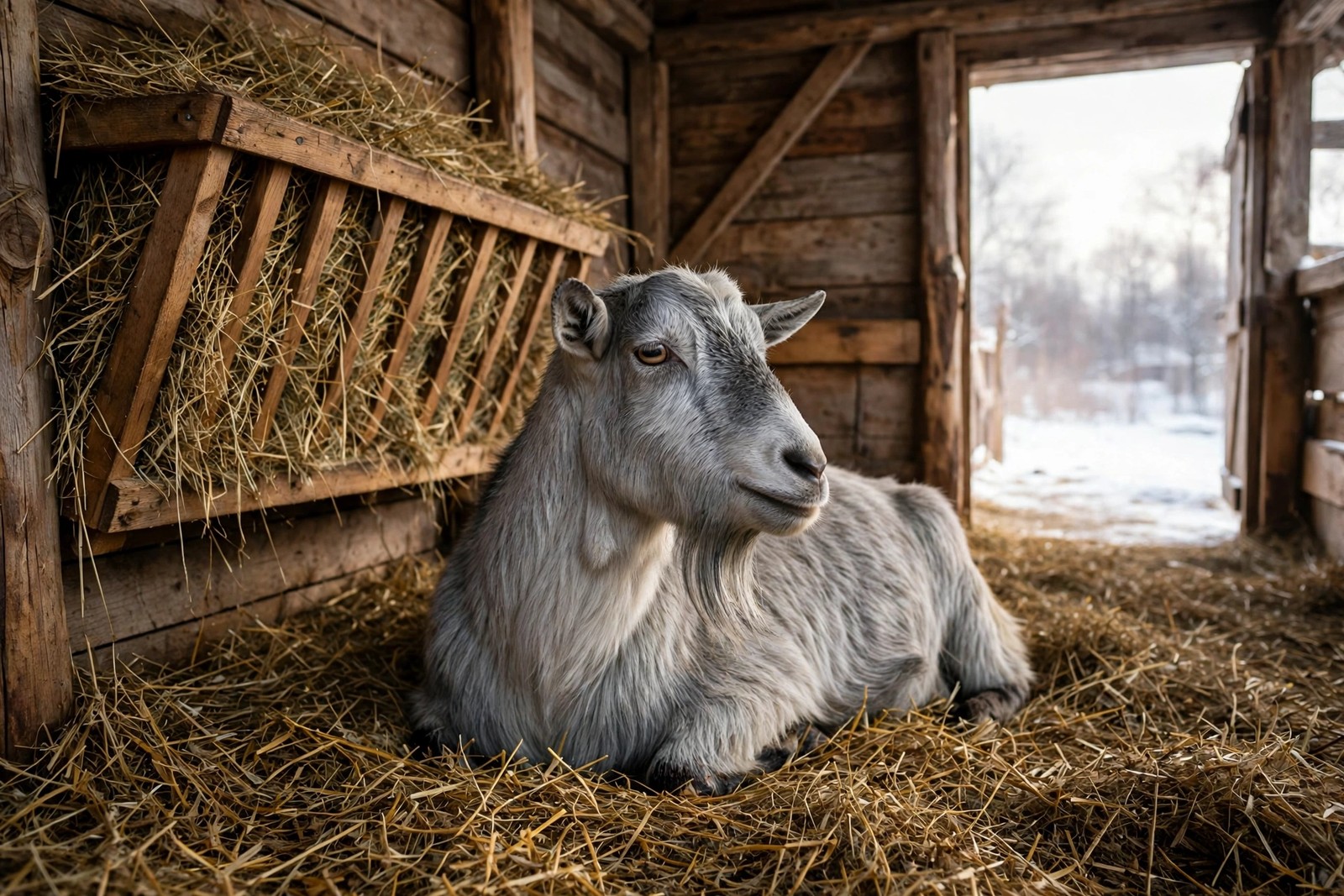
Cold alone rarely defeats a healthy goat with a full rumen and a dry coat. What defeats an elderly goat is the combination winter brings: wind and damp stripping heat through a thinner coat, worn teeth making forage harder to process, arthritis making the walk to feed and water painful, and younger herd mates eating first. Comfort in winter is therefore a system of small provisions, each aimed at one of those pressures, checked daily rather than installed once and forgotten.
Shelter Means Dry and Draught-Free, Not Heated
Give her a three-sided or enclosed shelter she can enter and leave freely, positioned out of the prevailing wind, with the doorway away from driving rain. Inside, lay deep bedding and keep adding dry material on top so she is never lying on a damp, compacted layer; an old goat rests longer than a young one, and a cold wet bed drains body heat all night. Check the bedding with your hand at goat level, because a shelter that feels dry standing up can be sodden where she actually lies.
A coat or rug is not automatically needed and a wet or ill-fitting one makes things worse, but a very thin, frail, or recently unwell goat may benefit, so judge by her condition and discuss it with your vet if you are unsure. What matters more is that her own coat stays dry and unmatted so it can trap air properly.
Food Is Her Central Heating
Fermentation of forage in the rumen generates real internal heat, so good hay available almost constantly is the single most warming provision you can make, especially overnight when temperatures bottom out. Elderly goats often need more than hay alone: if she is losing condition, discuss an age-appropriate concentrate ration with your vet or feed adviser, introduced gradually, and review her teeth, because a goat that is quidding, dropping half-chewed forage, or eating very slowly may not be extracting what the ration offers on paper.
Feed her where she can actually eat in peace. Herd feeding that worked at age four may fail at age twelve if she is shoved aside, so provide multiple feeding points or feed her separately for part of the day. Weigh or condition-score by hand weekly, feeling over the ribs and spine under the coat, since a thick winter coat hides weight loss from the eye completely.
Water Must Never Be an Ice Problem
Goats drink less when water is near freezing, and an old goat that drinks less eats less, which breaks the forage-and-fermentation cycle that keeps her warm. Check water at least twice daily, break or remove ice, and top up with fresh water; many goats drink noticeably more when offered water that is not icy. Place the trough where she can reach it without a slippery, crowded trek, and keep the area around it as mud-free as you can manage.
Daily Eyes on the Details
Watch her movement on cold mornings, when stiff joints are at their worst, and keep her route to feed, water, and shelter short and on the best footing available. Look for shivering that does not stop once she is fed and sheltered, isolation from the herd, drooping ears, reduced cudding, or droppings changes; any of these in an elderly goat in winter deserves a prompt call to your vet rather than a wait-and-see, because old animals decline faster in cold weather. Keep hooves trimmed so she stays steady on hard, frozen ground, and check her shelter companions are not bullying her off the best bedding spot.
The work is repetitive rather than difficult, so share it deliberately: KinsLe's Care Teams lets you assign the morning and evening water, forage, and bedding checks for your elderly goat to family or helpers, with each completed task timestamped, so nothing depends on one person's memory through the coldest weeks.