
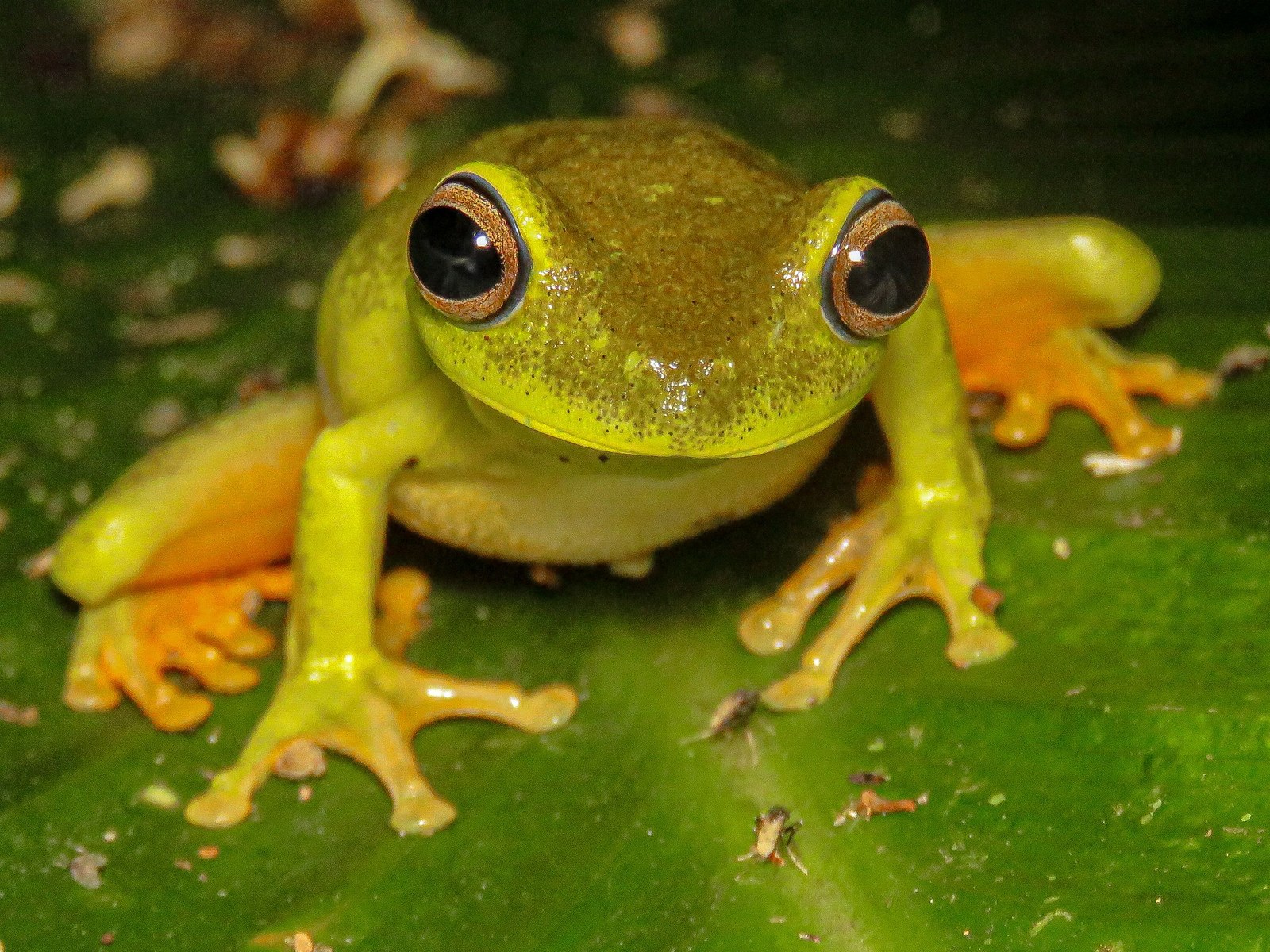
Most pet frogs need consistently high humidity — often 70 to 100 percent depending on species — and you keep it there with daily misting, a large shallow water dish, live or moisture-holding decor, a partially covered lid, and a hygrometer you actually read, rather than guessing from how the glass looks.
Know Your Species' Number First
Humidity is not one-size-fits-all. A White's tree frog tolerates, and benefits from, dips down toward 50 to 60 percent between mistings and good ventilation, while dart frogs and many other tropical tree frogs want conditions staying near the top of the range almost constantly. Pacman frogs, which burrow, care as much about damp substrate as humid air. Check a care guide specific to your species, write the target range down, and place it near the tank so anyone helping you knows what number you are aiming for.
The Tools That Actually Hold Moisture
A hygrometer — ideally a digital one with the probe inside the enclosure at frog level — tells you the truth a fogged pane cannot. From there, layer your methods:
- Mist with dechlorinated or spring water, never straight tap water with chlorine
- Offer a wide, shallow dish of clean water your frog can sit in and soak
- Use moisture-retentive substrate and live plants, which release humidity steadily
- Cover part of a mesh lid with glass or acrylic to slow evaporation, leaving the rest open for airflow
- Consider a timed mister or fogger for tropical species if hand misting cannot keep up
Distilled water is fine for misting glass and leaves, but your frog's soaking dish should contain minerals, so use dechlorinated tap or spring water there.
Humidity Without Stagnation
Constantly soaked, still air grows mould and bacteria, and a frog that can never dry slightly is at risk of skin problems. The goal is humid and fresh: strong ventilation in the upper part of the enclosure, substrate that is damp rather than swampy, and a daily rhythm where humidity peaks after misting and eases a little in between. If you see persistent condensation, a sour smell, or white mould spreading, increase airflow and clean promptly rather than misting more.
Skin Is a Lifeline — Handle With Care
Frogs absorb water, and unfortunately salts, oils, and chemicals, directly through their skin. Always mist and fill dishes with dechlorinated water, wash your hands and wet them with that same water before any necessary handling, and keep aerosols, cleaning sprays, and scented products away from the enclosure. Sudden lethargy, reluctance to eat, or changes in skin appearance are reasons to check your readings and water source first, then contact a veterinarian experienced with amphibians if the frog does not improve quickly.
Keeping It Steady With KinsLe
Humidity crashes are easiest to prevent on a routine, and that is where KinsLe helps: Kinny, the built-in AI assistant, can remind you to mist, prompt you to log hygrometer readings, and nudge you when a check has been missed, so a busy weekend does not quietly become a dry, stressful few days for your frog. Bring a follow-up question about a stubborn overnight reading to KinsLe, where Kinny draws its answer out of the KinsLe Answers library.