
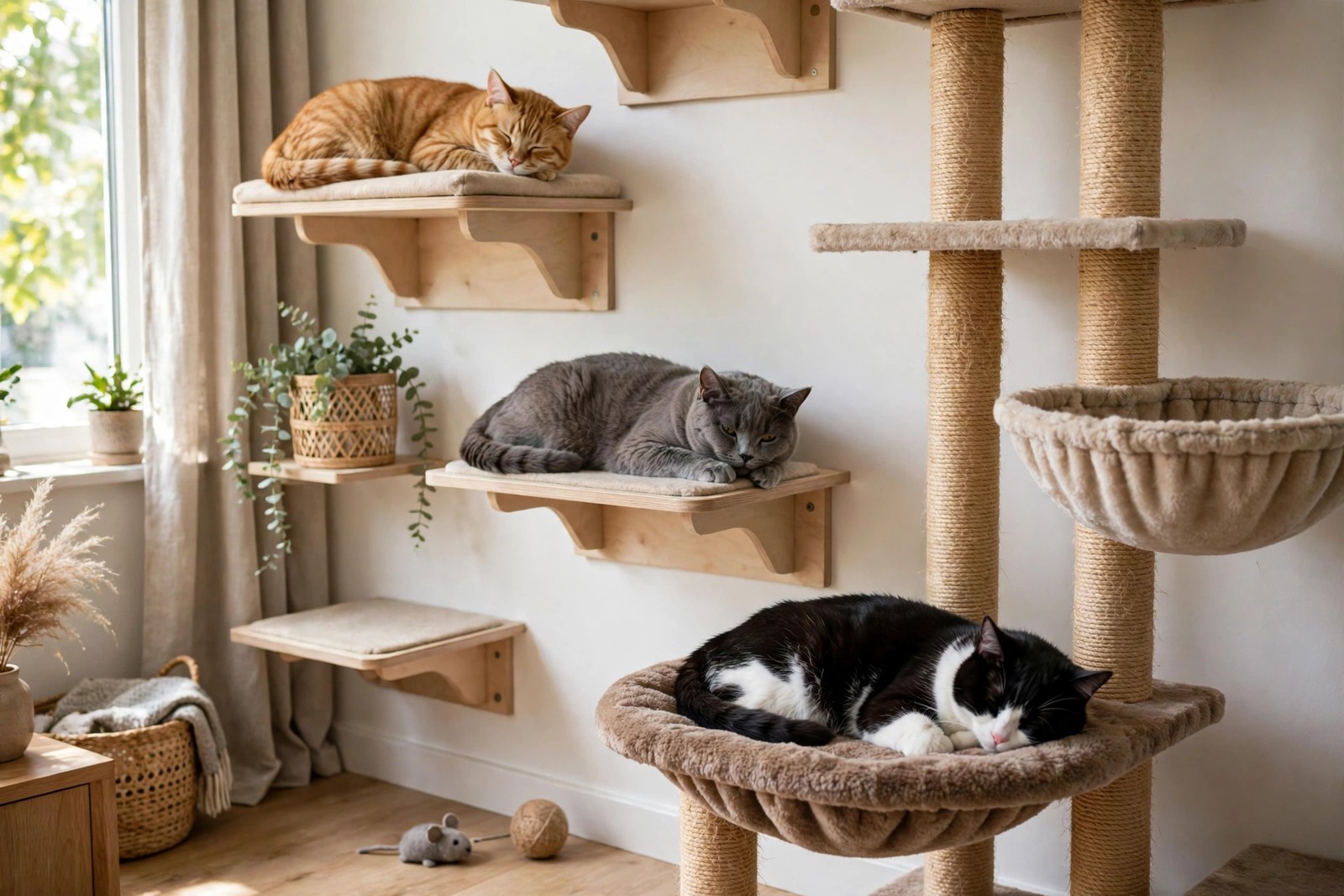
What keeps the peace between cats sharing a home is mostly a question of resources and room: enough boxes, bowls, posts and perches, spread out so nobody must compete for them or run a rival's gauntlet to reach them. Cats are not being dramatic when they feud over these things — in their social logic, guarding access to essentials is how status gets decided, and removing the competition removes most of the conflict.
The resource math that prevents fights
The well-tested rule is "one per cat, plus one" for the things that matter most — litter boxes above all, and ideally food and water stations too. Two cats do better with three boxes; three cats, four. Just as important is placement: spread resources across different rooms and floors rather than lining them up in one "cat corner." A single hallway with all the boxes, bowls, and scratchers is a single point of ambush, and a timid cat who must run that gauntlet past the household bully will start avoiding it — which is how "sudden" litter box problems and mealtime stress are born.
Vertical space counts as a resource too. Cat trees, shelves, and cleared wardrobe tops let cats share a room at different heights, which dramatically lowers tension because everyone can choose distance without leaving.
Feeding without friction
Feed in separate areas if meals are tense — different rooms, or at least opposite ends with a visual barrier. Some bonded pairs eat happily side by side, but shoulder-to-shoulder feeding makes many cats gulp, guard, or quietly eat less. Microchip feeders are a genuine peacekeeping tool in homes where one cat needs a special diet or steals everyone's dinner. Keep feeding locations consistent; predictability calms cats.
Introductions and re-introductions
Most multi-cat wars trace back to a rushed introduction. New cats should start in a separate room with their own resources, with scent swapping (rubbing a cloth on each cat and exchanging it) for days before any face-to-face meeting, then short visual introductions paired with food. After a vet visit, a returning cat smells "wrong" and can be attacked by housemates — a few hours apart to reacquire the home scent prevents a silly, preventable fight. Go back a step whenever tension spikes; slow is fast with cats.
Daily peacekeeping habits
- Give each cat individual play and attention every day — jealousy is real, and the shy cat needs her share deliberately delivered.
- Avoid punishing hisses or growls; they are communication that prevents fights, not defiance.
- Watch for quiet bullying: one cat sitting in doorways, staring others away from boxes or bowls. It rarely looks like a fight, but it stresses victims daily.
- If aggression causes injuries, or one cat starts hiding or missing the litter box, involve your veterinarian or a certified behaviorist early — stress-related health issues follow household tension fast.
One profile per cat keeps routines clear
In a busy multi-cat home, who eats what, who is due for meds, and who needs solo play gets muddled fast. Handing a relative access to one profile via KinsLe Family Sharing puts a single, distinct cat in front of them when the app opens. Clear information prevents the mistakes — wrong bowl, missed meds, blocked doorway chaos — that spark conflict. Keep the feeding spot, medication notes, and solo-play turn for each cat written down where every helper can find them, and let the relatives you choose open their profiles in KinsLe Family Sharing, so daily life starts from each cat as herself rather than from a blur of lookalikes.