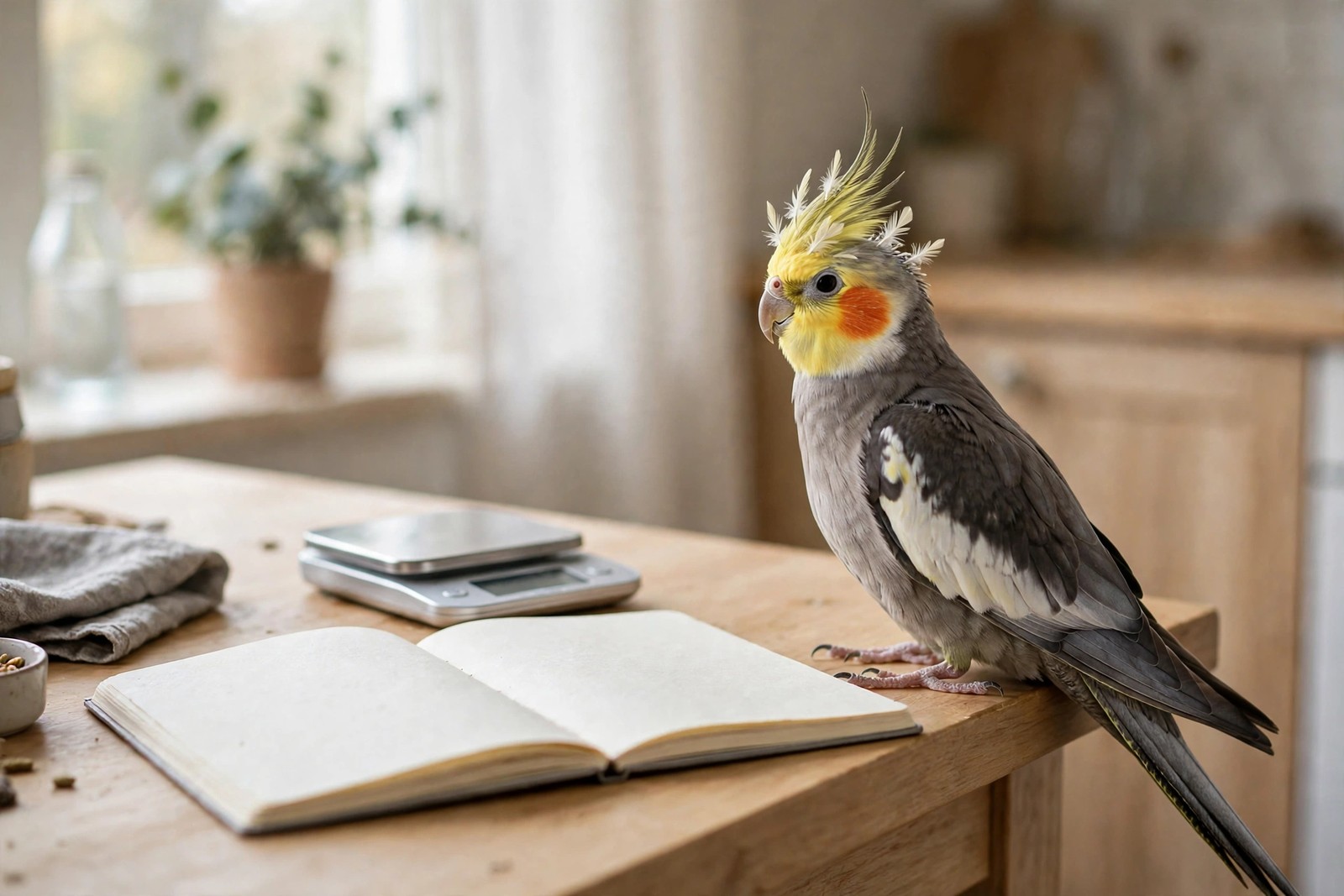
A molt looks messy even when it is completely normal, which is why memory fails owners: was that tail feather lost last week, and has the weight actually slipped? A short dated log answers both. The goal is not a diary. It is a repeatable record with the same fields each time, so a normal molt reads as normal and a problem stands out early.
The Fields Worth Recording
Start each molt entry with the date and stage: first loose feathers seen, heavy drop, pin feathers coming through, or new feathers opening. Note which areas are involved — head, wings, tail, body — and whether both sides look roughly even. Photograph the same perch angle once a week; a picture shows a patch that is not refilling far better than a sentence does.
Add a weekly weight, taken on the same small scale, at the same time of day, ideally before breakfast. Record droppings in plain words — colour, consistency, and any clear change from your bird's usual — plus appetite, favourite foods refused, sleep, energy, and voice. Finish with context: diet changes, a new toy or cage move, household stress, daylight changes, and any bath or misting routine you offered to soften pin feathers.
What a Normal Molt Note Looks Like
A healthy entry is boring: gradual feather loss over several weeks, itchy but bright behaviour, pin feathers that unfurl, steady weight, and normal eating. Many parrots and cockatiels look scruffy and nap a little more, and soft foods may be favoured while new feathers grow. Note that, then note when it resolves.
Flag a different pattern in the same log: feathers falling in a sudden rush with bare skin that stays bare, broken or chewed new feathers, a bird plucking rather than moulting, marked weight loss, persistently changed droppings, or lethargy and silence. Those entries, with dates, are the reason to call an avian vet promptly rather than waiting for the next routine visit.
Keeping Health Notes Beside the Molt
Use the same log for the rest of the health picture so nothing lives in a separate notebook. Add vet visit dates and what was advised, any test or treatment the vet prescribed, quarantine notes for a new bird, egg-laying dates for hens, beak and nail trims, and reactions to new foods. Keep the vet's phone number and your bird's band or microchip details at the front.
Review the log monthly, not just during a molt. Two light molts close together, a molt that stalls for months, or weight creeping down across three entries is a trend you will only catch on paper.
Making the Log Easy to Keep
Tie the weekly weigh-in to a fixed moment, such as cage-clean day, and keep the scale beside the cage. Short entries you actually write beat a perfect spreadsheet abandoned in week two. If more than one person feeds or handles the bird, everyone writes in the same place and uses the same simple words for droppings and appetite.
When the log travels with the bird, a sitter spots trouble sooner and a vet can judge a molt against real history instead of a guess. KinsLe Pet Passport holds that molt timeline, weight record, and vet history as one portable packet, ready to share at an appointment or hand over with the cage.