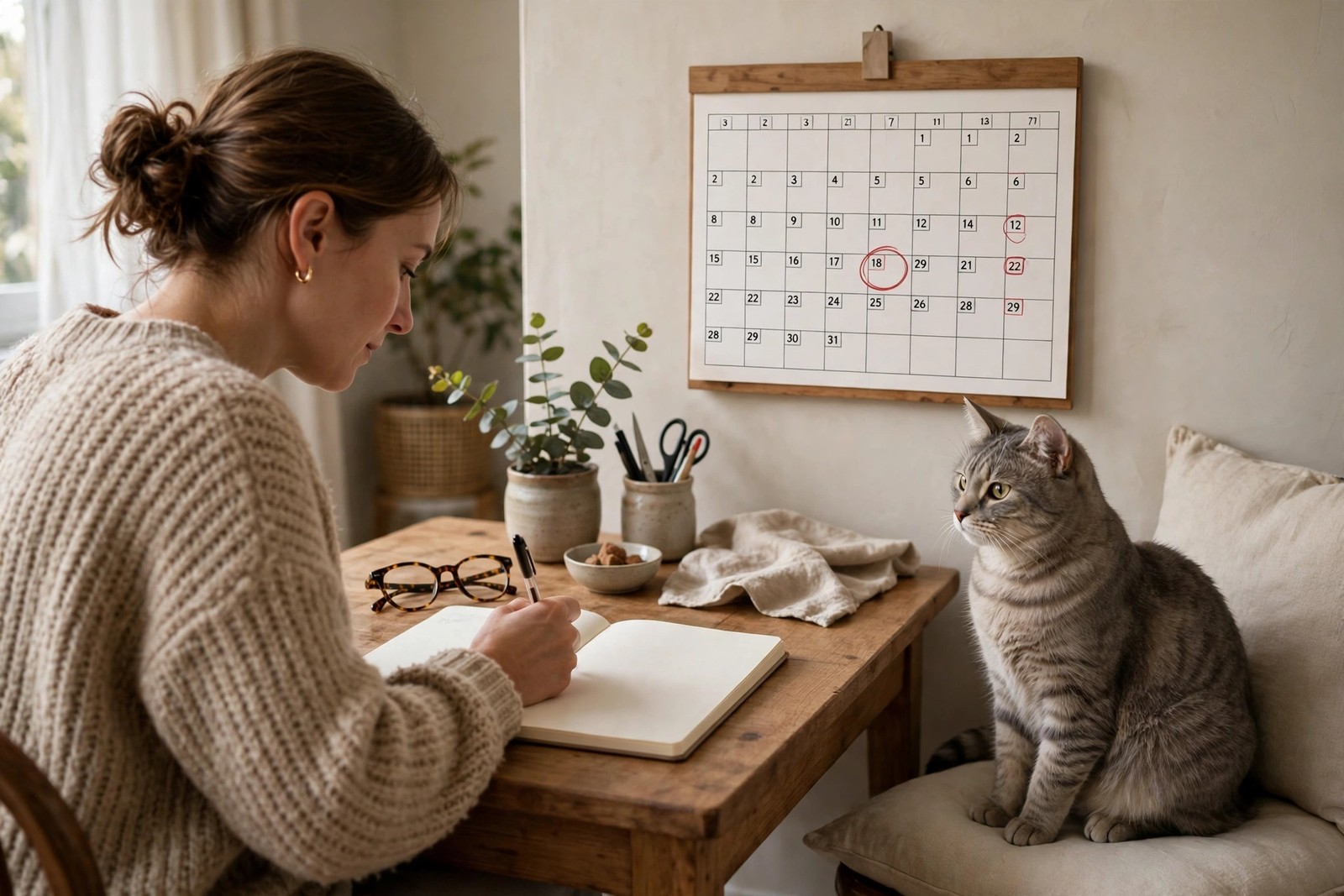
Flea and worming control fails quietly. A treatment given a week late here and a fortnight late there leaves gaps in cover, and in a multi-cat household the commonest error is worse: one person treats a cat the other person already treated. The answer is not memory or good intentions but a tiny recording habit — a log filled in on the day, and the next reminder set in the same minute — which takes under sixty seconds per treatment and removes all doubt permanently.
What to Record for Every Treatment
Keep one log per cat, on paper in the cat's folder or digitally alongside their other records, with four fields for each treatment: the date it was given, what was given, the interval your vet advised for that particular product, and the next due date calculated from the two. Intervals vary between products and between flea and worming treatments, and your vet may set a different rhythm for an indoor-only cat than for a hunter who eats what they catch, so record the interval you were actually given rather than assuming one standard gap. Add the name of the person who gave the treatment in any household where care is shared; that single initial is what prevents double-dosing.
Never back-fill the log from memory weeks later. If you genuinely cannot remember whether a treatment was given, treat the log as the truth — if it is not written down, check with your vet before repeating anything, because giving a second dose too soon is a real risk while a short delay usually is not.
Set the Next Reminder Immediately
A log tells you the past; a reminder protects the future. The moment you record a treatment, create the calendar entry for the next due date, with an alert a few days before it so you can make sure the product is in the house. Use one calendar system you actually look at — your phone is usually the honest answer — and mirror the due dates on a wall calendar or on the front of the paper log as backup, because phones get replaced and apps get deleted. Owners who keep a year-view list of due dates on the log itself can see at a glance whether flea and worming dates are drifting apart, which is what makes it possible to plan combining them into one treatment-day routine.
If a due date lands while you are travelling or the cat is at a cattery, note that in the calendar entry itself. Catteries often ask for proof of up-to-date flea and worming cover, and your log is exactly the evidence they want to see.
Build a Rhythm That Survives Real Life
Anchor treatments to something fixed in your month rather than to memory of the last dose — the first weekend of the month, payday, or the same day you do another monthly household task — as long as the anchor stays inside the interval your vet advised. When you switch products, write the change and the reason in the log and recalculate the due date from the new interval; a bare gap in the list a year later looks like a missed treatment and wastes everyone's time.
Review the log at each vet visit. Your vet can confirm the intervals still suit your cat's age, weight band, health, and lifestyle, adjust them for a new kitten in the house or a cat who has started hunting, and correct the common drift where worming quietly slips to half the intended frequency because only the flea dates were being tracked. Kittens, pregnant cats, and cats on other medication always follow the schedule their vet sets for them individually, and the log's job is simply to carry that schedule faithfully.
A complete, dated treatment history is genuinely useful beyond your own kitchen, and KinsLe Pet Passport keeps your cat's log alongside their vaccination and health records in one portable packet, so a new vet, a cattery, or a sitter can see exactly what was given and what is due.