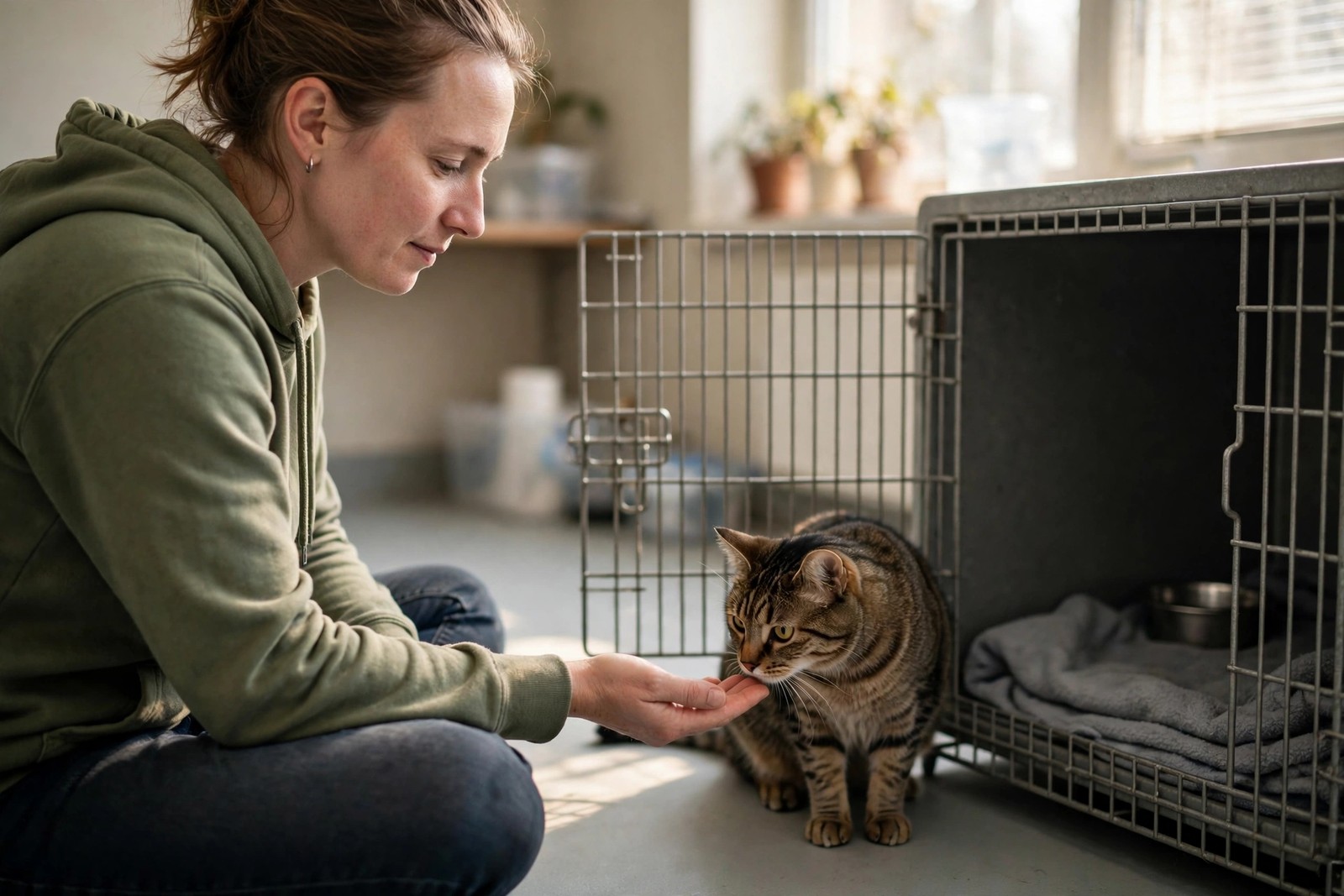
The listing is a snapshot: a few observed moments, compressed into appealing language, about an animal living under fluorescent light with strangers walking past all day. Some profiles prove spot-on. Others describe a cat who barely resembles the one who unpacks at your house, in either direction. The skill is not cynicism; it is gathering better evidence before adoption and giving the real cat time to appear afterward.
A Listing Is a Snapshot, Not a Promise
Read a profile for facts and forgive its adjectives. Age, sex, origin, medical notes, and whether the cat came from a foster home are solid information. Words like cuddly, chill, playful, and perfect companion are interpretations, often based on brief interactions with one or two staff members, and occasionally written from an intake form filled in by the person surrendering the cat. A profile is also marketing by necessity.
None of that makes listings useless. Note what the profile does not mention as carefully as what it says: silence about other cats, dogs, children, litter habits, or being picked up usually means the shelter does not know yet, and unknown is an honest answer you can work with once you know it is unknown.
Why Shelter Behavior Shifts at Home
A shelter is one of the most stressful addresses a cat can have: constant noise, unfamiliar smells, neighboring cats, broken sleep, and a parade of strangers. A confident, sociable cat may shut down completely in a kennel, sitting at the back with a flat stare, and then bloom within days at home into the greeter the profile promised. A frightened cat may cling to any visitor out of desperation and look devotedly affectionate, then need weeks of hiding at home before choosing company voluntarily.
Environment also edits specific traits. Playfulness, appetite, grooming, and litter habits all run differently in a cage than in a house. Expect the home version to be the real one, and expect it to arrive gradually rather than at the front door, which is why experienced adopters talk about the personality at three weeks, not the personality on day one.
Better Evidence Than a Profile Page
Ask the shelter what stands behind the adjectives. Staff and volunteer handling notes over weeks are far richer than a listing paragraph: who can pick this cat up, how it reacts to the carrier, whether it eats in front of people, and how it behaves when the room gets loud. If the cat is in a foster home, the foster's report is the strongest evidence available anywhere, because it describes the cat in a real house, with real routines, visitors, and nights.
Visit more than once if you can, at different times of day. A cat who ignored you on a busy Saturday may seek you out on a quiet Tuesday morning, and two visits also let you watch litter habits, appetite, and how the cat treats the cat in the next kennel. If the shelter offers a trial or foster-to-adopt arrangement, treat it as the finest evidence of all and use the full period before deciding.
The Settling Period Decides the Match
Plan for a settling period of weeks at home before judging the match. Many cats follow a rough pattern: the first days are for hiding, eating cautiously, and learning the sounds of the house; the following weeks bring exploration, routine-building, and the first real tests of boundaries; and somewhere across the first couple of months the settled personality stands up and introduces itself.
Help the real cat arrive faster with a small, predictable world at first: one room, one routine, the food and litter the shelter used, and company offered without being imposed. Keep notes as traits emerge, because your observations at home quickly become more valuable than the listing ever was, for your veterinarian, for any future sitter, and for the household itself. Once adoption day arrives, KinsLe moves the Transferrable Profiles notes over with your cat, so early shelter observations sit beside the personality that emerges later.