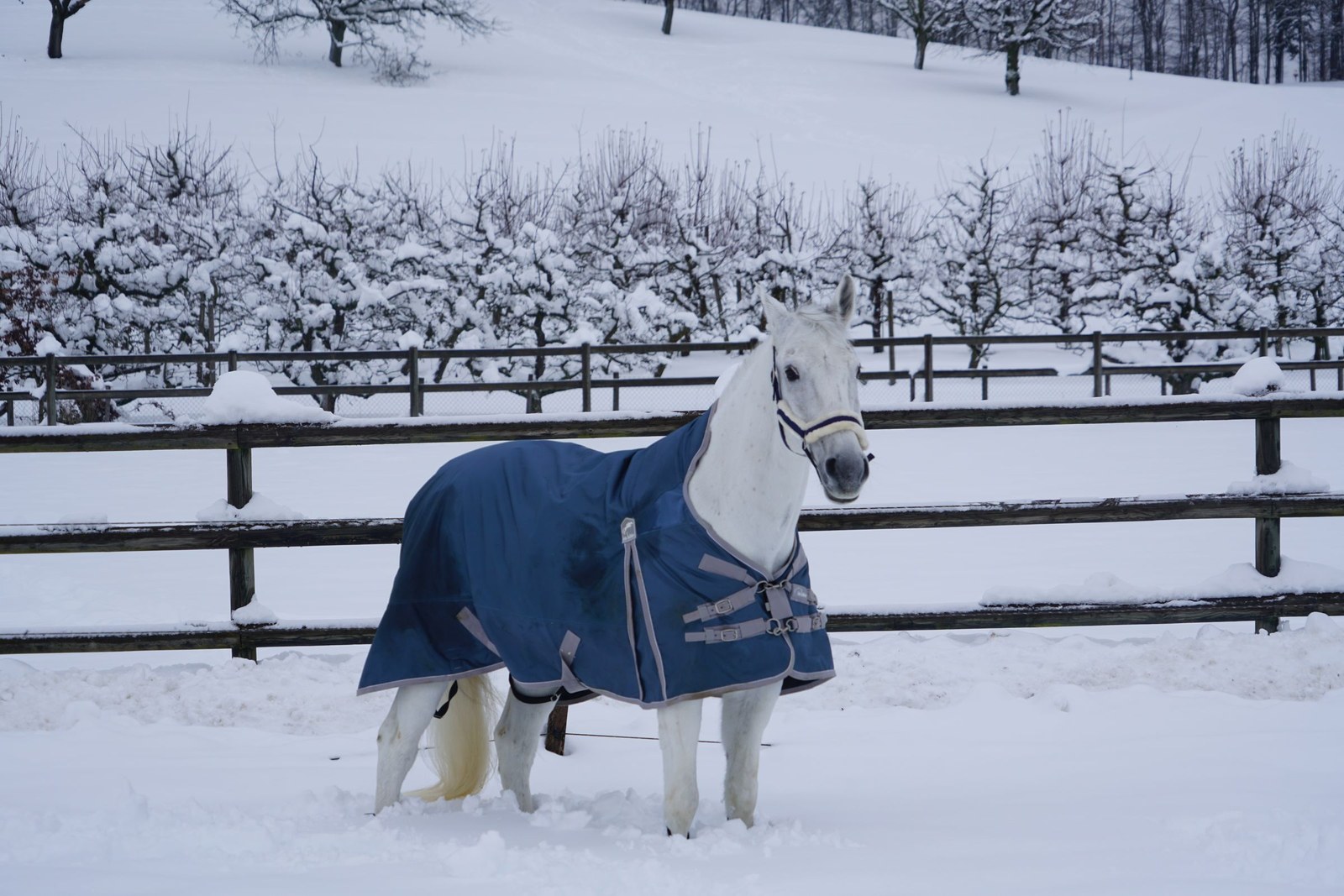
Many healthy horses do not need a blanket at all, even in cold weather, as long as they have grown a full winter coat, have shelter from wind and rain, and have plenty of hay to fuel body heat. A blanket becomes worth considering when a horse is clipped, older, thin, ill, recovering, or struggling to hold condition — those horses have less natural protection and less reserve. The calendar alone is a poor guide; your horse, the weather, and how he is actually coping matter far more.
How Horses Stay Warm on Their Own
A horse's winter coat is not just hair. Individual hairs stand up to trap warm air against the skin, and digestion does much of the heating work. Fermenting forage in the hindgut generates real internal warmth, which is why horses often eat more hay on cold nights and why running low on forage matters more in a cold snap than a slightly chilly afternoon. A dry, fluffy coat insulates well. A coat flattened by steady rain, sleet, or a biting wind loses much of that loft, so wet and windy weather can chill a horse at temperatures that would be no problem on a still, dry day.
Fat cover helps too: a horse in good condition carries insulation a thin horse does not have.
Signs Your Horse Actually Needs One
Check the horse, not the forecast app. Useful clues include:
- Shivering, tucking up, or standing hunched with his hindquarters turned to the wind
- Ears and skin that feel distinctly cold, with a coat soaked through to the skin
- Weight or condition slipping over a few weeks despite adequate feed
- Seeking shelter constantly instead of grazing and moving normally
- A recent body clip, recent illness, or a move from a warmer climate
If your horse is bright, eating well, maintaining weight, and his coat is dry underneath, he is probably coping fine without a rug. If you blanket and he sweats under it, that is also a problem — damp, overheated skin can chill quickly when temperatures drop again, and over-blanketing is a common, well-meaning mistake.
Choosing and Checking a Blanket
Fit matters as much as fill weight. A blanket should sit without pulling across the chest, rubbing the withers, or sliding sideways. Light, medium, and heavy weights suit different conditions, and many owners layer or switch as weather swings rather than owning one rug for the whole season. Check under the blanket daily: feel for warmth and dryness, look for rubs, and make sure straps are secure and not twisted. Remove it regularly to groom, check condition, and let the coat breathe.
Rain sheets with no fill can help a clipped or vulnerable horse stay dry, but on an unclipped horse a sheet can actually flatten the coat and reduce natural insulation if it is used in dry cold alone. Match the tool to the problem you are solving.
When in Doubt, Look at the Whole Picture
Age, breed, workload, housing, and health all shift the answer. A hardy cob living out with a field shelter and ad-lib hay is in a different situation from a clipped Thoroughbred in hard work who comes in sweating. If your horse is losing condition, shivering repeatedly, or you are unsure whether a medical issue is affecting his ability to stay warm, ask your veterinarian rather than guessing — unexplained weight loss deserves a check in its own right.
Keeping Everyone on the Same Blanketing Plan
Blanketing decisions go wrong most often when different people guess differently. Grant relatives you pick access to his profile via KinsLe Family Sharing, so someone arriving on a bitter morning meets the animal directly instead of guessing about him. Deciding the guidelines once, together, means your horse is neither rugged twice nor left uncovered because each person assumed someone else had decided. When overnight weather turns, the blanketing schedule your household agreed belongs where everyone can check it, and a relative opening his profile in KinsLe Family Sharing meets the horse himself, not a stable-yard rumour.