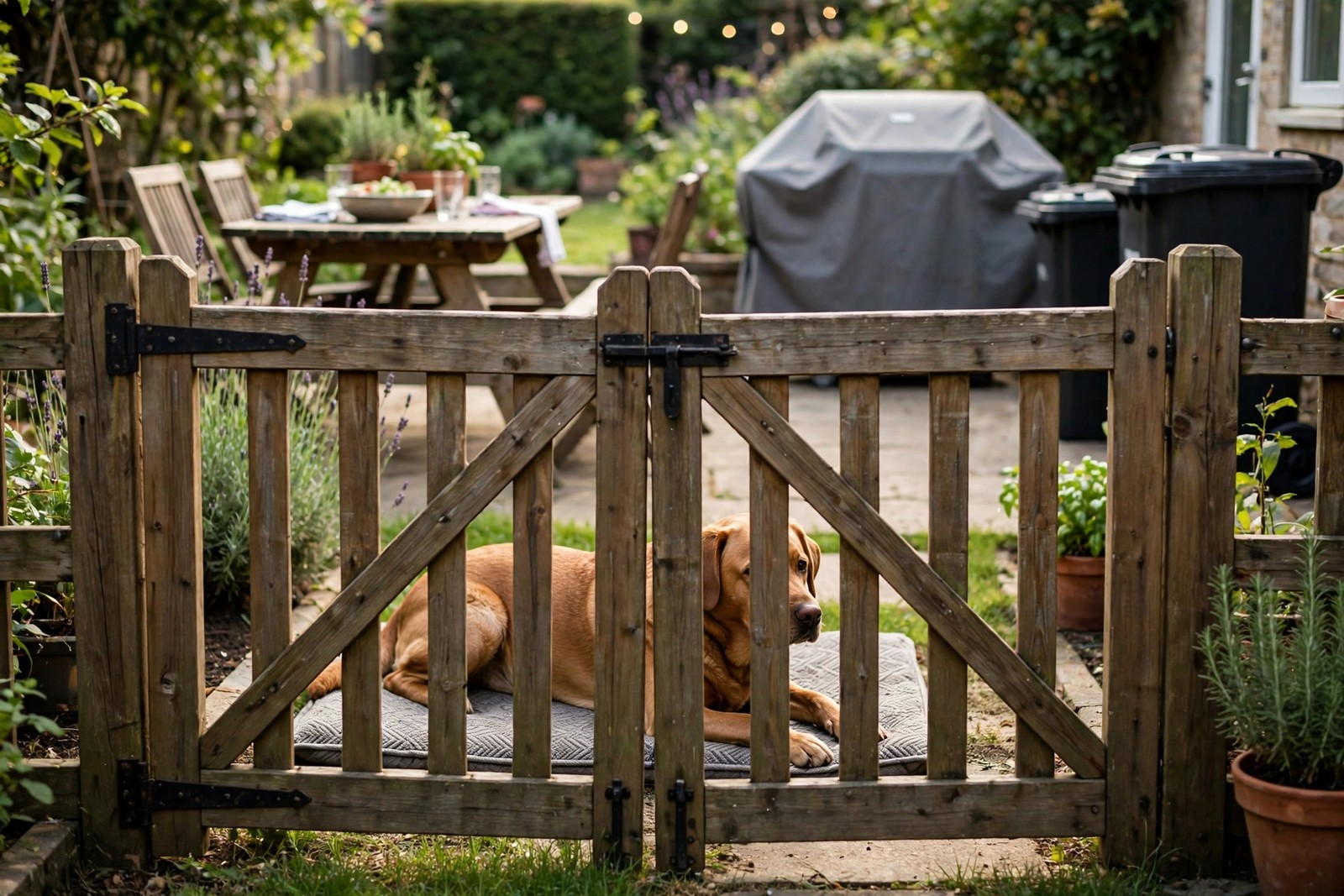
A barbecue concentrates almost every dog hazard into one afternoon: a hot open grill, cooked bones, skewers, dropped food, open gates, and guests who feed dogs without asking. The fix is not hovering all day. It is setting zones and food rules before the first guest arrives, so your dog can enjoy the garden without access to the dangerous parts.
Make the Grill a No-Dog Zone
Position the grill so a barrier, exercise pen, closed gate, or a lead in one responsible person's hand keeps your dog several feet away at all times. Dogs get burned nosing a hot lid, investigating dropped fat, or brushing a kettle grill that tips more easily than owners expect. Keep lighter fuel, matches, and charcoal — including cooled ash, which can still hold heat and chemicals — fully out of reach.
Assign the lead or the settled spot to one named adult, not to the group in general and never to a small child while adults cook. Rotate that job at agreed times so it actually happens for the whole party.
The Foods That Cause the Vet Visits
Cooked bones are the headline risk: rib, chicken, and chop bones splinter and can obstruct or perforate, so they go straight from plate to a lidded bin, never onto a low table or an open bag. Wooden and metal skewers smell of meat and are swallowed whole often enough that they should be collected into a solid container the moment food comes off them.
Corn cobs are another frequent blockage, and rich fatty trimmings, sausages, and drippings can trigger a painful digestive upset or worse in sensitive dogs. Onions, garlic-heavy marinades, and alcohol are toxic risks that hide in sauces, salads, and unattended cups on the ground. Brief guests kindly and once: please do not feed the dog anything, however pleading the eyes. Offer a bowl of your dog's own treats by the seating area if people want to give something.
Settle Your Dog Away From the Action
Give your dog a shaded spot within sight of the family but outside the cooking and serving traffic, with fresh water, a mat, and a long-lasting safe chew or a stuffed food toy you prepared earlier. A dog with a job and a place is far less likely to counter-surf, scavenge plates left on the grass, or practise begging at every chair.
Plan toilet breaks and a short walk or play session before guests arrive. A tired dog settles; a bored, under-exercised dog invents barbecue games of its own.
Gates, Guests, and the Escape Moment
Most barbecue escapes happen at arrival and departure, when a side gate or front door stands open and nobody thinks the dog is near it. Keep exit routes closed, use a lead for greetings if your dog is excited by visitors, and check that children understand the gate clicks shut. Make sure collar ID is on and legible before the party, not as an afterthought.
If the worst happens and your dog gets out into the street mid-party, start searching immediately and put the word out in the same minutes rather than after dessert. KinsLe's Lost Pet Alert System sends a free alert to nearby Circle of Love members and lets a finder message you directly, turning your neighbours into searchers while your guests check the surrounding streets.