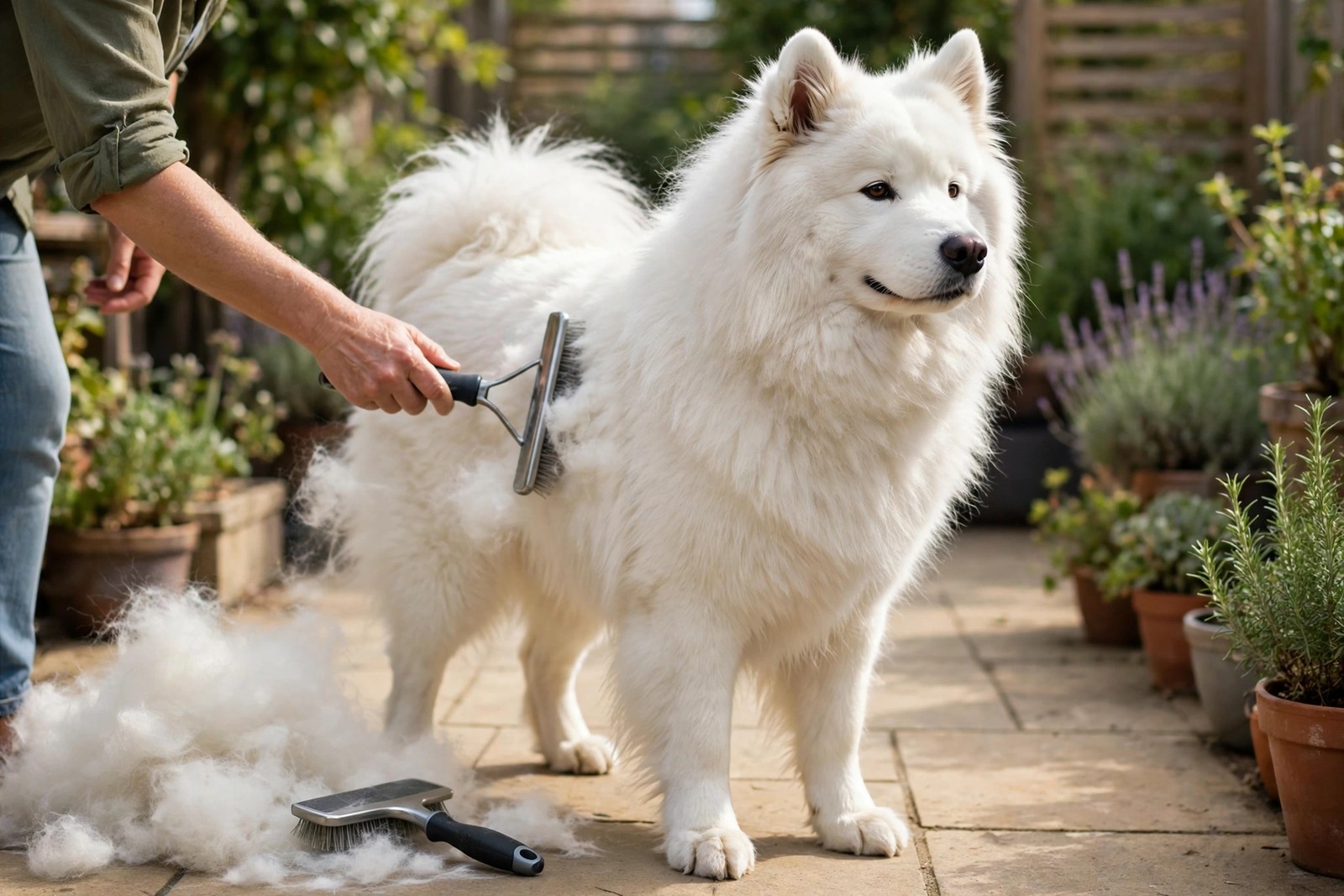
A Samoyed's coat is built in two layers: a dense, soft undercoat that traps warmth, and longer guard hairs that shed water and dirt. During the annual blow, that undercoat loosens and lifts out in tufts over several weeks, and the sheer volume is what overwhelms owners, not any single grooming session. Loose undercoat that stays in the coat packs down into felt, traps moisture against the skin, and turns a brushing job into a mat-removal job.
Line-brush in sections, down to the skin
The technique that makes the difference is line brushing. Part the coat with one hand so you can see skin, hold the upper layer back, and brush the exposed strip from the skin outwards with a slicker, working in small sections and moving steadily across the body. Follow with an undercoat rake through the same strip to lift what the slicker loosened, then test with a metal comb: the comb should glide from skin to tip without snagging. If it snags, that strip is not finished, however smooth the surface looks. Keep each daily session to 15 to 20 minutes and work one area thoroughly rather than skimming the whole dog, rewarding calm standing and stopping for a break before your Samoyed gets fidgety and sore.
Tackle the felted hotspots early
Some areas felt days before the open back and sides do. Check behind the ears, in the armpits, on the chest, along the belly, around the breeches at the back of the thighs, and under the tail, because friction and moisture pack the undercoat tightest there. Tease a forming mat apart with your fingers first, then work it out from the edges with the corner of the slicker and the comb, holding the base of the mat so the skin is not pulled. Never drag a rake through a tight mat, and never try to cut one out against the skin, because Samoyed skin is loose and easy to nick. A mat that has felted hard against the skin belongs to a professional groomer, who can remove it safely while you watch the technique.
Use a bath to loosen, not to soak mats
A bath partway through the blow can release a surprising amount of undercoat, but only if the coat goes in brushed. Water tightens existing mats, so comb the hotspots out first, then wash, work the shampoo through to the skin, and rinse far longer than feels necessary, because residue left in a dense coat dulls it and irritates skin. Dry thoroughly, right down to the skin: a damp undercoat left to air-dry in warm weather can sour and mat as it dries. Brushing while the coat dries lifts out the loosened tufts.
Keep the house liveable for several weeks
Brush outdoors or in one easy-clean room during the heaviest part of the blow, and keep the fallout contained rather than chasing it around every room. Wash the throws and bedding your Samoyed uses, vacuum the traffic lanes and the spots where they shake, because one good shake redistributes a session's loosened coat across a room, and keep a lint roller by the front door for clothes.
Watch the skin under the fluff
Part the coat and look at the skin as you work, because problems hide well under that much hair. Redness, sore or hot patches, scabs, a sour smell, bald areas, or scratching and chewing at one spot are all reasons to stop grooming that area and book a vet visit, since only a vet can examine the skin properly and judge what it needs. Keep brushing the unaffected areas gently in the meantime, and note where the problem sits so you can describe it accurately. When several people share the work, KinsLe's Care Teams lets you assign each day's 15- to 20-minute brushing shift to a named person and mark it complete, so your Samoyed gets one thorough session a day instead of two rough ones or none.