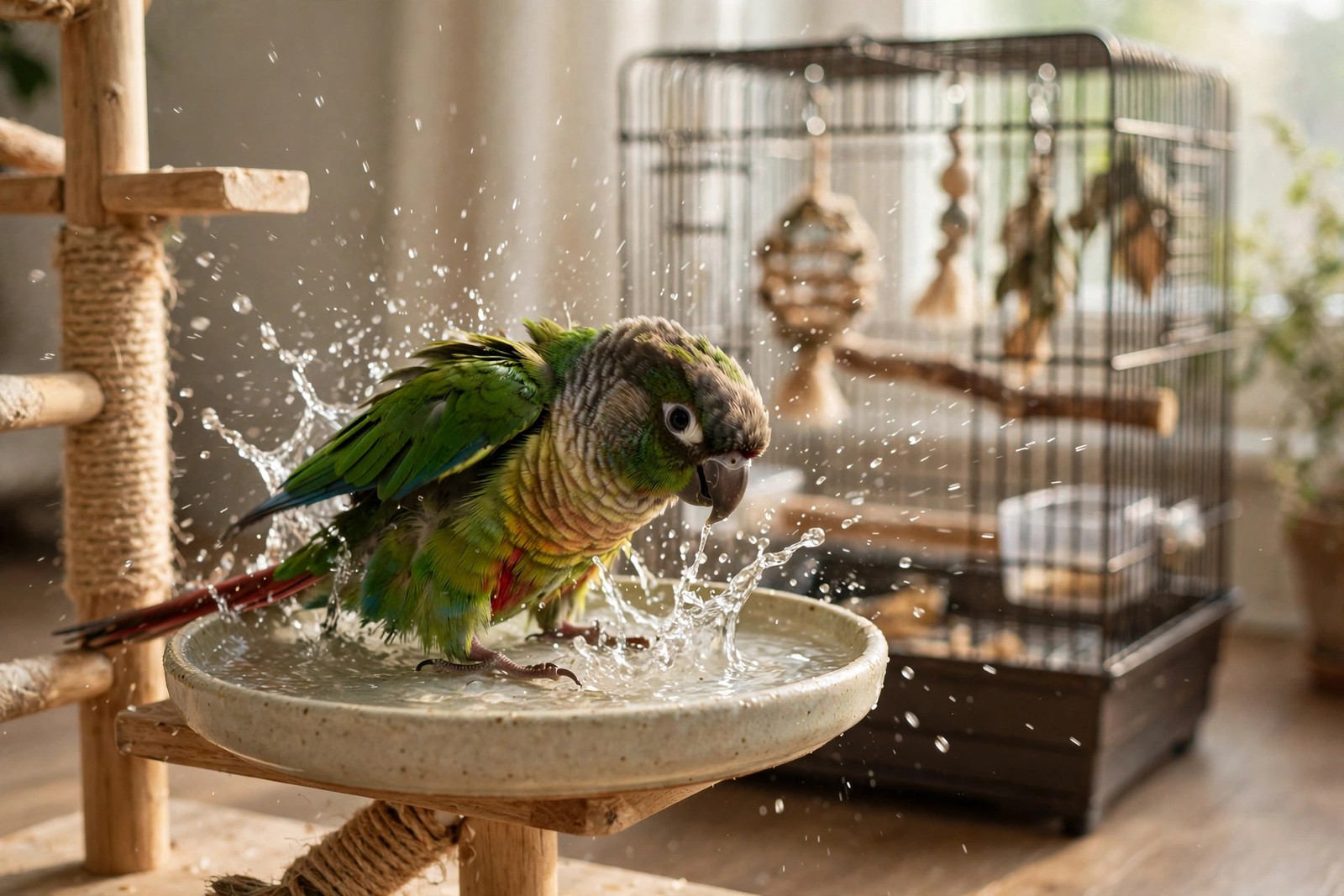
A bird who lunges at the spray bottle, flattens its feathers, or scrambles away is not being stubborn. Direct spray feels like being grabbed by weather, and many birds bathe happily once the water arrives in a form they control. Your job is to offer choices, read the answer honestly, and never turn bathing into a chase.
Start With Water the Bird Chooses
The simplest fix is often a shallow, heavy dish of clean lukewarm water placed on the cage floor or play stand. Many spray-haters step straight into a dish, dip their chest, and flick water over their back with obvious enjoyment, because their feet are planted and they decide how wet to get. A perch fixed at the edge of a shower, well out of the direct stream, works the same way: the bird sits in warm drifting mist and leans in or shuffles away as it pleases. Some birds prefer bathing in wet greens or under a slowly dripping tap. Offer each option on different days and watch which one produces relaxed, fluffed-up bathing instead of escape behaviour.
If You Mist, Make It Rain
When you do use a spray bottle, change the geometry completely. Fill it with plain lukewarm water, set it to the finest mist it makes, and spray upward above the bird so the droplets arc and settle down softly, the way rain does. Never spray at the face, never spray a bird backed into a cage corner, and never keep going to finish the job. Start several feet away, mist the air beside the bird rather than the bird itself, and let curiosity close the distance over days. A bird leaning toward the falling droplets with feathers loosening is consenting; a bird leaning away, slicking its feathers tight, or trying to leave is not, and that answer ends the session.
Build Tolerance Slowly
For a bird who panics at the sight of the bottle, desensitise in stages across one to two weeks. First, leave the bottle sitting in view near the cage during normal, pleasant time and reward the bird for ignoring it. Next, spray a plant or your own hand nearby, then reward again. Only then mist the air above the bird for a few seconds, followed immediately by a favourite treat or a game it loves. Keep each stage until the bird stays relaxed, bathe in the morning so feathers dry fully before the cooler evening, and keep the room warm and free of drafts while the bird is wet. Most birds bathe two or three times a week quite happily; daily forced spraying is neither needed nor kind.
Hygiene and Hard Limits
Use fresh water each time, wash the bottle and bath dish with hot water between uses, and add nothing to the water: no oils, soaps, or feather sprays. Bathing supports feather condition and encourages normal preening, but a bird who suddenly refuses all water, sits fluffed for long periods, or shows discharge around the nostrils needs a vet visit rather than more bathing experiments. KinsLe's Care Teams lets whoever offers the bath each day log which method was tried and how the bird responded, turning a frustrating guessing game into a clear record of what this particular bird actually enjoys.