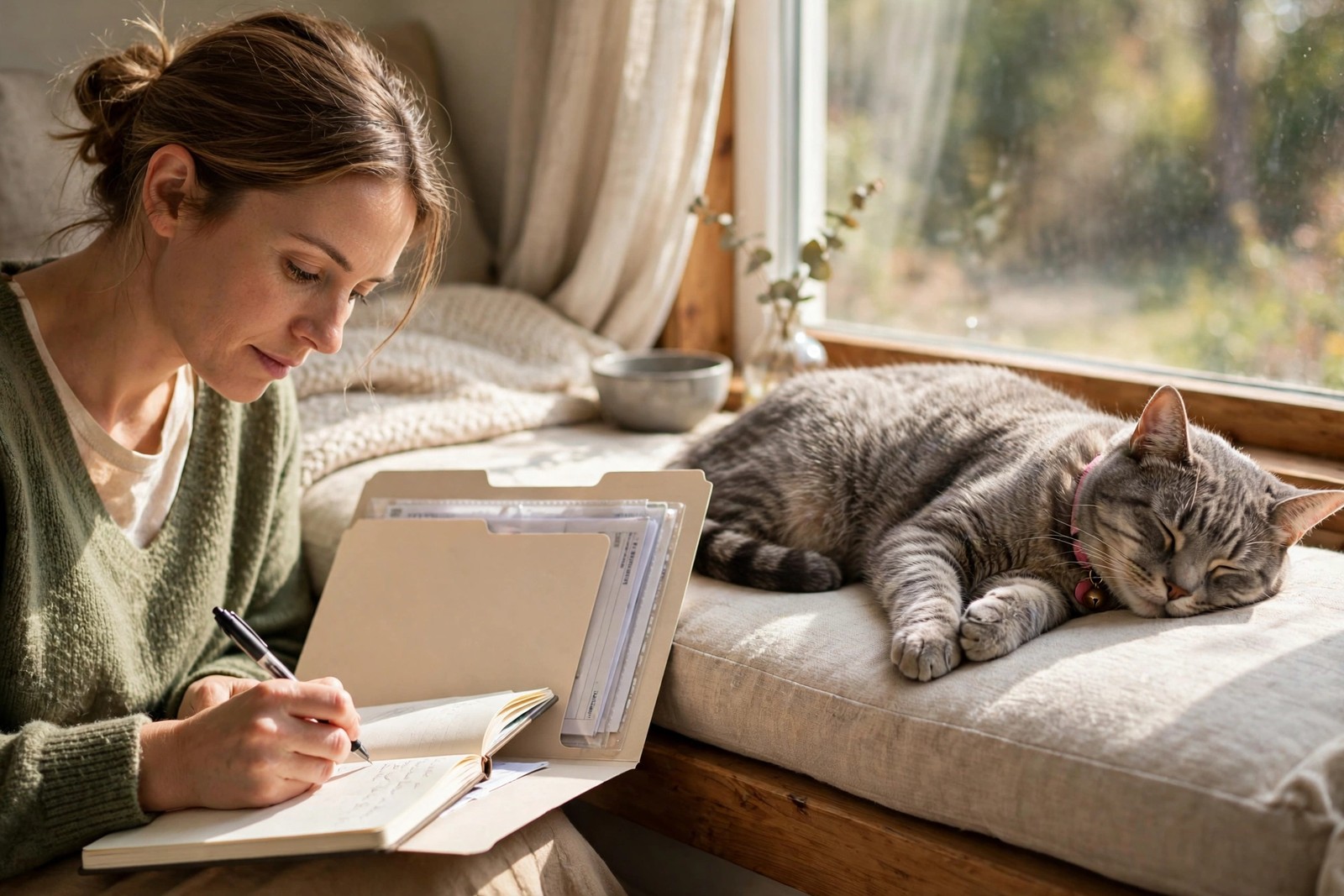
Writing end-of-life wishes while she is still healthy is an act of steadiness, not pessimism. Decisions made on an ordinary day, with time to think and talk, are clearer than decisions made during a crisis night when everyone is tired and frightened. A good document does not try to script her final day in detail. It records how you want to judge her quality of life, who carries which responsibility, what the veterinarian's role will be, and what should happen afterward, so the people who love her are guided by her actual life rather than by panic.
The Quality Markers You Will Watch
Describe the markers her household will watch over time: whether she is eating with interest, whether she rests comfortably, how she moves around her familiar places, whether she still seeks company, play, or a favorite window, and whether her breathing looks easy at rest. Write them as observations tied to her normal self, because her baseline is personal; a cat who was never playful should not be judged by play. This is a framework for noticing change, not a score, a threshold, or a verdict written in advance. Note who sees her daily and how observations get shared, since a slow change is easiest to spot when more than one person compares notes honestly.
Who Decides, Who Is Called, and the Vet's Role
Name the decision maker plainly, plus a backup if that person cannot be reached. List who gets called and in what order: the veterinarian, the named person who may need to come to the home, and anyone who should be told soon after. Bring her veterinarian into this conversation early, at a routine visit, rather than introducing the subject for the first time during an emergency. The vet can explain what they look for as a cat declines, what they can and cannot do at home or at the practice, and how an appointment of this kind is usually arranged. Where she would be, home or practice, should follow that veterinary advice and her own comfort with travel, handling, and unfamiliar rooms.
Aftercare Preferences, Recorded in Plain Language
Record aftercare choices while there is no pressure to choose quickly. Note whether you prefer cremation or burial, knowing that local rules vary and need checking before you rely on a burial plan at home. If cremation is chosen, write whether her ashes should be returned or not, and name any keepsake you want kept, such as a paw print or a small clipping of fur, so nobody has to guess in a hard moment. Add practical details too: who handles transport, who should be contacted about payment arrangements, and anything about her carrier, blanket, or favorite resting place that you want respected.
Where the Document Lives
Pet Passport holds her written wishes inside her records packet, alongside her veterinary history, so the document travels to an appointment instead of sitting forgotten in a drawer. Keep the signed original with her records, place a copy with her veterinarian, and give another copy to the named person who may have to act on it. Tell those people where it is before it is ever needed; a document nobody can find helps no one. Note the names and phone numbers inside it rather than assuming a phone will be charged, unlocked, and nearby when a call has to be made quickly.
Revisiting the Wishes as She Ages
A document written for a healthy middle-aged cat may not fit the elderly cat she becomes. Reread it at least when her health changes in a lasting way, when a decision maker moves away, or when her veterinarian raises a new condition that changes what decline may look like for her. Update names, numbers, and aftercare choices, sign and replace the copies, and make sure older versions are removed so nobody follows superseded wishes. As she grows older, reread the pages kept with the Pet Passport records on KinsLe and change anything that no longer fits her life.