
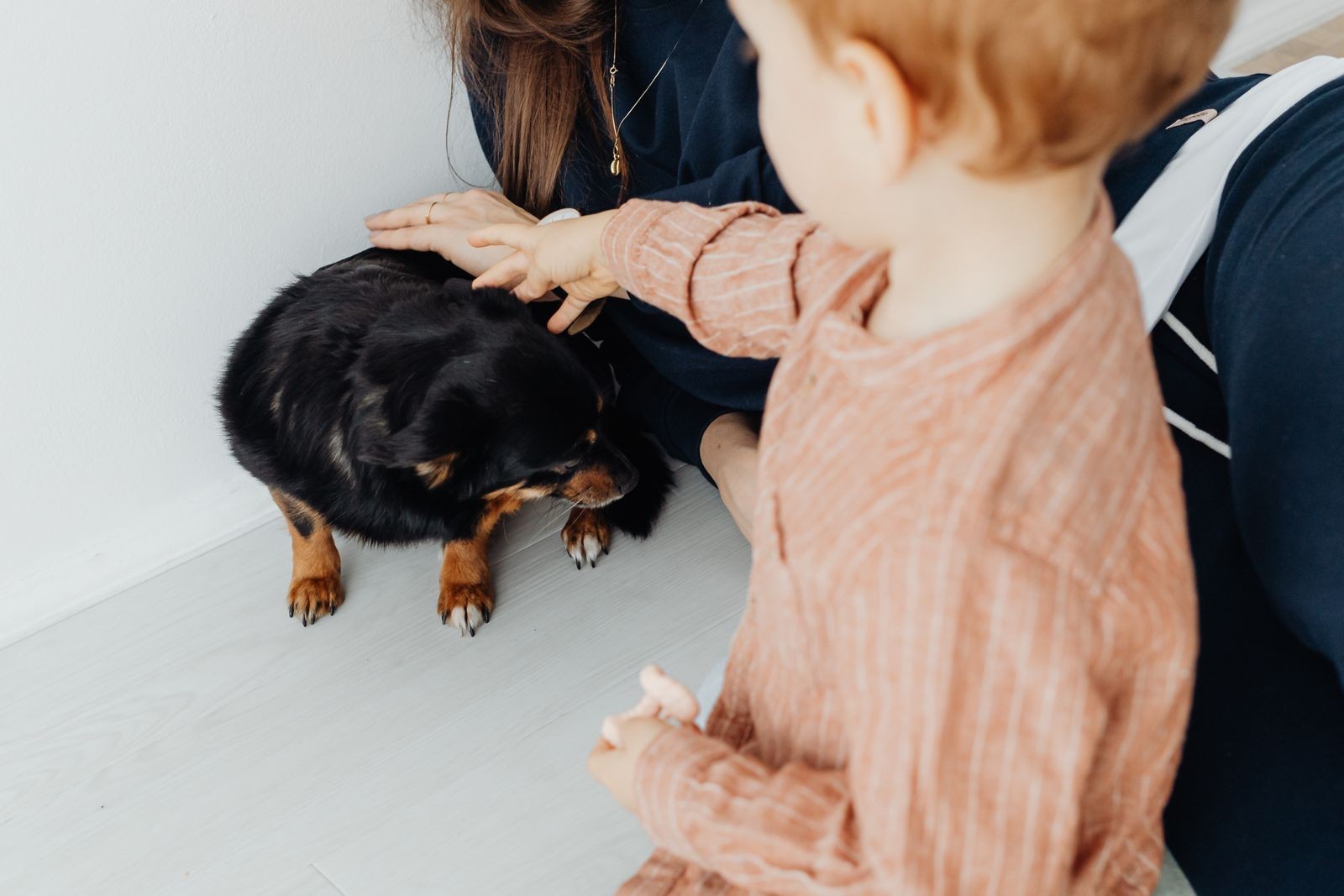
A good match for children starts with temperament: look for a dog who is tolerant and friendly, sized and energised in a way your children can manage, then supervise early meetings closely and teach gentle hands and respect for the dog's space from the start. Breed labels guarantee nothing in either direction. Individual temperament, the dog's history, your children's ages and behavior, and how carefully you manage the relationship matter far more than what is written on a breed chart.
Temperament signs worth looking for
You want a dog who is socially comfortable without being frantic: approaches people willingly, recovers quickly from a surprise noise or a dropped toy, tolerates gentle handling of ears, paws, and tail, and can settle after excitement. At a shelter or breeder, watch how the dog responds to normal, slightly clumsy movement — a child will eventually trip, squeal, and wave a toy around, and a dog who startles hard at small things needs a quieter home.
Be equally honest about red flags: a dog who guards food or toys, shows discomfort being approached while resting, or has a known history of snapping should not be placed with young children, however much you like them. Protecting both sides of that decision is the responsible choice.
Meet together, as a family
Meeting the dog together tells you more than any description. Bring the children who will live with the dog, let them interact under staff guidance, and watch both directions: the dog's body language and your children's instincts. A puppy is not automatically the safer choice — puppies nip with needle teeth, jump, and need months of training, while a steady adult dog with a known history around children is often the calmer introduction to dog ownership.
With a breeder, ask directly about the parents' temperaments and how puppies are raised around household noise and children. With a rescue, ask whether the dog has lived with kids and what ages.
Set the household rules from day one
Even the most tolerant dog needs protection from well-meaning children. Teach and enforce: no hugging around the neck, no climbing or sitting on the dog, no disturbing a sleeping or eating dog, and gentle hands always. Give the dog a child-free retreat — a crate or bed in a quiet spot — and make its sanctity a family rule. Supervision is non-negotiable with young children; most incidents happen in ordinary moments when adults assumed everything was fine.
Start children as helpers, not handlers: filling the water bowl, scattering treats for a "find it" game, and reading the dog's signals — turning away, yawning, moving off — and learning to respect them.
Growing responsibility together
As children mature, their role in the dog's care can grow with them. Adults can hand over age-appropriate responsibilities as that maturity shows — helping with feeding routines, joining walks, and taking a fuller part in looking after the family dog. Done well, choosing a dog for your kids is not just adding a pet; it is giving your children a years-long lesson in empathy and responsibility. Parents keep supervision in place while children take on simple jobs like filling the water bowl, and relatives you select can open the profile once you grant them access through KinsLe Family Sharing.