
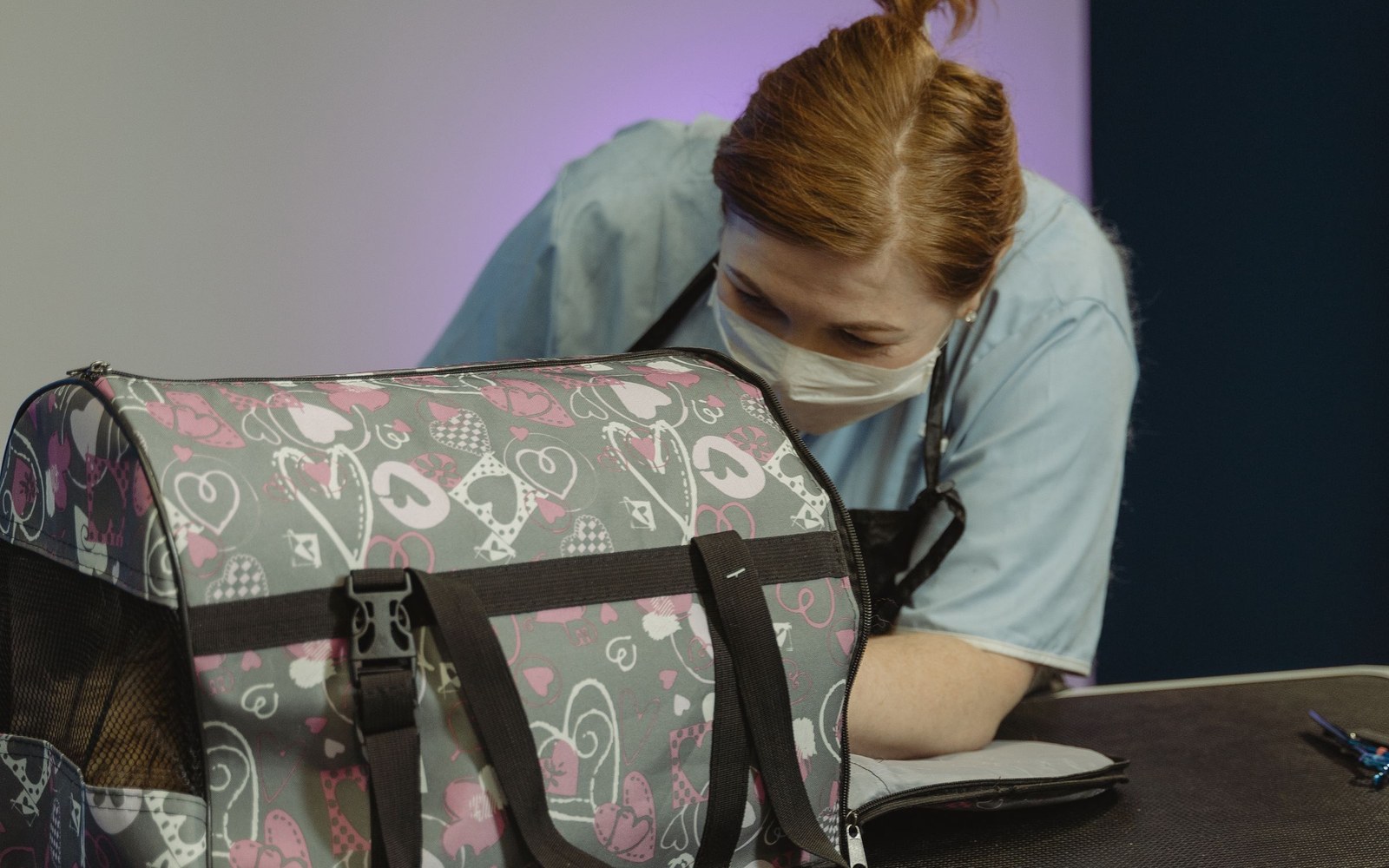
For most owners, the simplest way to prepare your cat for her first vet trip is to keep the morning calm and familiar, use a secure carrier lined with bedding that smells like home, and bring notes about her food, litter habits, and anything unusual you have noticed. A short, unhurried plan beats a last-minute chase around the house every time, and it sets a calmer tone for every visit that follows.
Start With the Carrier, Not the Car
A carrier that only appears on vet day quickly becomes a warning sign. If you have a few days, leave it open in a quiet room with a soft blanket inside and let your cat explore it on her own terms. Drop a treat inside, let her walk in and out, and do not close the door the first time she ventures in. On the day itself, line the carrier with bedding she has already slept on — familiar scent matters more to a cat than a brand-new pad.
Choose a hard-sided, top-opening carrier if you can — it lets the vet lift a nervous cat out gently. Check latches are secure.
What to Do That Morning
Keep your normal routine. Feed a light meal unless your vet asked you to fast her, provide water, and let her use the litter box before you leave.
A few practical steps help:
- Secure the carrier in the car so it does not slide or tip on turns
- Cover the carrier lightly with a towel if outside sights seem to stress her
- Play the radio low or drive in quiet — avoid loud, sudden sounds
- Arrive a few minutes early so you are not rushing through the door
If she meows in the car, that is normal. Talk in a calm, ordinary voice rather than repeatedly reaching in, which can add stress.
What to Bring and What to Ask
Bring a written list rather than relying on memory. Note what she eats, how often she uses the litter box, and any sneezing, hiding, or appetite change. For an adopted cat, bring shelter or previous vet paperwork.
Ask how the clinic handles nervous cats, whether they can examine her in the carrier with the top removed, and what vaccines they recommend for her age and lifestyle. A good clinic will welcome questions without hurrying you.
Safety and Stress Signals to Watch
Never carry your cat loose in the car or through the parking lot — a startled cat can bolt in seconds. Keep the carrier closed until you are in a closed exam room. Watch for panting, drooling, or flattened ears and tell the vet team if you see them. Do not sedate her with leftover medication; if anxiety has been severe, call the clinic beforehand for advice.
Making Records Easy With KinsLe
KinsLe's Pet Passport pulls your cat's vaccines, medications, allergies, and documents into one records packet you can share with vets and sitters, so the second visit starts from organised information instead of scattered papers.
A calm first trip teaches your cat that the carrier and clinic are survivable, even ordinary — and that lesson pays off for years. For that first appointment, hand the clinic the Pet Passport packet on KinsLe with her vaccines, medications, allergies, and prior documents already gathered in one place.