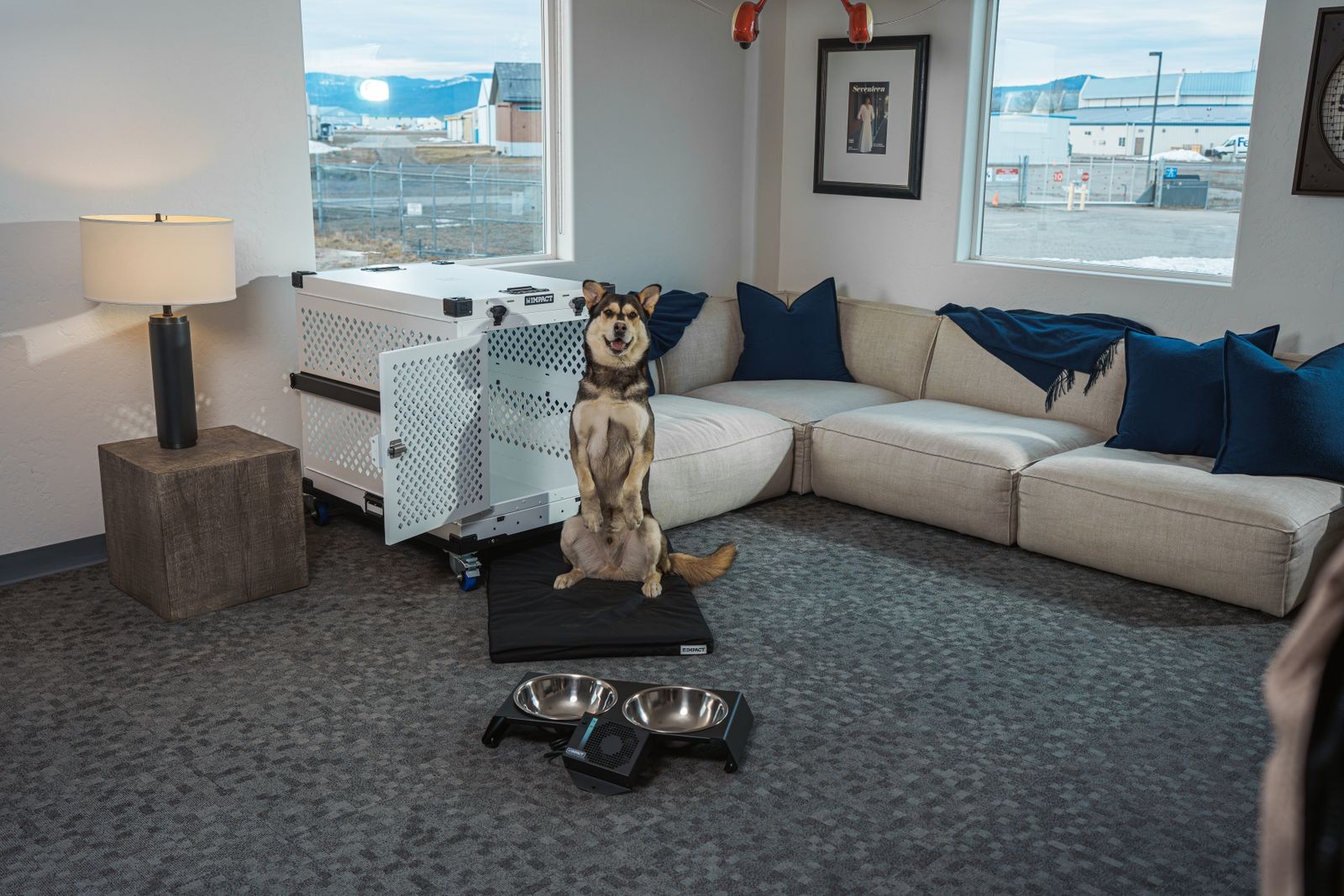
Before your adopted dog walks in, get the basics in place — a bed, bowls and food, collar and lead, toys and cleaning gear — create a quiet resting corner, and clear anything hazardous at dog level. Just as importantly, agree on household rules in advance — where the dog sleeps, who feeds them, which rooms are off-limits — so day one feels calm and consistent rather than improvised. An adopted dog may arrive nervous, overexcited, or exhausted; a ready home lets them simply decompress.
The Essentials, Ready and Waiting
Shop before pickup day so you are not leaving a brand-new dog alone for a supply run. You will need:
- Food — ideally the same food the shelter or foster home has been feeding, to avoid stomach upsets, plus treats for gentle training.
- A well-fitting collar with an ID tag and a sturdy leash; a harness helps nervous dogs who might slip a collar.
- Food and water bowls, a comfortable bed in a quiet corner, and a crate or pen if you plan to use one as a safe den.
- Enzyme cleaner for inevitable accidents, waste bags, and a few durable toys and chews.
Skip the extras for now; you will learn what this particular dog loves within the first week.
Make the Space Safe and Small
Do the dog-level sweep: move cables, chemicals, medications, and small swallowable objects out of reach, fit lids on bins, and check fences and gates for gaps — a stressed new dog can bolt through a space you never noticed. Start with access to one or two rooms rather than the whole house. A smaller territory is easier for a dog to map, less overwhelming, and far simpler for housetraining, even with adult dogs whose history is unknown. Expand the world gradually as they settle.
Plan the First Day and the First Week
Keep arrival day quiet: no visitors, no welcome party, just a garden toilet break, a sniff around their new space, water, and rest. Many adopted dogs sleep deeply for the first day or two — that is normal decompression, not dullness. Build a simple rhythm of toilet breaks, meals, short walks, and long rests, and keep expectations low while trust grows. Some dogs show their true personality only after several weeks, so patience early on pays off enormously. Arrange a first vet visit within the first week or two to register, review records, and set up preventive care.
Agree the Rules Before the Arguments
Consistency is kindness: a dog allowed on the sofa by one person and scolded by another learns only that people are unpredictable. Decide feeding times and who delivers them, walking duties, sleeping arrangements, and which behaviors you will reward from day one — and write it down if that helps everyone remember.
Get Their Profile Ready Early
Preparation is smoother when everyone shares one plan. Decide feeding, walks and settling-in duties as a household, and write the decisions down where everyone can find them on the first evening. Your first pet profile is free, so you can have everything ready ahead of arrival day. Family Sharing on KinsLe is how relatives you name get to open that profile once it is set up.