
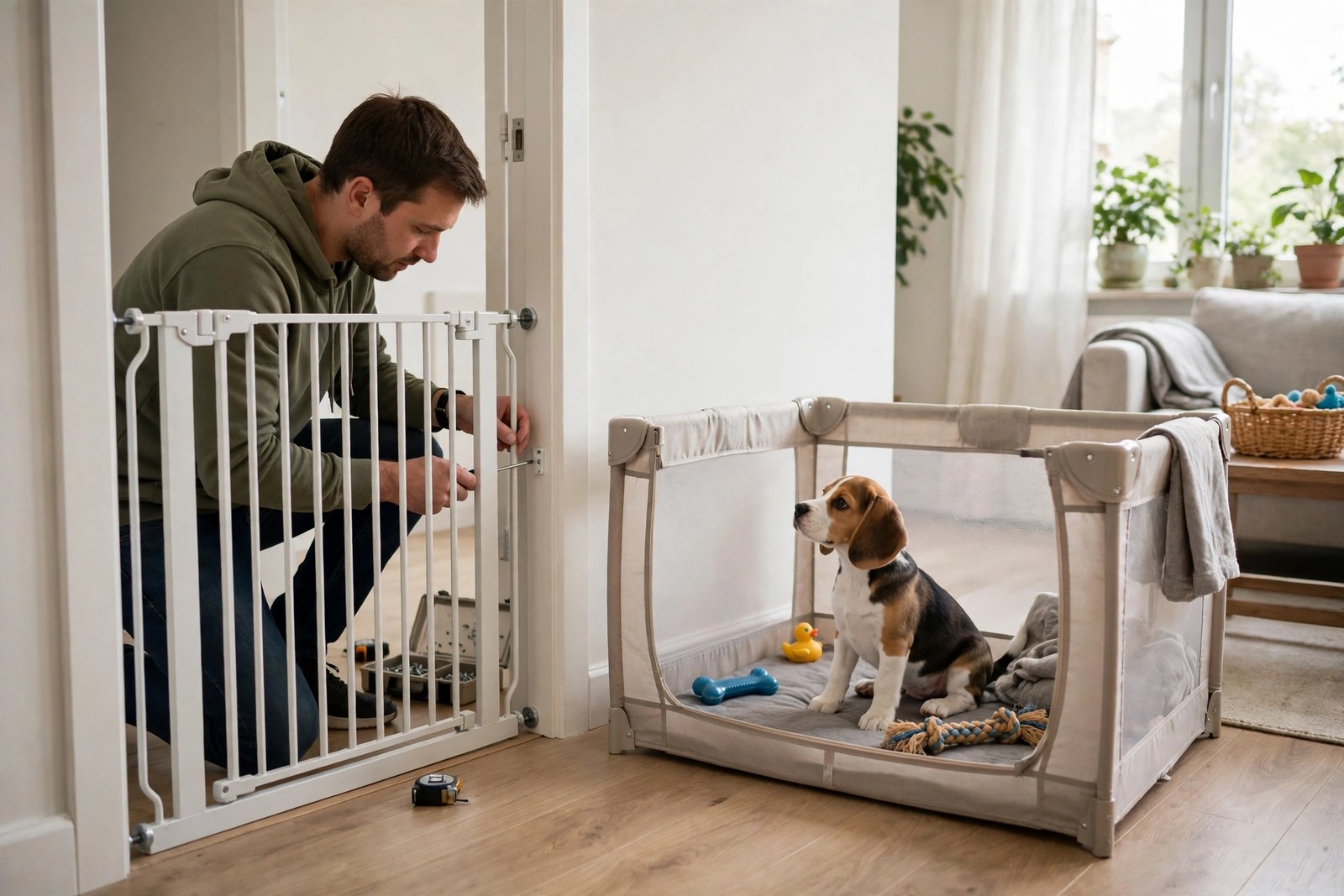
Puppy-proofing means seeing your home the way a curious, teething baby dog does: everything at floor level is either chewable, swallowable, or tippable. Get down on your hands and knees in every room your puppy will access, remove or block anything dangerous, and use baby gates to shrink their world at first. A smaller, safe space is far easier to supervise than a whole house full of lures.
The Floor-Level Sweep
Start with the biggest hazards. Electrical cables are a top risk — bundle them, run them behind furniture, or use cord covers, because a chewing puppy and a live cable are a genuine emergency waiting to happen. Pick up small objects that fit in a mouth: hair ties, socks, children's toys, coins, and batteries, which are especially dangerous if punctured or swallowed. Shoes and remote controls will be chewed if reachable, so closed closets and high shelves become your best friends for the next few months.
Lock Away Poisons and Check Your Plants
Store cleaning products, laundry pods, medications, antifreeze, and rodent or insect baits in latched or high cabinets — laundry pods and antifreeze are particularly lethal in small amounts. Then check your houseplants: lilies, sago palm, philodendron, and several other common plants are toxic to dogs, so move them out of reach or out of the home. Your veterinarian or a reputable pet-poison resource can confirm whether a specific plant is safe. The same sweep applies to the yard and garage, where fertilizers, tools, and chemicals tend to live within puppy reach.
Set Up Zones, Not Just Rules
Gates and a playpen let you create a puppy zone with washable flooring, a crate, water, and approved chew toys, while the rest of the house opens up gradually as housetraining and manners improve. Rotate a few safe chews to keep the zone interesting, and make sure everyone in the household knows what counts as an approved chew versus a contraband sock. Consistent zones also speed up potty training, because puppies naturally avoid soiling a small living space.
Room-by-Room Habits That Stick
Puppy-proofing is partly setup and partly habit. Trash cans get lids or go under the sink — chicken bones and food packaging are constant lures. Toilet lids stay down, especially with cleaning chemicals in the bowl. Laundry baskets move behind closed doors, since swallowed socks are one of the most common reasons puppies end up in emergency surgery. Do a fresh floor-level sweep weekly; puppies grow, learn to stand on hind legs, and suddenly reach shelves that were safe last month.
Keep the Whole Household on the Same Page
A proofed home fails if one person leaves the gate open and another leaves chocolate on the coffee table. KinsLe Messenger works as the per-pet communications hub for your puppy, so the whole household can share the puppy-proofing checklist, flag new hazards, and coordinate care notes in one place instead of scattered texts. When everyone sees the same list, nothing gets missed. Keep hazard updates, gate checks, and care notes for your puppy inside the KinsLe Messenger hub on KinsLe, where each conversation stays tied to that one puppy instead of scattering across household texts.