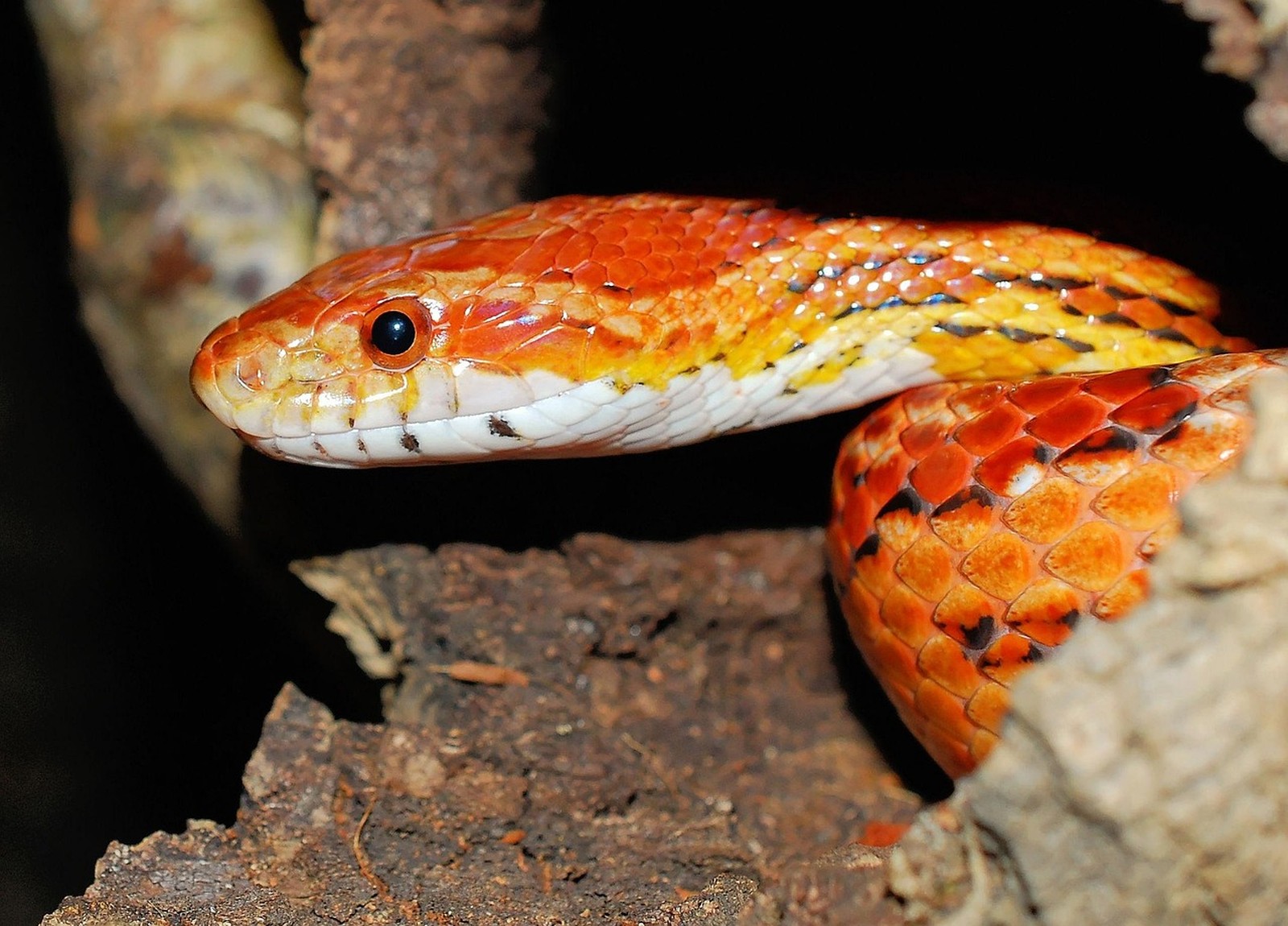
An escaped corn snake is almost never far away. Overnight it will have looked for somewhere warm, dark, and tight against its body, then coiled up to wait out the day. Your job is a slow, systematic search — not a panicked furniture-moving session that drives it deeper into hiding.
Start Where It Escaped
Begin in the enclosure room and close the door, blocking the gap underneath with a towel so the snake cannot slip out while you work. Check the vivarium itself first: under the water bowl, inside hides, buried in substrate, and coiled inside any hollow decor. Then work the perimeter of the room at floor level with a torch, even in daylight. Look behind and under the stand, behind radiators and fridges, inside the warm motor housing area of appliances, along pipe runs, and in the folds of curtains that touch the floor.
Think like a snake: it follows edges and squeezes into gaps roughly its own width. Check shoes, boots, laundry piles, open bags, boxes, and the underside of furniture, lifting cushions and looking into sofa frames. Move each item once, check it fully, and put cleared items into a sealed-off area so you never search the same pile twice or miss that the snake has moved into something you already checked.
Room by Room, Then Seal It
Finish one room completely before opening the next door. Note what you searched and when, because method beats enthusiasm here. Kitchens and bathrooms deserve extra time: behind the washing machine, under the sink around warm pipes, behind the toilet cistern, and inside any cupboard with a pipe hole in its back panel. Check airing cupboards, boiler housings, and the warm space behind a tumble dryer especially carefully.
If the first pass finds nothing, set passive traps rather than tearing the house apart again. Dust a thin line of flour across doorways and along skirting boards in the evening — a smooth S-shaped trail through it tells you a snake passed, and which way the room traffic is moving. Lay crinkly plastic bags along walls in a dark, quiet room; a moving snake at night makes a sound you can hear from the next room. A bottle trap or a hide box placed against a wall, with a warmed frozen-thawed mouse inside and a heat source beside it, gives the snake a reason to come to one warm, food-scented spot and stay there.
Search Again at Night
Corn snakes are most active at dusk and after dark, so repeat your perimeter check in the evening with the house quiet and lights low, torch held low to catch movement and eye shine along the floor. Place a shallow water dish against a wall — a thirsty snake that has been out for days may come to drink. Keep other pets, especially cats and dogs, out of the search rooms entirely until the snake is found.
Recheck the warmest spots every day, even rooms you cleared, because a snake can move between searches at night. Most indoor escapes end within a few days and usually in the same room or the next one along. When you find it, approach calmly, scoop it up supporting its whole body, and return it to a secured enclosure before investigating how it got out — check lid clips, cable holes, and door gaps, because a corn snake will use the same exit again. If there is any sign it reached the outdoors, act the same day rather than waiting, and KinsLe's Lost Pet Alert System lets you send a free alert to nearby members and receive a finder's message directly, while your indoor search continues.