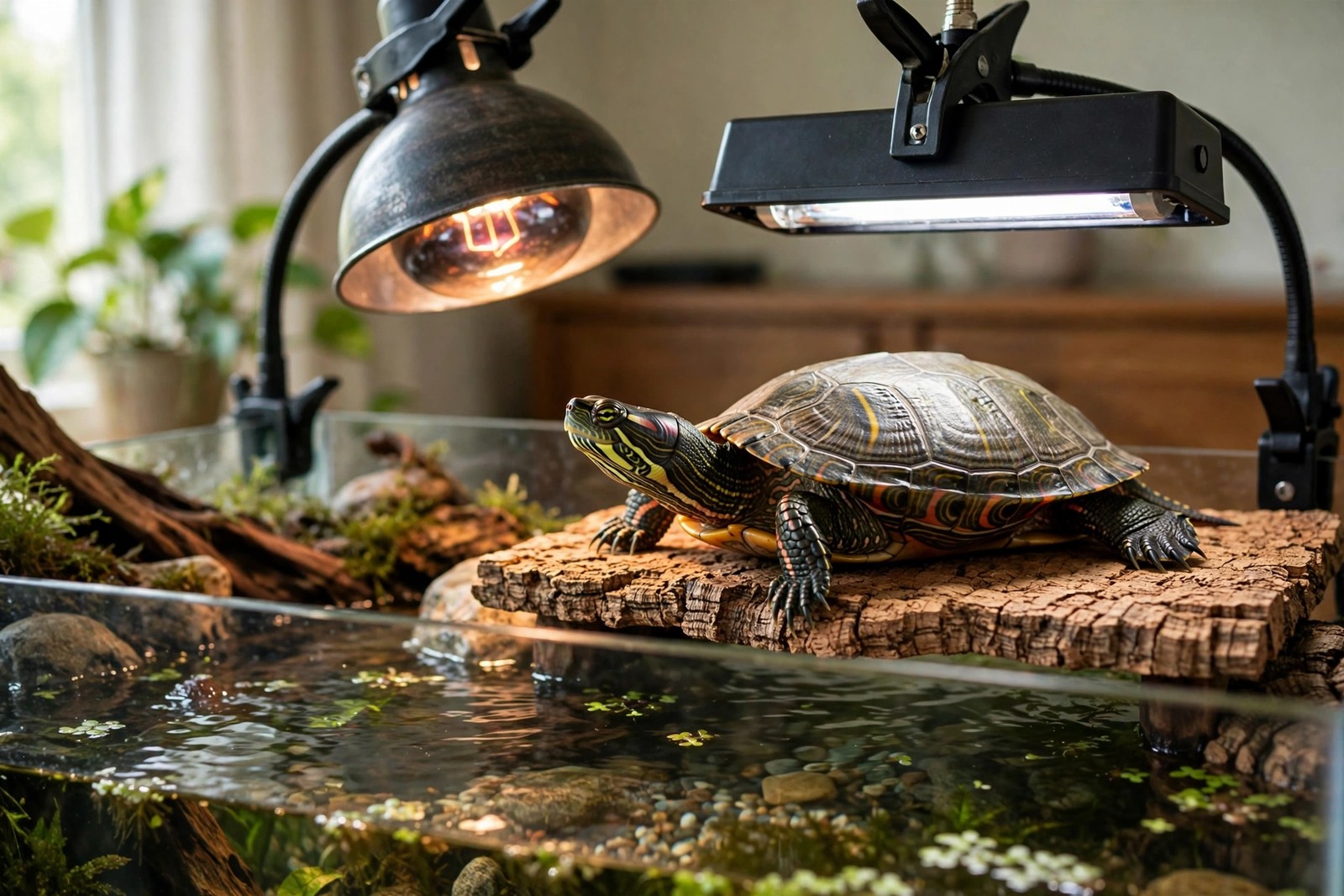
Set up a basking area as a dry, stable platform your turtle can climb onto completely, fully out of the water, with a basking lamp above it creating a warm spot warmer than the water, plus a UVB light over the same area. Your turtle needs to dry its shell fully, warm up, and absorb UVB every day. Replace the UVB bulb on schedule even if it still lights up, because UV output fades long before the bulb burns out.
Choosing and Positioning the Platform
The platform must support your turtle's full weight without tipping, flexing, or trapping toes. Floating docks suit many juveniles and smaller adults, but large, determined sliders can sink or flip lighter docks — fixed platforms, large smooth rocks secured in place, or purpose-built above-tank basking areas may work better as turtles grow. The ramp should be grippable and gentle enough that your turtle can haul out easily, including after a growth spurt.
Your turtle should be able to get its entire body, including the underside of the shell, out of the water. A platform that leaves the plastron sitting in a puddle defeats much of the purpose. Check the fit regularly; a dock that was generous for a hatchling becomes cramped surprisingly quickly.
Heat and UVB: Two Different Jobs
The basking lamp provides heat. Aim for a basking surface noticeably warmer than the water — most keepers verify this with a thermometer or temperature gun on the platform itself rather than guessing from air temperature. Position the lamp so your turtle can warm up but also move to a slightly cooler edge of the platform if it wants less heat.
The UVB light does a different job: it allows your turtle to process calcium properly for shell and bone health. It must shine directly over the basking area without glass or plastic between bulb and turtle, since those block UVB. Follow the bulb maker's distance guidance and replacement schedule — many bulbs need changing around every six months, even while still glowing. Keep the two lights on a consistent daytime schedule, typically with a timer, so your turtle gets a reliable day-night rhythm.
Safety Checks Most Owners Miss
Secure lamp fixtures so they cannot fall into the water, and keep cords out of climbing reach. Use a guard where needed and never rest a hot lamp directly on a plastic rim. Check platform stability after every deep clean, when you have moved rocks or decor. Watch your turtle use the area: repeated failed climbing attempts mean the ramp angle, water level, or platform size needs adjusting now, not at the next clean.
Partial drying is a subtle problem — a turtle that basks with one side always hanging off may simply have outgrown the spot. Filmed from above for a minute, you will see fit problems you miss from the side.
Timing Bulb Changes and Checks With Kinny
The most common basking failure is an old UVB bulb that still looks fine. Kinny, KinsLe's built-in AI assistant, can nudge you when it is time to check basking temperatures and replace that UVB bulb, and remind you to re-measure the platform as your turtle grows. Those small nudges protect shell health quietly in the background. Kinny can field follow-up questions you ask through KinsLe about platform fit or fading UVB output, drawing each reply from the library behind KinsLe Answers.