
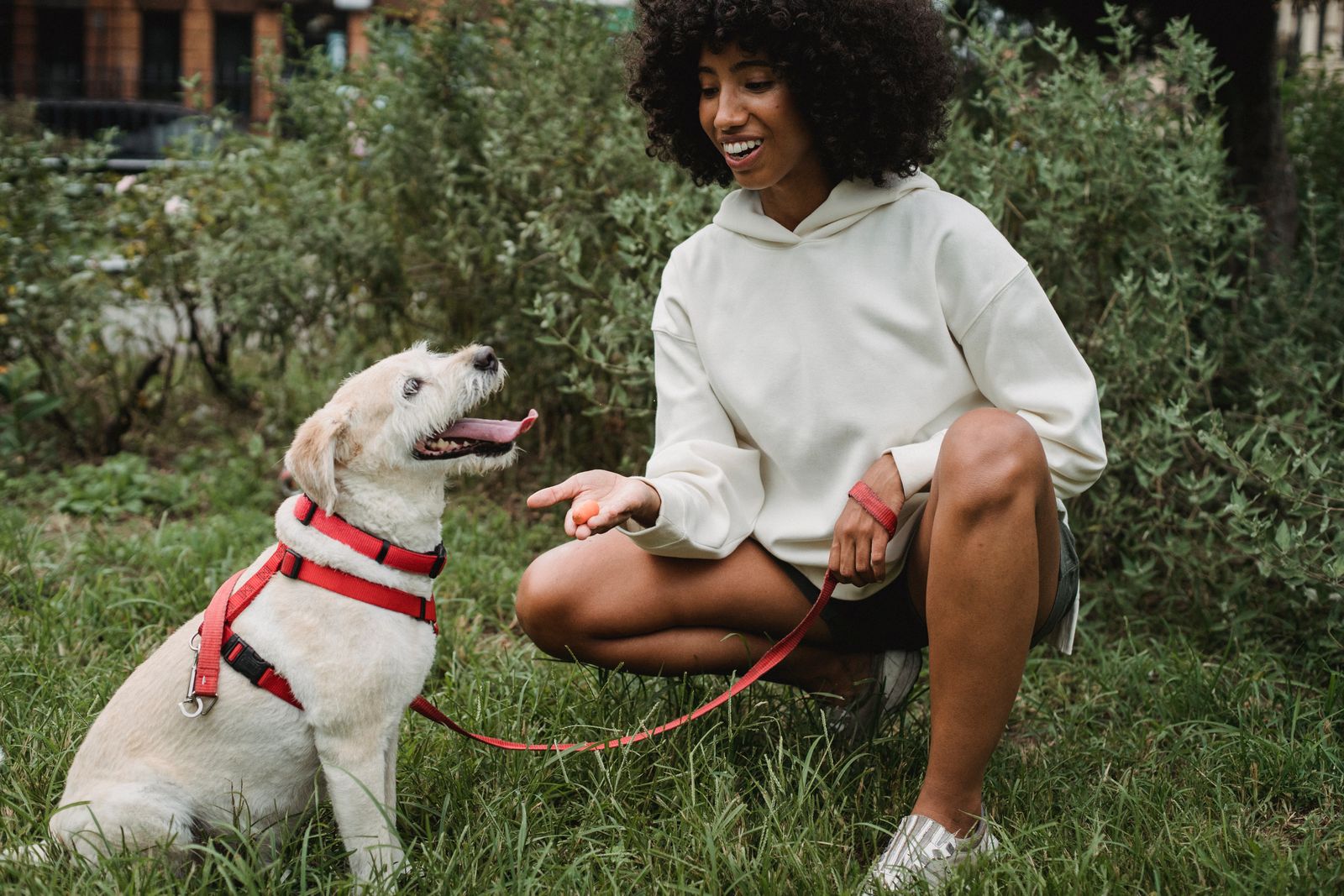
Start house training by taking your puppy out first thing in the morning, after every meal, nap, and play session, and last thing at night — always to the same outdoor spot — and praising and rewarding them the moment they finish outside. Timing and repetition do the teaching. Expect accidents along the way, clean them properly, and never punish: consistency teaches far faster than scolding a puppy who simply could not hold it or did not yet understand.
The schedule that does the heavy lifting
Young puppies have small bladders and little warning before they need to go. A workable starting rhythm looks like this:
- Straight outside on waking — carry very young puppies so they make it
- After each meal, usually within 5 to 30 minutes
- After naps, play sessions, and any excited visitor moments
- Every one to two hours in between while your puppy is awake
- Last thing before bed, plus overnight trips for young puppies when they stir
Use a leash, go to the same patch, and use a simple cue phrase like "go toilet" quietly as they start. Reward outdoors, within seconds of finishing — a treat brought back inside ten minutes later teaches nothing about toileting. Over weeks, trips space out as bladder control and understanding grow, but progress is rarely a straight line; a great week followed by two accidents usually means growth and excitement, not rebellion.
Reading the signs and preventing accidents
Learn your puppy's tells: sudden sniffing and circling, wandering away from play, squatting, or heading for a previously used spot. Scoop them up mid-signal and head outside without drama. Between trips, supervise actively or use a crate or playpen — a puppy with free run of the house will quietly toilet in a far corner and learn that indoor spots are acceptable.
If you catch an accident in progress, a calm "outside" and a trip out is enough. If you find it later, just clean it. Rubbing noses in messes or shouting only teaches your puppy to hide from you, often in harder-to-find places. Clean with an enzyme cleaner made for pet messes so scent markers that invite a repeat are actually removed.
Nights, weather, and real life
Most young puppies cannot last the whole night at first. Keep the crate near you so you hear stirring, and keep nighttime trips brief and boring. Rain and cold put some puppies off — go out with them, umbrella and all, reward generously, and consider a covered or sheltered spot. Apartment owners without a garden need an even tighter schedule and a plan for the nearest appropriate outdoor area, used from day one rather than indoor pads, if the end goal is outdoor toileting.
Track what is working in a simple log for the first couple of weeks: times of meals, successful trips, and accidents. Patterns appear fast — many owners discover their puppy reliably needs to go 15 minutes after breakfast, which turns guesswork into a routine.
Sharing the potty-break load
With KinsLe's Care Teams, potty-break duties can be assigned to family members and marked complete with timestamps, alongside feeding, walks, meds, and grooming. That log shows who took the puppy out last and when, so no one assumes someone else did the 6 a.m. trip — and your puppy gets the consistency that makes house training click.
Care Teams on KinsLe keep the next outdoor trip from being missed, because the last completed break sits in the log with its time beside a family member's name.