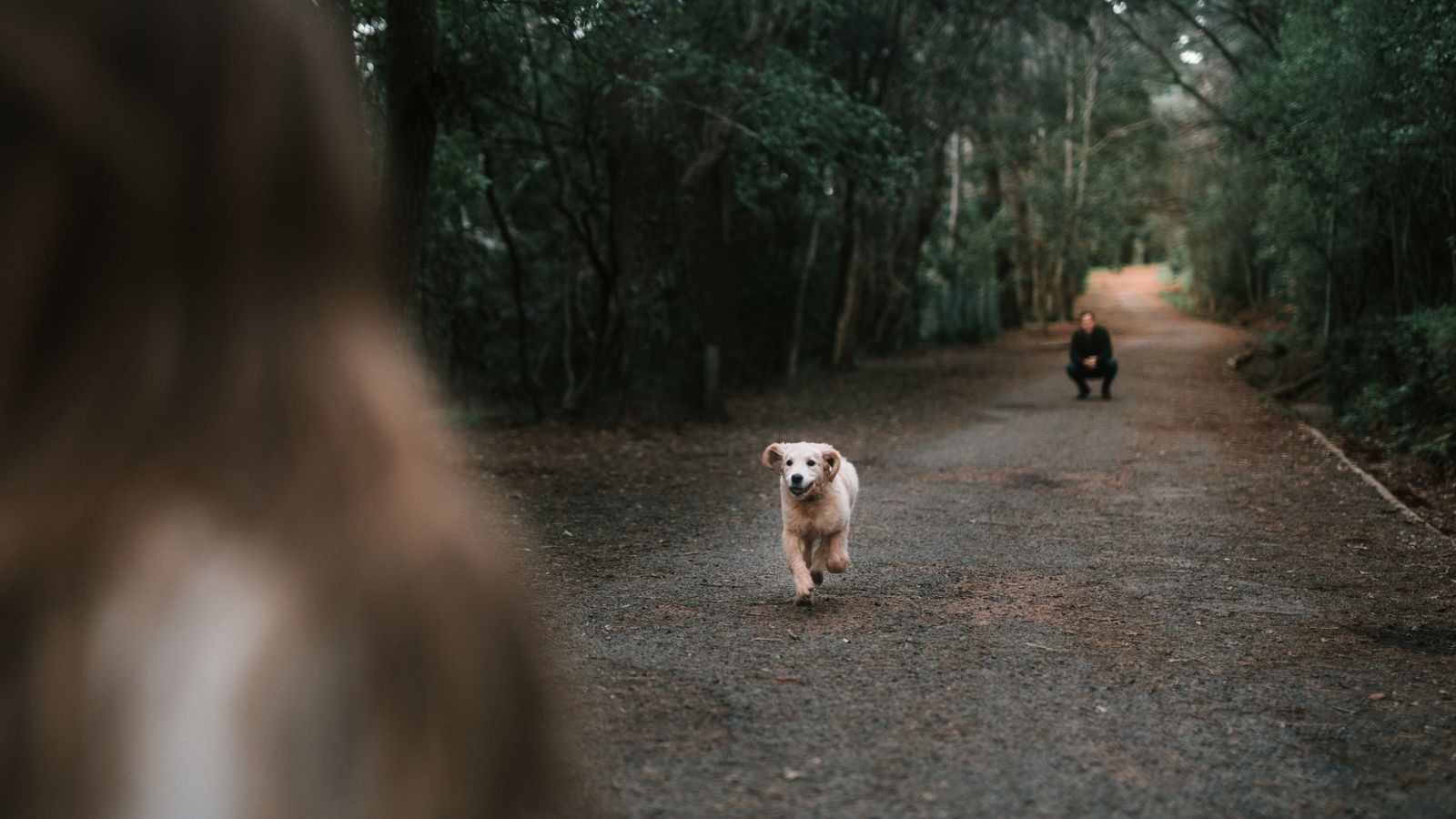
A reliable recall starts indoors, not at the park: pick one cheerful cue, say it once, take a small step back, and pay your dog generously the moment he arrives. Keep those first sessions under five minutes, use something genuinely exciting like tiny pieces of chicken or cheese, and end while he still wants more. If your dog learns that coming to you always pays better than whatever he was sniffing, you have the foundation everything else is built on.
Choose a cue worth listening to
Pick a word or a whistle pattern you have not already worn out. If "come" has been repeated twenty times at the dog park while your dog ignored it, that word is background noise now, so start fresh with "here" or a distinct whistle. Say the cue in the same bright tone every time, and never use it for anything your dog dislikes — no calling him in to end play, trim nails, or give a bath right after. The cue should predict the best part of his day. Delivery matters as much as the word. Crouch slightly, turn sideways, and sound like a celebration, not a drill sergeant. Puppies and soft-tempered dogs respond especially well to playful movement: jog backward a few steps as he approaches so chasing you becomes part of the game.
Build the game at home first
Start in one quiet room with no competing distractions. Call your dog from a few feet away, reward, release him back to what he was doing, and repeat. Then turn it into a household game:
- Two or three family members stand in different rooms and take turns calling him. - Whoever he runs to throws a small party — praise, a high-value treat, a quick tug game. - Hide-and-seek rounds, where you call him from an easy hiding spot, make searching for you thrilling. Only increase the challenge when he is succeeding almost every time at the current level. Move from room to room, then to the yard on a long line, then to quiet outdoor spaces. Rushing this ladder is the single most common reason recalls fall apart outside.
Add distance and distractions gradually
Think of distractions in levels. A leaf blowing by is level one; another dog playing across a field is level ten. Work through the middle levels slowly — a friend walking past at a distance, a ball sitting still on the ground, a squirrel he has already noticed but is not yet chasing. If he fails twice at a new level, you have climbed too fast; drop back to the last level where he was brilliant and rebuild. Always keep a long line on him in unfenced areas during training. The line is not a leash to drag him in with — it is insurance that he cannot rehearse ignoring you, which is a habit that gets stronger every time it works.
Keep recall rewarding for life
Even after your dog is reliable, keep paying him sometimes. Intermittent jackpots — a whole handful of treats, his favorite game — keep the cue powerful. Practice in boring moments too, not only when you need him, so the cue stays associated with good things rather than the end of fun.
A little help staying consistent
Frequent short sessions beat a single long one each week. Build those tiny reps into moments that already happen — call him in from the garden before dinner, call him across the room during an advert break, call him to you on a quiet stretch of every walk and pay him well — so recall practice happens daily without needing a special training slot in the diary. When you want a fresh game or a way through a level where she has stalled, put a follow-up question to KinsLe's Kimmy; she answers using the KinsLe Answers library.