
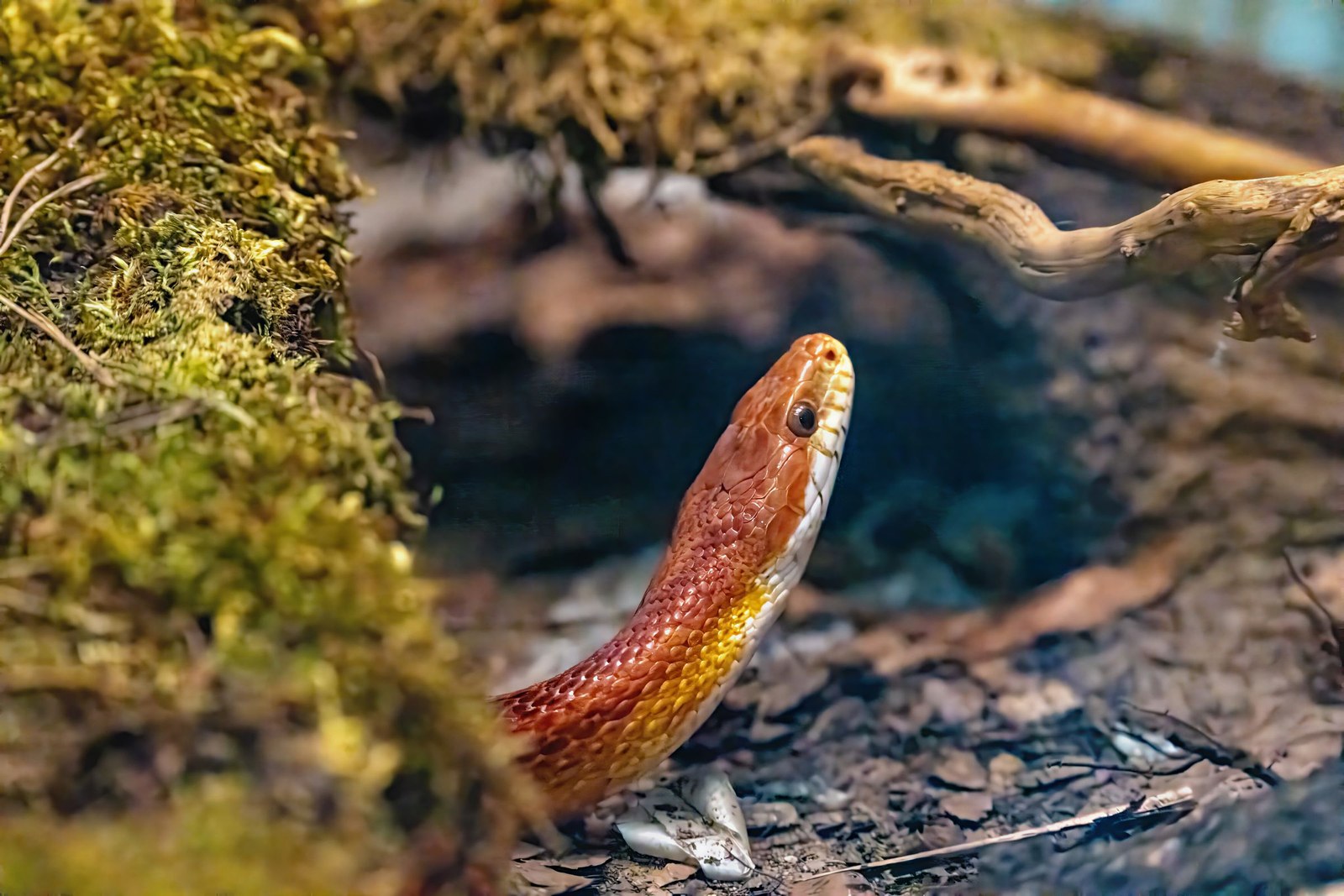
Think like the animal inside the enclosure: if a seam lifts, a corner flexes or a hole sits unplugged, a corn snake will find it and push through. That is why escape-proofing starts with a lid that locks properly, doors that meet flush, and a quick inspection of every join and opening before the snake goes back in. Get those basics right, and then make closing up securely an unbreakable habit, every time, for everyone in the household.
Know how escapes actually happen
Most escapes trace back to a short list of culprits. Clip lids that were only clipped on one side. Sliding doors left a fraction open after feeding. A thermostat probe cable creating a wedge gap in the corner. A decorative branch tall enough to let the snake push directly against the lid seam. And the classic: a lid held down with books or a heavy object instead of real locks. Weights fail because a pushing snake works like a slow hydraulic jack, and a lid that lifts a few millimeters at one corner is already open.
Walk around your enclosure and look at it the way a snake would, at snake height, checking corners, vents, and anywhere two panels meet.
Hardware that actually holds
Choose screen lids with proper locking clips on both ends, or front-opening enclosures with latches and, for extra peace of mind, a small lock on sliding doors. Fill cable and probe gaps with the grommets supplied, or with a dab of aquarium-safe silicone once equipment is positioned. If you use a tub setup, the latching handles should snap firmly and the lid should not flex upward in the middle when you press it.
Juveniles need extra scrutiny. A hatchling corn snake can pass through gaps an adult cannot, so the enclosure that safely housed a yearling may not suit a baby. Match gap size to the smallest snake, every time.
Habits that close the last loophole
Latch immediately after feeding, handling, or spot-cleaning, before you turn away, not after you put the tongs down. Do a two-second visual check of both latches as the final step of every interaction, the way you would check a front door. When you take your snake out, close the empty enclosure too, so the habit never breaks. Keep a simple rule for the whole household: nobody walks away from an open snake tank, ever.
If children handle the snake, supervise and make the latch check a shared ritual rather than a scolding point.
If the worst happens anyway
Search close and low first: behind the enclosure, inside warm appliances' surroundings from a safe distance, along baseboards, and inside shoes and laundry piles. Escaped corn snakes usually stay nearby and move at night. Tell neighbors if there is any chance it left your home, and stay calm, as corn snakes are harmless and usually recovered within days.
A safety net beyond your front door
Even careful keepers can have a latch fail, which is why a backup plan matters. On KinsLe, the Lost Pet Alert System costs nothing in any profile: the missing pet's alert appears on the map, and whoever finds the animal can contact the owner directly through that profile. For a snake, that visibility, paired with your pet's unique QR ID profile, gives a neighbour a fast way to reach you instead of guessing whose snake it is. If that latch check ever comes too late and your snake is truly missing, KinsLe keeps its Lost Pet Alert System listing visible so the person who finds it can contact you directly.