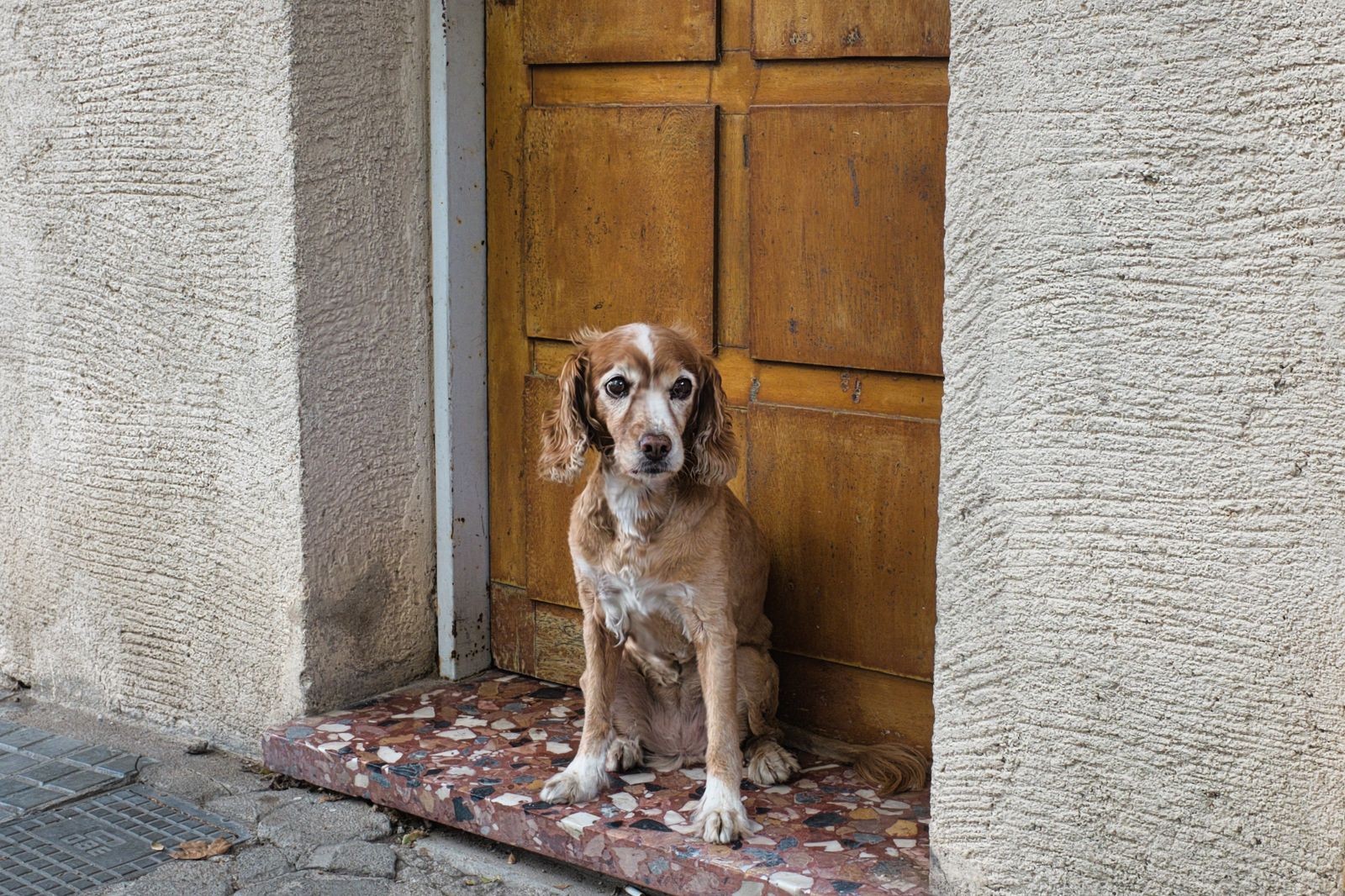
You stop doorbell barking by teaching a replacement routine: when the bell rings, your dog goes to a mat or bed, stays there, and gets rewarded for calm behavior. You build it gradually, starting with recorded doorbell sounds at low volume, long before a real visitor tests it. Your dog can still notice the bell — the goal is a few alert barks traded for a job he knows how to do.
Why the Doorbell Hits So Hard
The bell is loud, sudden, and almost always predicts the most exciting event of the day: a person arriving. Dogs also read our behavior — we jump up, move fast, and raise our voices — which confirms that something big is happening. For delivery-obsessed dogs, the pattern is even better: bark furiously, and the stranger leaves a package and disappears. Every delivery rehearses the habit for free.
Build the Mat Routine Step by Step
- Choose a mat or bed a little distance from the door, where your dog can see arrivals without blocking them.
- With no bell at all, reward your dog generously for going to the mat and settling there, until he offers it eagerly.
- Play a recorded doorbell or knock at very low volume. Reward your dog for staying on the mat; if he erupts, lower the volume next time.
- Raise the volume gradually over several short sessions, always paying calm mat behavior well.
- Add a helper ringing the real bell, then opening the door, then a familiar friend walking in — one new difficulty at a time.
Keep sessions to a few minutes and end on a success. Use genuinely good treats for this one — cheese or chicken, if your dog's stomach tolerates them — because you are competing with a very exciting event.
Managing Real Visitors While You Train
Training collapses if real life keeps staging the full performance. While you practice, put a note on the door asking visitors to text instead of ringing, use a parcel box for deliveries, and, when guests do arrive, leash your dog or settle him behind a gate with a chew before you open the door. Greet people calmly yourself; a loud, excited welcome at the door teaches your dog the party starts there.
Safety at the Front Door
A door routine also prevents escapes and scuffles. Teach children in the house never to open the door while the dog is loose and rehearsing, keep the mat far enough back that your dog cannot lunge at a visitor's ankles, and if your dog has ever snapped at or bitten someone entering, skip the DIY route and work with a qualified trainer and your veterinarian — safety comes before manners.
One Routine for the Whole Household
Doorbell training fails when Dad rewards the mat, a teenager lets the dog charge, and a house-sitter has never heard of the plan. KinsLe Care Teams help because everyone who cares for your dog can follow the same assigned routine and mark tasks complete with a timestamp — the practice session happened, the visitor protocol is shared, and your dog hears one consistent story at the door.
Care Teams on KinsLe keep that mat routine assigned and visible, so whoever answers the door follows the written practice plan and marks each session done.