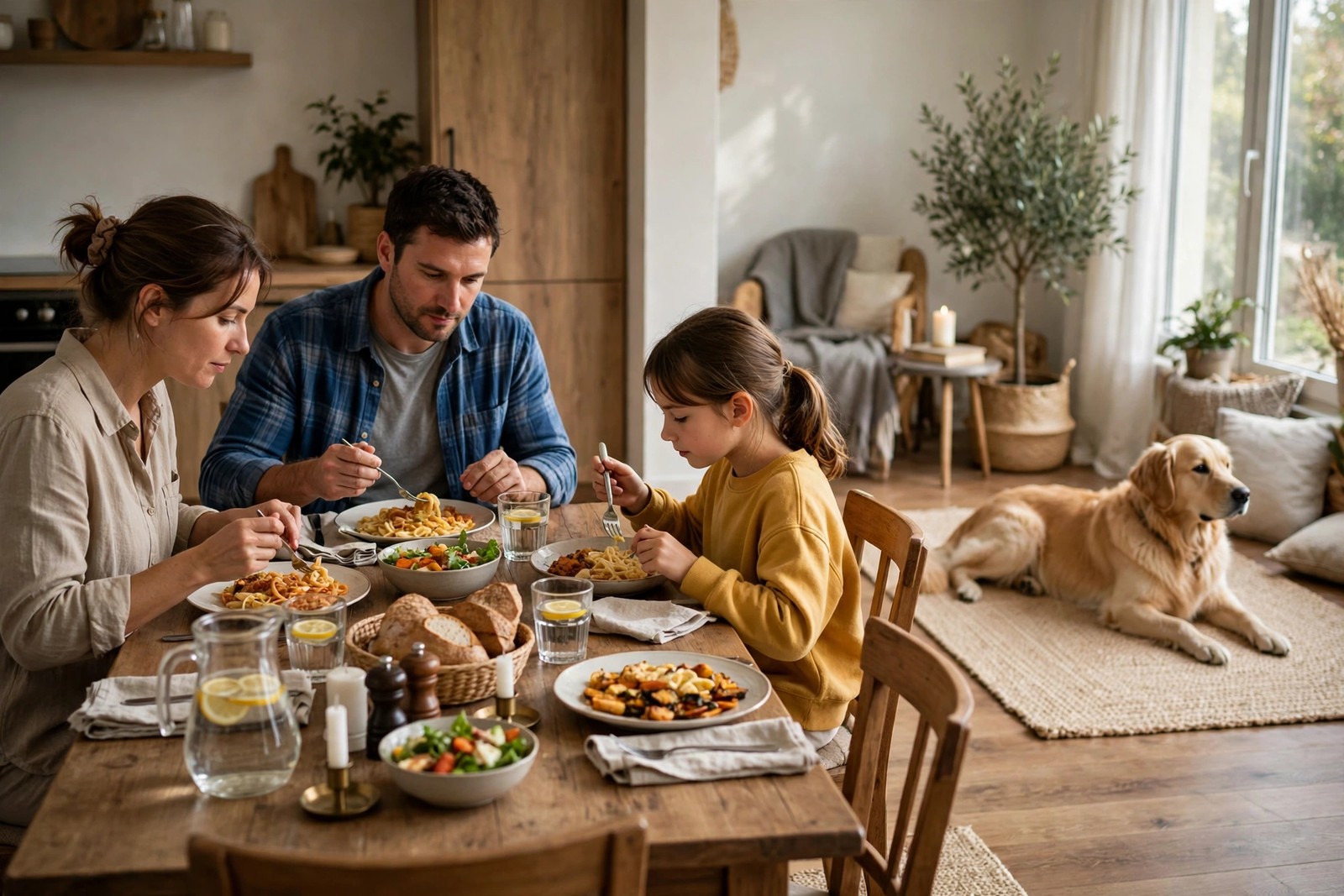
A begging dog runs a simple calculation. Staring, pawing, and whining beside the table have produced food before, and intermittent rewards make a behaviour unusually persistent. A dog who wins a scrap on one evening in five will keep trying for months, because the occasional payout teaches persistence rather than failure. Retraining therefore starts with the people. Every diner must follow the same rule, every meal, until the dog recalculates.
Close Every Route to a Reward
The rule covers more than food passed from a fork at the table. Scraps offered while plates get scraped, a crust handed over during washing up, and food given from the sofa after dinner all teach the same lesson. Children and visiting grandparents carry the highest relapse risk, and a cheerful briefing before the meal works better than a correction during it. Explain that the dog receives plenty of food at set times and that table food undermines both training and waistline.
Eye contact and conversation also reward a begging dog. Acknowledge the dog before the meal, settle the dog deliberately, and then let the mealtime pass without commentary aimed at the dog. Attention returns when the dog lies quietly, and the timing teaches exactly which behaviour earns notice.
Feed First and Settle With a Purpose
Serve the dog a measured meal shortly before the family sits down. A dog who has just eaten brings less urgency to the performance, and the full stomach supports the settle you ask for next. Place a familiar bed or mat in a consistent spot within sight of the table but not beside a chair, and cue the dog to settle there as plates arrive.
Give the settled dog a job that lasts. A permitted chew, a stuffed food toy, or a lick mat drawn from the daily ration occupies the dog through the main course. Rotate the options so the mealtime item stays interesting, and lift any unfinished item away when the family meal ends. The dog learns that the dining room predicts a specific activity in a specific place rather than open-ended lobbying.
Weather the Flare and Protect the Wins
Begging often intensifies briefly when rewards stop, a pattern trainers call an extinction burst. The dog tries the old behaviour harder, adds barking, or moves between chairs with fresh urgency. This flare signals that the dog noticed the change, and feeding during the flare would teach the dog that escalation works. Hold the rule calmly for several evenings and the intensity usually drops sharply.
Physical management helps during the hardest week. A baby gate or a closed door keeps a persistent dog out of the dining room while the new habit forms, and distance prevents weak moments at the table. Reintroduce the settle spot once the dog can rest calmly nearby during a quiet practice meal, then build back up to full family dinners with guests.
Reward the behaviour you want at the right moment. When the dog chooses the bed and lies down without prompting, mark that choice after the meal with praise and a treat from the allowance. Timing the reward after the meal keeps the table itself neutral, and the dog connects calm settling with good outcomes rather than connecting staring with scraps.
Extend the rule beyond the dining table. The same dog often begs in the kitchen during cooking, beside picnic blankets, and around café tables. One consistent principle travels well: food for the dog arrives in the bowl, in the settle spot, or as a training reward, and food never arrives from a human plate anywhere.
Families hold the line better when the rule lives in writing rather than in one person's memory, and KinsLe Care Teams stores that mealtime rule alongside the dog's feeding duties for everyone to follow.