
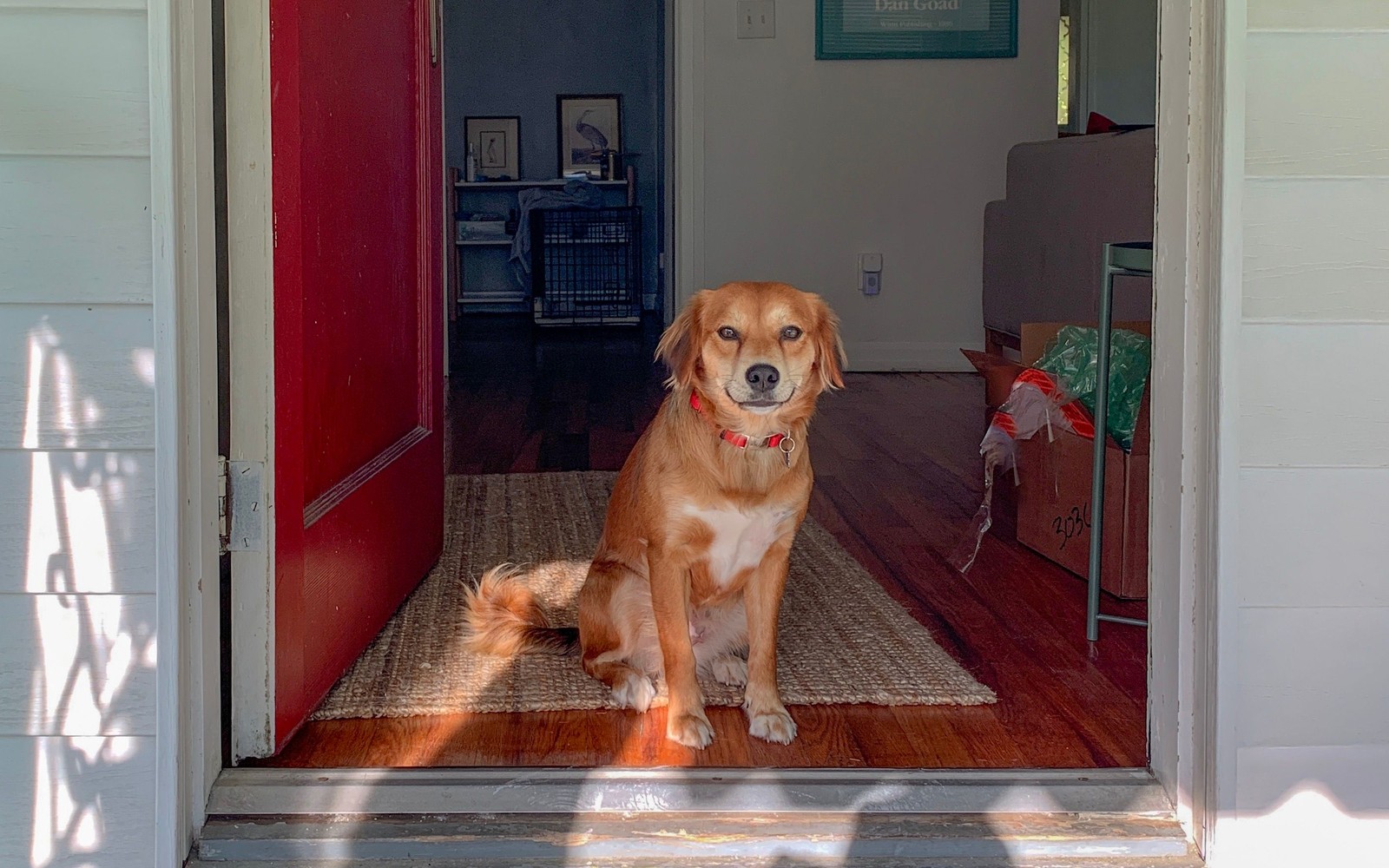
You stop jumping up by removing its reward and paying generously for the alternative. Jumping persists because it works: the dog gets hands, voices, eye contact, and excitement, even when that attention is pushing him off and scolding. So set a simple new rule — greetings and treats arrive only while all four paws stay down or your dog is sitting, and people turn away calmly the moment he leaves the ground.
Why Dogs Jump in the First Place
Jumping is friendly behavior. Dogs greet each other face to face, and a human face is inconveniently high, so a dog who wants to say hello properly, by his own etiquette, goes up. Puppies are almost always rewarded for it — who resists a puppy standing up for a fuss? — and then the same dog weighs thirty kilos and the habit stops being cute. Understanding that it is enthusiasm, not defiance, helps everyone stay patient.
Teach the Incompatible Behavior
A dog cannot jump and sit at the same time, so make sitting the gateway to everything good at greetings.
- Practice with family first, not real guests. As someone approaches, ask for a sit before they get close.
- The approaching person stops if your dog bounces, and only continues when he sits or stands with all four paws down.
- Reward on the floor — treats delivered low, or scattered at his feet, keep his focus down instead of up.
- Let the greeting itself be the prize: calm petting and praise happen only while paws stay down, and pause the moment they leave the floor.
Keep early greetings on a leash or behind a baby gate if your dog is large, strong, or wildly enthusiastic, so he can succeed instead of rehearsing the jump.
Brief Your Guests Like Teammates
The training is only half the system; the other half is human behavior. Ask visitors to ignore the dog until he settles, avoid high-pitched greetings and looming over him with outstretched hands, and never knee him in the chest or squeeze his paws — those old-school corrections can hurt, frighten, and actually increase frantic behavior. Children should greet with an adult managing the leash, and anyone who cannot follow the plan can say hello to the dog later, once he is calm.
It helps to give guests a job: toss a handful of treats on the floor as they enter, or ask the dog for his sit themselves. People cooperate better with instructions than with “just ignore him.”
Safety and Special Cases
Jumping is a genuine fall risk for elderly visitors, small children, and anyone unsteady on their feet, so manage first and train second — leash, gate, or a separate room with a chew is always a respectable choice. A dog whose jumping comes with mouthing, grabbing sleeves, or hard staring may be over-aroused rather than friendly, and a dog who jumps only at certain people or in certain places may be anxious. Persistent over-arousal is worth a conversation with a qualified trainer.
One Greeting Response From Every Person
Your dog will learn fastest when every person responds the same way. Grandparents, teenagers, and the friend who visits every Friday should all work to one greeting script — sit earns hello, jumping earns a calm turn-away — instead of improvising, and progress sticks when every visitor follows it.
A Friday regular may master the sit-for-hello rule in a minute, yet seeing his profile is separate: KinsLe Family Sharing extends that view only to relatives you personally pick.