
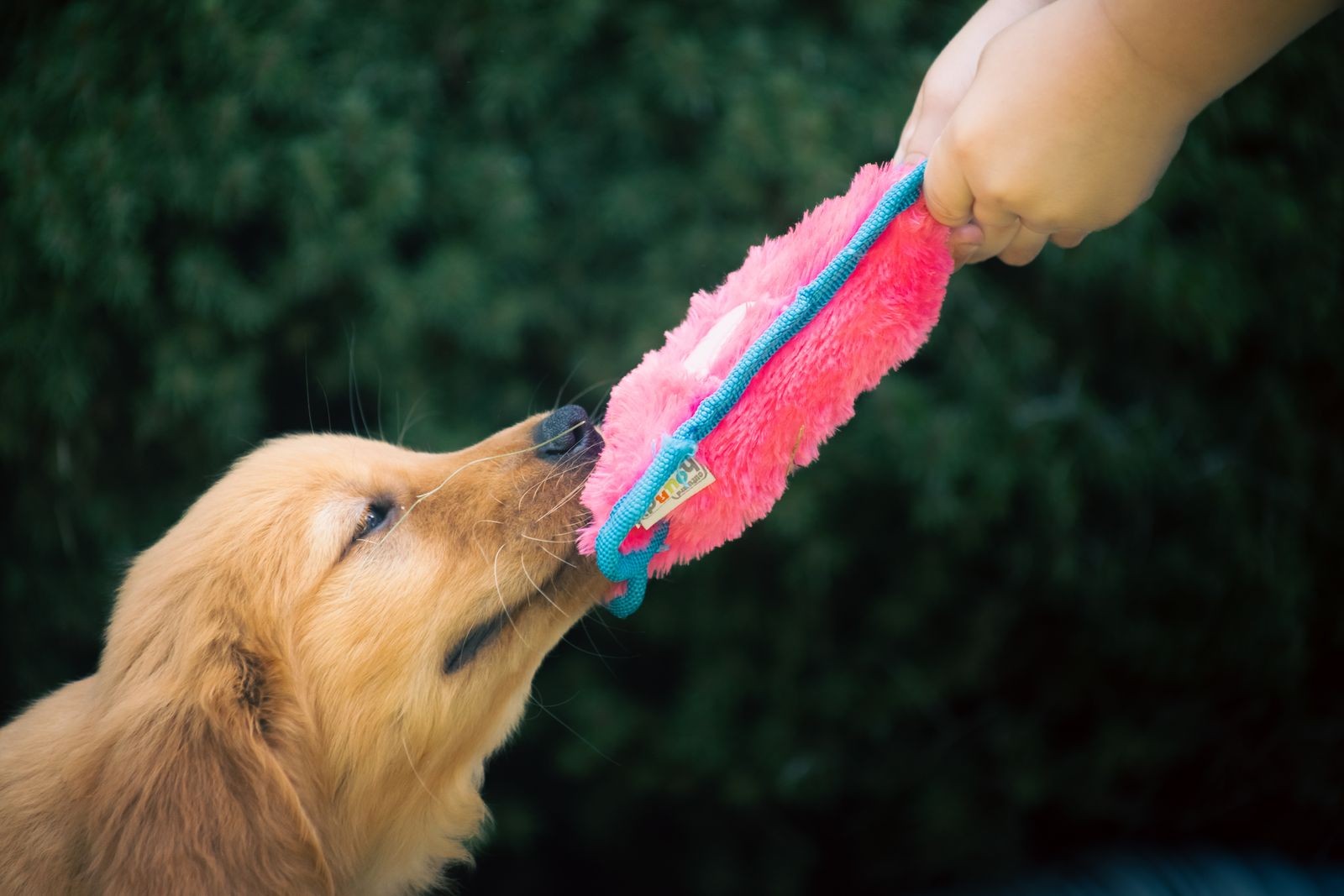
Stop puppy biting by teaching one clear consequence: teeth on skin means a toy is offered instead, and if the mouthing keeps building, play stops for a short pause so your puppy learns that biting makes the fun stop. Puppies explore the world with their mouths and learn bite control through feedback, so the goal is not to punish mouthing out of existence in a day — it is to show, hundreds of consistent times, what is for chewing and what is not.
Why puppies bite so much
In the litter, puppies bite each other constantly and learn from squeals and play stopping when they bite too hard. With humans, they have to learn that our skin is far more fragile than a littermate's coat. Biting also spikes for predictable reasons: teething discomfort, excitement during play, hunger, and — most overlooked — overtiredness. A puppy who has been awake and stimulated for over an hour often turns into a biting whirlwind who actually needs a nap, not a telling-off.
Certain games pour fuel on it. Rough hand-wrestling, wiggling fingers in a puppy's face, and chasing games with squealing children all teach that hands and clothes are toys. Swap them for tug toys with rules, fetch, and chew sessions from the start.
The redirect routine, step by step
Keep a toy within reach in every room your puppy plays in, because a redirect that requires leaving to find a toy arrives too late.
- Teeth on skin: stay calm, stop moving the hand — flapping and squealing makes it a better game
- Offer the toy, wiggle it to make it interesting, and praise warmly when your puppy takes it
- If biting immediately returns and escalates, stand up, turn away, or step behind a gate for 20 to 30 seconds
- Resume play calmly; repeat the pause every time — the pattern is the lesson
Never hit, hold a muzzle shut, or shout in a puppy's face for biting. Those responses frighten puppies or read as rough play, and both make biting worse over time. Also supervise every interaction with children: teach kids to stand still like a tree, arms folded, if a puppy gets mouthy, and to call an adult rather than running and squealing.
Set your puppy up to succeed
Meet the needs that sit underneath biting. Provide legal chews for teething, enforce naps in a quiet spot, keep play sessions exciting but short, and reward the behavior you want — a puppy chewing a toy, greeting with a toy in their mouth, or choosing to lick instead of bite deserves to hear about it. Some owners teach a "get a toy" cue for greetings, which gives excited puppies a job that is physically incompatible with nipping visitors' sleeves.
Most puppies improve steadily over weeks as adult teeth come in and self-control grows. Seek help from your veterinarian or a qualified, reward-based trainer if biting is intense, breaks skin regularly, comes with growling over food or toys, or frightens anyone in the home — early professional input is a strength, not a failure.
One rule, from every person
A rule that Dad enforces, Mum forgets, and the kids accidentally reverse with wrestling games will take three times as long to land; one shared rule lands fast. Consistency lands fastest when the puppy meets the identical response from every hand, so agree the redirect-and-pause response as a household and hold to it.
Chosen family members can view their profile once you share it through KinsLe Family Sharing.