
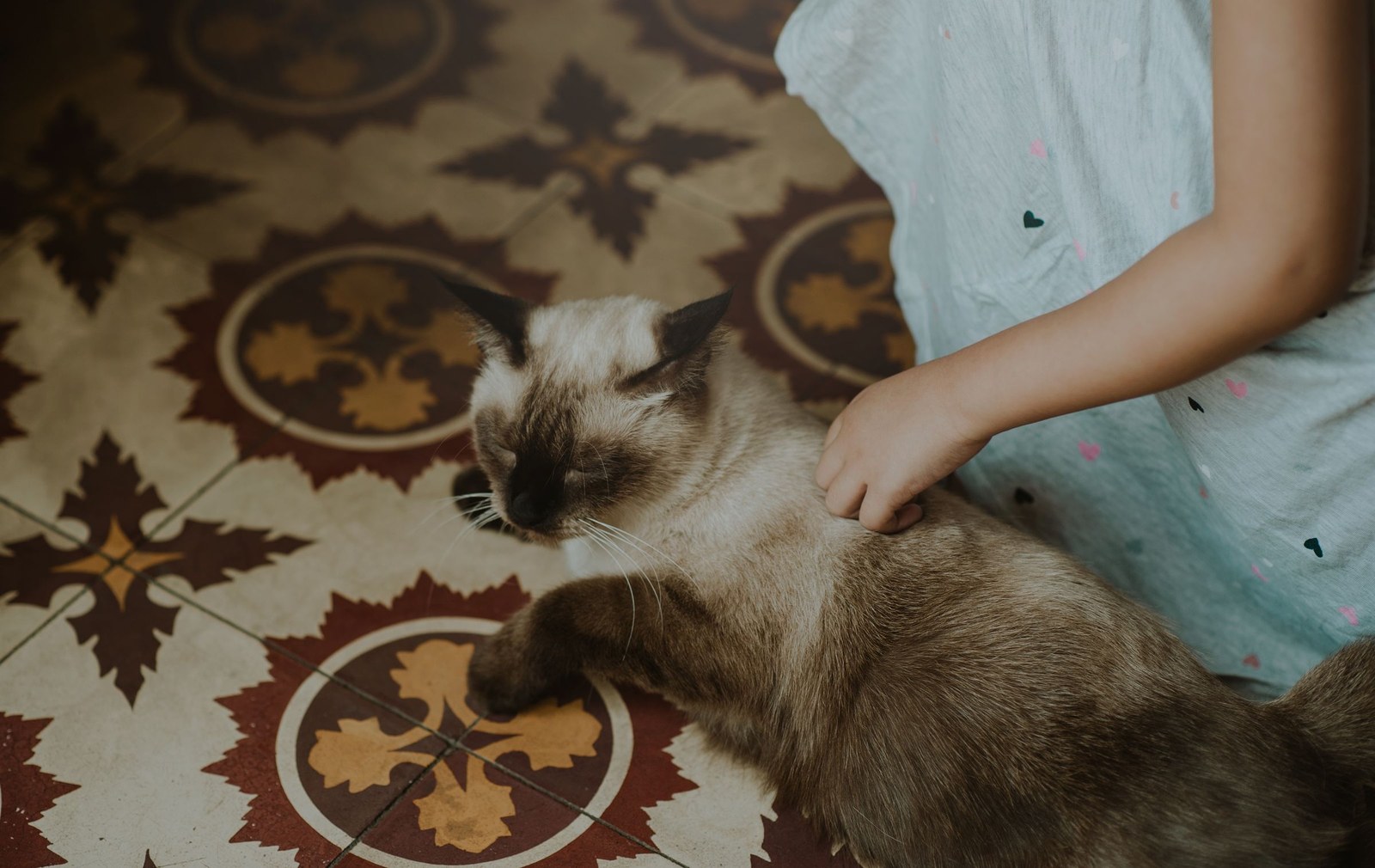
Teaching children to handle a cat gently starts with one rule: the cat chooses. Begin by having children wait for the cat to come to them, then stroke along her back instead of grabbing or hugging, and stop the moment she moves away. Children who learn that a cat's "no" gets respected — and that patience earns a cat's trust — become the people cats genuinely seek out.
Teach the invitation, not the grab
Set kids up for success with a simple ritual. Have your child sit on the floor, which makes them smaller and less looming, and hold out a loose fist at cat height. If the cat rubs against it, she has said yes, and gentle stroking can begin. If she sniffs and walks off, the lesson is just as valuable: that is a complete interaction, and we wave goodbye. Practice the "one hand, slow strokes" rule — pets go along the cheeks, chin, and back, in the direction of the fur. Most cats dislike belly rubs, tail touches, and being patted on top of the head from above, so teach kids those are off-limits zones unless the cat clearly invites more.
Hands-off rules that keep everyone safe
- Never pick the cat up without an adult. Most handling injuries and scratches happen when a cat is lifted awkwardly and panics. Teach older children a proper supported lift only when you judge them ready, and always let the cat leave the moment she wants down.
- No chasing, cornering, or carrying. A cat who cannot retreat will eventually defend herself, and she will be blamed unfairly for it.
- Leave sleeping and eating cats alone. Waking a cat with a grab startles her; disturbing meals creates guarding.
- Read the stop signals together. Tail lashing, ears flattening, skin twitching along the back, or a sudden head turn toward the hand all mean "enough" — praise your child every time they notice and stop.
Supervise, and make gentle behavior the game
All interactions between young children and the cat should be supervised, full stop — toddlers grab fur and tails with the best intentions and no malice, and cats cannot be expected to tolerate it. Turn learning into praise-rich practice: compliment specific gentle behavior ("You waited and let her come to you — that is exactly right") far more than you correct mistakes. Kids can also build the bond without touching at all: dragging a wand toy (with you supervising the string), reading aloud near the cat, or being the one who delivers dinner all teach the cat that this small human predicts good things.
If a scratch or bite does happen, stay calm, clean the wound promptly, and treat it as information — something in that interaction was too much for the cat — rather than a crime by either party. Cat bites that puncture skin should be checked by a doctor, as they infect easily.
Give kids real, age-appropriate cat-care jobs
Children who help care for a cat handle her better, because they understand her as a someone with needs. Filling the water bowl, measuring dinner with a scoop, brushing a cat who enjoys it, and running a play session are perfect starter responsibilities, scaled to age.
A last word on her profile
Talk the jobs through as a family — water bowl duty and supervised playtime for the children, feeding and medication kept with the adults — so gentle handling becomes part of daily life rather than a one-off lecture. Selected family members may view her profile after you grant them entry via Family Sharing on KinsLe.