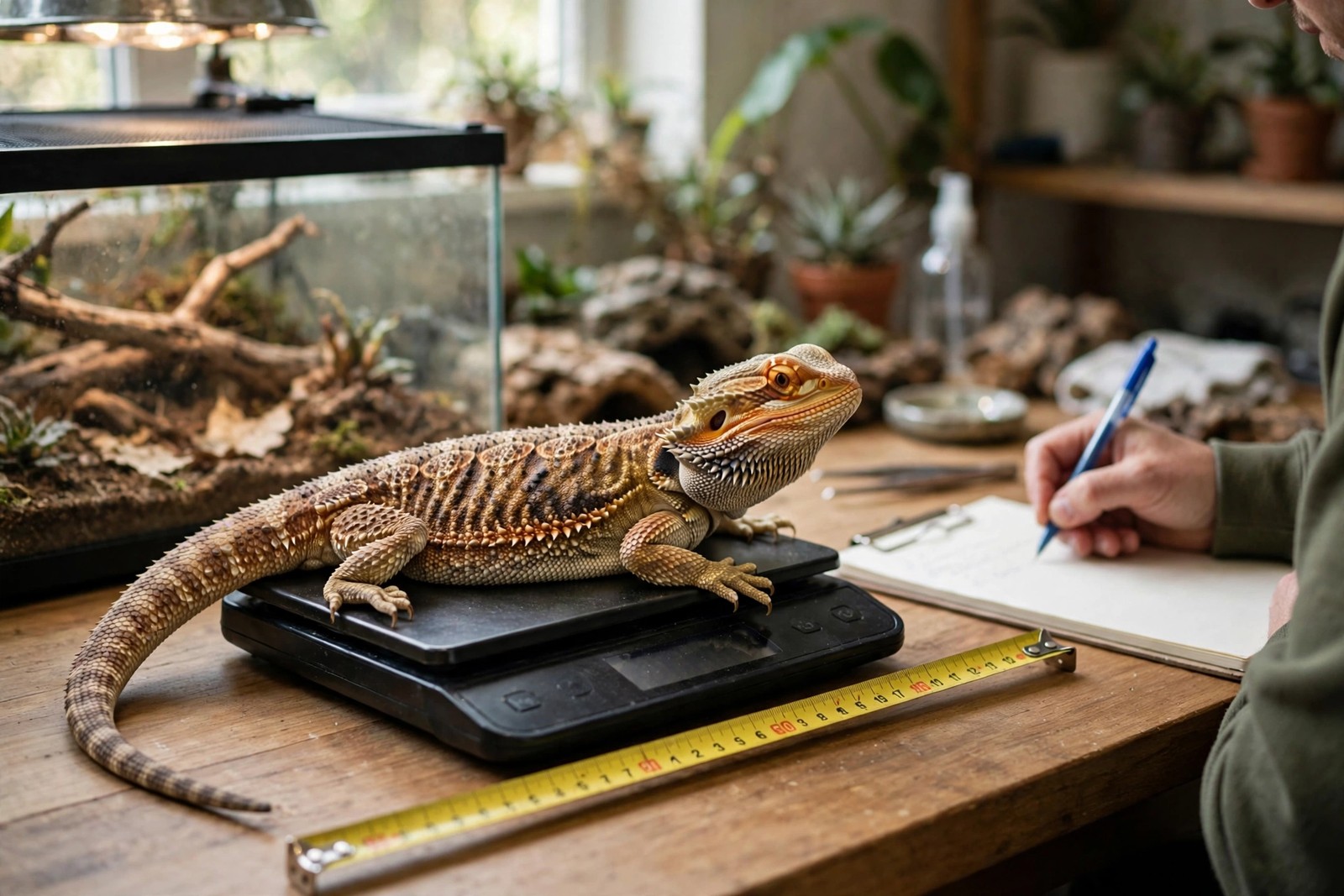
Rescue reptiles rarely arrive with paperwork, and unlike a puppy they carry no reliable age markers on the outside. Growth in reptiles is indeterminate and driven by heat, food and health, so two animals of the same age can be very different sizes, and one animal can grow in spurts and stalls. The realistic goal is a bracket — juvenile, subadult, adult, possibly senior — built from several clues together, and care set by the animal's current size and condition rather than a guessed birthday.
Size and Weight Against the Species Norm
Start with the strongest clue: how your animal measures against known growth for its species. Weigh and measure it — snout-to-vent length for lizards and snakes, straight shell length for tortoises — and compare with typical hatchling, yearling and adult sizes for that species. A bearded dragon near adult length with a full beard and mature proportions is not a youngster whatever its past; a leopard gecko still well under adult weight and length, with juvenile banding not yet faded to adult spots, is young. Sex matters, since males and females of many species finish at different sizes, so identify sex where the species allows before finalising the comparison. Record the numbers with the date you took them; from then on, your own growth log is real data.
Development Signs That Narrow the Range
Layer in maturity clues. Colour and pattern changes are dependable in many species: juvenile patterns fade, adult colour intensifies, and some males develop breeding colour or features such as a dragon's darkened beard or a chameleon's mature casque and patterning. Behaviour helps too — courtship displays, territorial behaviour and, in females, egg-laying whether or not a male is present all mark a sexually mature animal. Shedding frequency is a rough growth diary: fast-growing youngsters shed often, adults far less, but a rescue's shed history is usually unknown, which is exactly why it cannot carry the estimate alone.
The Clues That Look Precise but Are Not
Tortoise scute rings tempt owners to count years, but rings form with growth spurts, so a well-fed warm year can add more than one and a poor year none — two tortoises with equal rings can differ by years. Size alone can also mislead in rescues: an animal kept cold and underfed may be stunted, looking juvenile while being adult, and one power-fed for fast growth can look adult while young. Worn claws, shell wear and faded colour can hint at age in tortoises and turtles but also reflect rough housing. Treat every single clue as a hint, and trust only the direction they point when several agree.
Let a Reptile Vet Weigh It, Then Record a Range
Book an exotics or reptile vet for a first assessment and bring your measurements and any history the rescue gave you, however thin. The vet can judge body condition, muscle and bone quality, eyes and mouth, and sexual maturity alongside size, and may spot signs of past poor care that explain a misleading size. What you write down afterwards should be honest: an estimated range with its basis — for example, adult, likely mid-life, based on size and maturity — reviewed as your growth log grows. Care then follows the animal you have: enclosure size, diet and temperatures matched to species and current size, not to the estimate. Keeping that record straight matters for every future vet visit and handover, and KinsLe's Pet Passport helps by holding this reptile's estimated age range, measurement log, photos and vet findings together in one portable packet, so anyone caring for them later can see both the estimate and the reasoning behind it.