
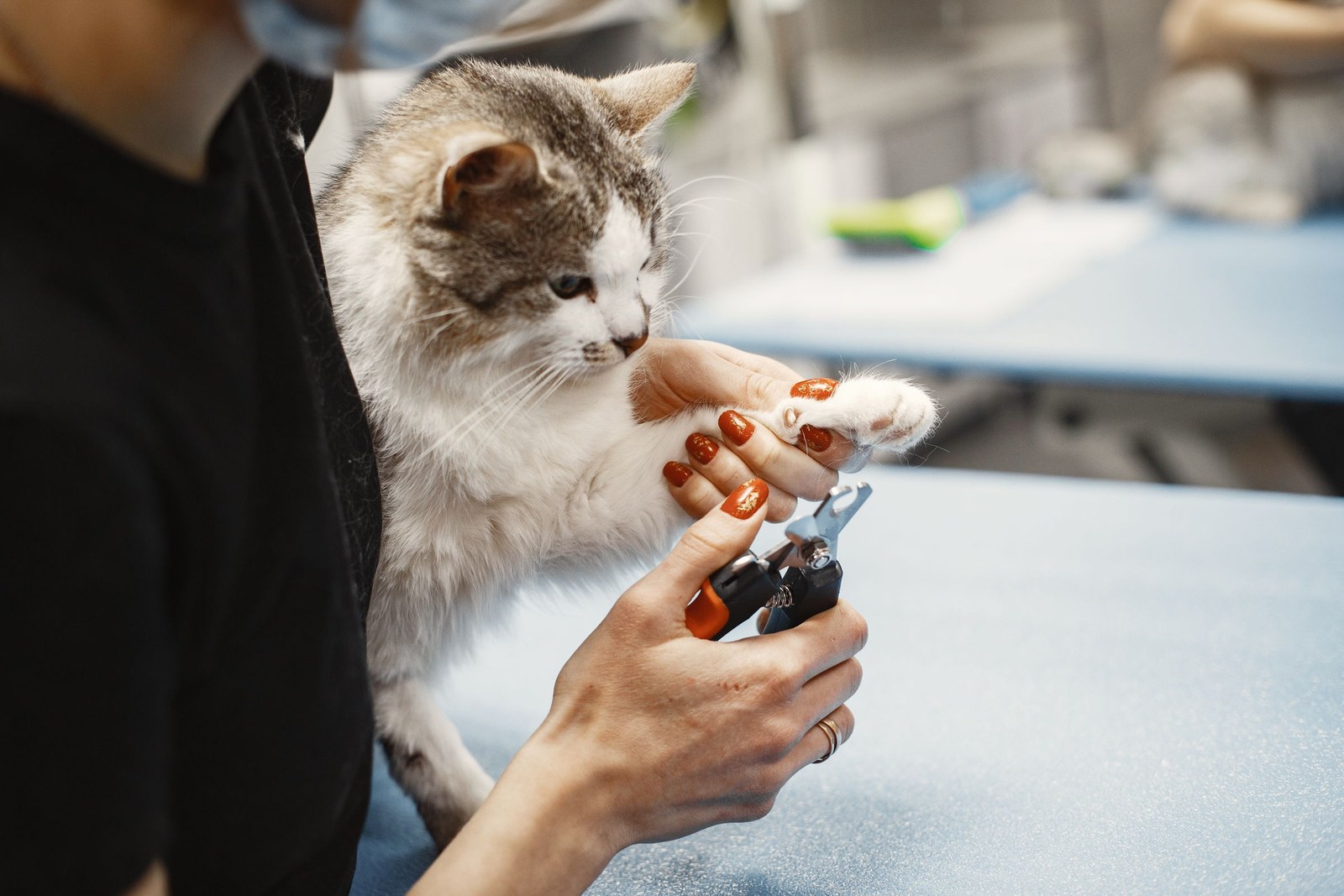
To trim your cat's nails safely at home, wait until they are calm, gently press a paw pad to extend the claw, and snip only the clear, curved tip — never the pink quick inside, which contains blood vessels and nerves. One or two nails at a time is a perfectly good session if that is all your cat happily allows.
What You Need and How to Set Up
Use proper cat nail clippers or small, sharp pet nail scissors — dull blades crush rather than cut and are more likely to splinter the claw. Human clippers are a poor fit for the shape of a cat claw. Set up in good light so you can clearly see the quick, have treats ready, and keep a styptic powder or pencil nearby just in case you ever nick the quick; it helps stop minor bleeding while you keep your cat calm.
Choose a position your cat already tolerates: on your lap facing away, curled beside you on the sofa, or with a second calm person providing gentle support and treats. A cat who feels trapped will struggle, and a struggling cat plus sharp clippers is how accidents happen.
The Trim, Nail by Nail
Press the pad softly between your thumb and finger and the claw will extend. Look for the pink quick inside the claw — in pale claws it is easy to see; in dark claws, trim much more conservatively, taking only the very tip of the hook. Cut at a slight angle following the claw's natural curve, well in front of the quick.
- Do the front paws first — those claws are sharper and do the scratching
- Include the dewclaws on the inner front legs; they do not wear down and can overgrow
- Praise and treat after every few nails, not just at the end
- Stop if your cat pulls away repeatedly, growls, or becomes tense — finish another day
Most owners find two paws one evening and two the next is the sweet spot. There is no prize for doing all eighteen claws in one sitting.
If You Cut Too Short, and Other Safety Notes
If you do nick the quick, stay calm, apply styptic powder with gentle pressure, and let your cat rest. Bleeding usually stops within several minutes. If it does not stop, the nail looks damaged, or your cat is clearly in pain, contact your veterinarian for advice.
Check for problem claws as you go: thickened, brittle, or ingrown nails — especially in senior cats, whose claws can curve into the pad — need veterinary attention rather than a braver home trim. Never declaw or ask about declawing as a shortcut for scratching; it is a major surgical procedure with lasting consequences, and scratching posts, trimming, and nail caps are the humane alternatives to discuss with your vet if scratching is an issue.
When to Hand It to a Professional
Plenty of confident owners still book nail trims out, and plenty of cats actually behave better for a vet nurse or groomer who does this daily. If you are nervous, your cat is wriggly, or their claws are dark and hard to read, KinsLe's Pet Services Directory can connect you with local groomers and vets who offer nail trims, so you can find a calm, cat-friendly option nearby.
Safe trimming is mostly patience and small tips at a time — confidence comes quickly once you have done it a few times. Pet Services Directory on KinsLe is a practical route to a groomer appointment when dark claws or a wriggly cat make home trims feel risky.