Begin with the guide, but aim at target weight
Every complete dog food carries a feeding guide that matches daily amounts to body weight, and it is the right place to start — with one adjustment. Feed for the weight your dog should be, not the weight he is today. An overweight dog fed the guide amount for his current weight is being served a maintenance ration for the very size you are trying to reduce, while a skinny rescue needs the amount for the healthier weight he is heading toward. If you do not know his target, your veterinarian or a hands-on body condition check will give you one: ribs felt with light pressure under a slight fat covering, a waist visible from above, and a tummy that tucks up from the side rather than sagging level with the chest.
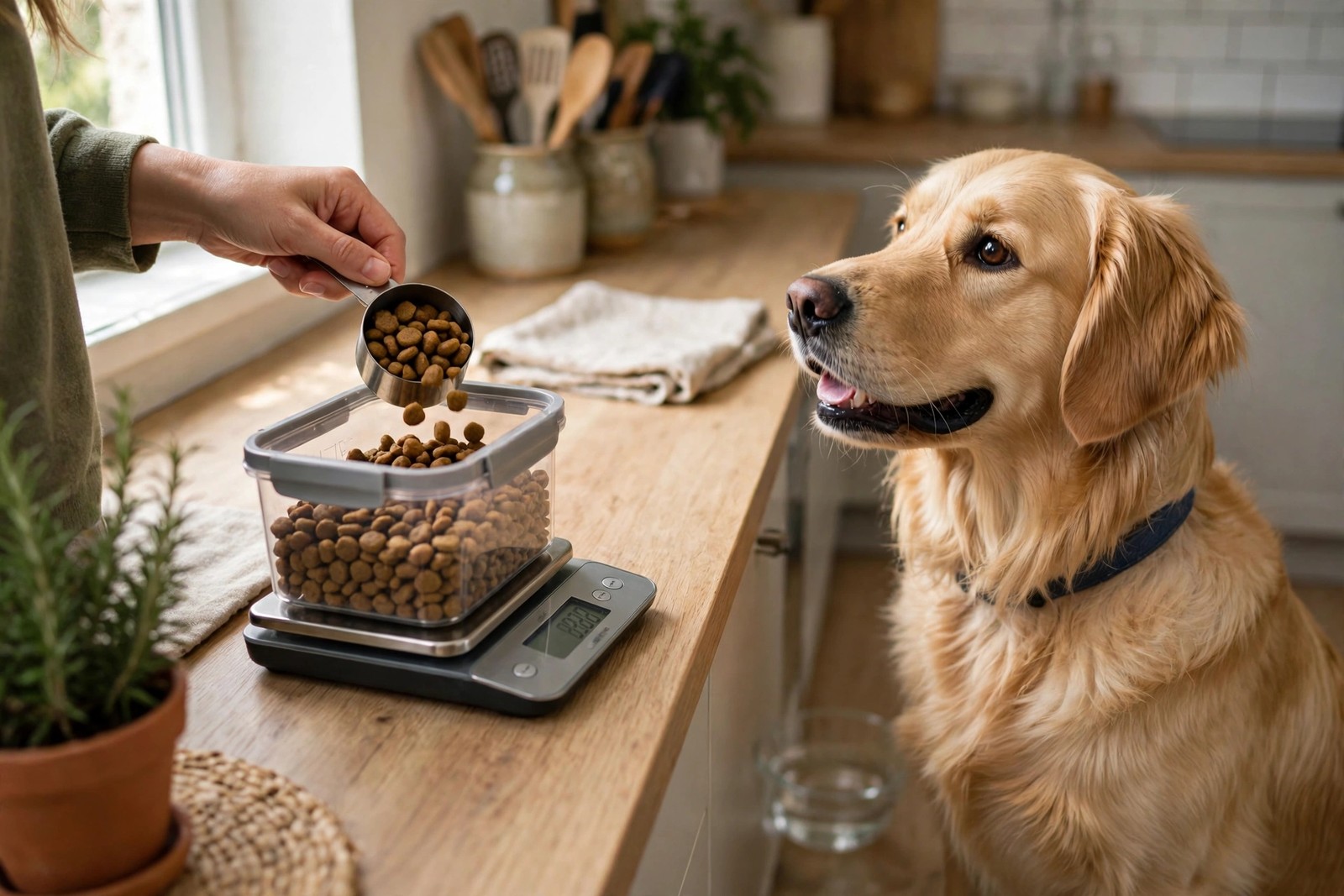
Weigh food; scoops quietly lie
Portion creep is the most common reason careful owners overfeed. A scoop that heaps on busy mornings and levels off on careful ones can vary the day's intake considerably, and different kibbles pack into it differently. A cheap kitchen scale removes the guesswork in seconds: weigh the full day's amount in the morning, put it in a container, and serve meals from that container. Now the day's total is fixed before anyone's generosity gets involved, training treats can be taken from the container too, and the other classic leak — treats, chews, and dental sticks handed out on top of full meals — becomes visible. Those extras are food; a dog on a measured ration plus uncounted chews is not on a measured ration.
Adjust for the dog in front of you, in small steps
Feeding guides assume an average, moderately active, neutered adult, and real dogs scatter widely around that average. A young working dog may need noticeably more than the guide, while a senior dog whose exercise is two gentle strolls may need less. Make changes gradually — adjust the daily amount by roughly a tenth at a time, hold it for two to three weeks, and judge by the scale and by his ribs rather than by whether the bowl is emptied enthusiastically, because most dogs will happily eat beyond their needs. Weigh him on the same scales, at the same time of day, for comparisons you can trust, and write the results down; slow gain is invisible in the mirror because you see him every day.
Split the total across meals and life stages
Once the daily figure exists, divide it across the meals your dog actually has — two for most adults, more for puppies, whose small stomachs and growth demands suit three or four smaller servings. Puppies need amounts adjusted frequently as they grow, while pregnant and nursing dogs have sharply higher needs that deserve veterinary guidance on quantities. Senior dogs may keep the same total but benefit from it spread across smaller meals. Rainy weeks and holiday weeks nudge requirements, but resist daily tinkering; reassess at the regular weigh-in instead.
When the numbers and the dog disagree, ask the vet
If your dog gains on amounts that should maintain him, loses weight despite generous portions, or his appetite changes suddenly, the problem may not be arithmetic. Thyroid trouble, parasites, dental pain, and other conditions alter weight and appetite, and a veterinarian can check before you keep shrinking or enlarging the bowl. Bring your feeding record — food, weighed daily amount, treats included, recent weights — because that lets the vet judge quickly whether the ration or the dog needs attention.
Once the amount is settled, KinsLe Care Teams turns it into the household's standing feeding duty with the weighed portion written in, so a partner, teenager, or sitter serves the same total you calculated instead of a hopeful extra scoop.