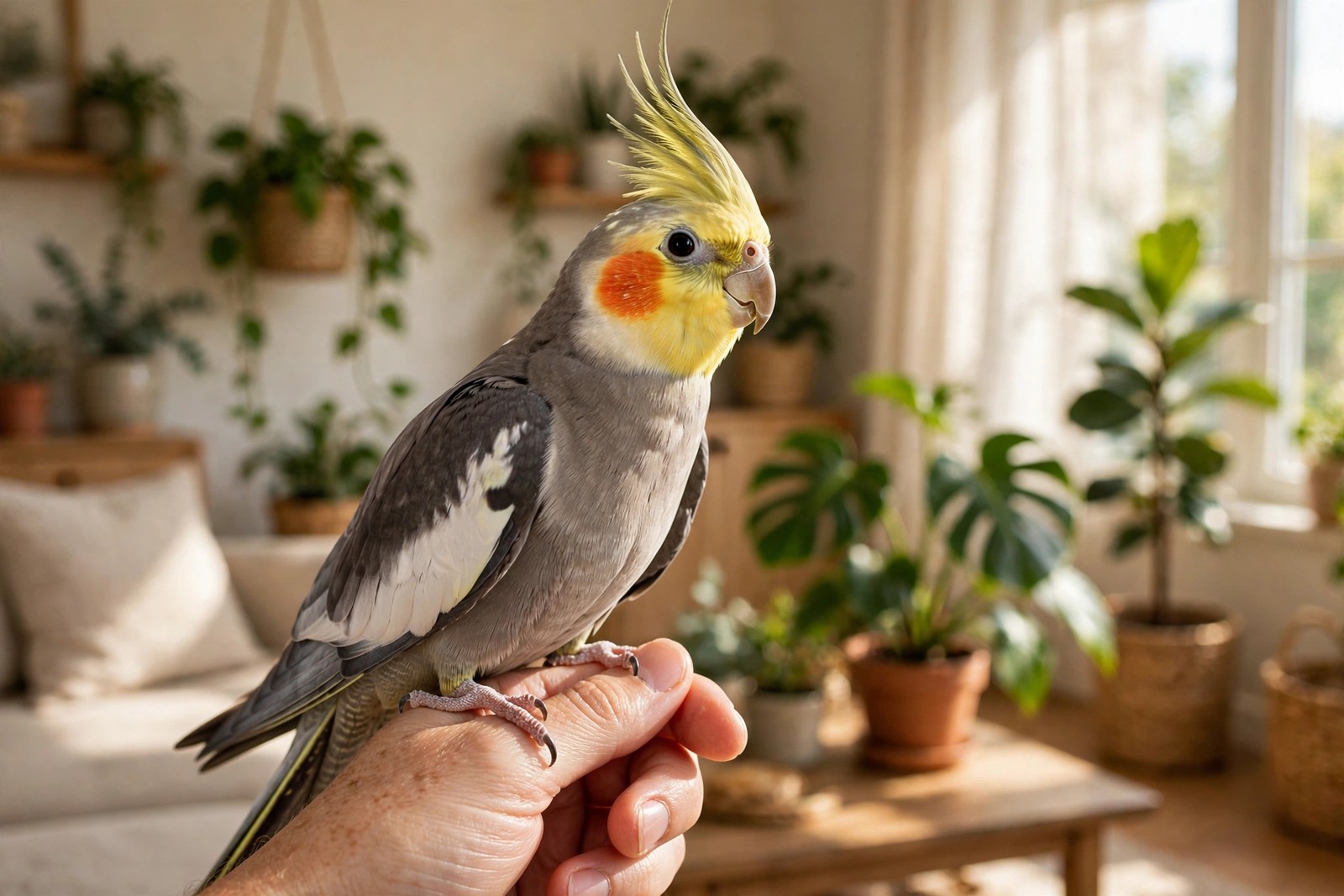
A cockatiel is not a short-lived starter pet. With good care, most pet cockatiels live fifteen to twenty years, and reaching the mid-twenties is unremarkable for a healthy bird — thirty-year-old cockatiels exist and are not freaks. Anyone bringing home a young cockatiel with its bright crest and baby face should plan honestly for a companion who could be present for a child's entire schooling and well into that child's adult life.
What Decides Where a Bird Lands
Genetics sets the ceiling, and daily care decides how close a bird gets to it. Diet is the largest owner-controlled factor: cockatiels fed seed alone tend toward fatty liver problems and nutrient gaps, while birds eating a quality formulated diet with vegetables, some seed, and limited treats stay in better condition. Flight exercise keeps weight, heart, and lungs working; a bird confined to a small cage without out-of-cage flying ages faster in every practical sense. Air quality is critical for a dusty, powder-down species — cockatiels should live away from kitchen fumes, non-stick cookware overheating, smoke, and heavy aerosols. Night frights, where a startled cockatiel thrashes around the cage in the dark, cause wing and blood-feather injuries, so a dim night light and a secure, quiet sleeping spot protect real years.
Cockatiel Health Over Two Decades
The illnesses that shorten cockatiel lives often develop quietly. Fatty liver disease builds over years of rich, seed-heavy feeding. Hens can become chronic egg layers, which drains calcium and risks egg binding, a true emergency needing prompt veterinary care. Psittacosis and other infections can move through a household of birds, which is why a new bird should be quarantined and vet-checked before joining an existing cockatiel. Annual or twice-yearly checks for a senior bird, plus monthly weighing on a gram scale, catch the slow drifts — weight gain, weight loss, reduced flight — while they are still correctable. A cockatiel who stops eating, sits fluffed on the cage floor, or breathes with effort needs a veterinarian promptly at any age.
A Twenty-Year Care Plan
Think in life stages. The young bird needs taming, flight practice, and a varied diet established early, because food habits formed in the first year are stubborn. The middle years need stimulation — foraging toys, company, and out-of-cage time — to prevent the boredom behaviours, such as feather plucking and constant screaming, that erode welfare. The senior cockatiel needs lower perches, easy access to food, warmth, and gentler handling as joints stiffen. Across all stages, keep one continuous record rather than scattered notes: diet changes, weights, illnesses, and favourite foods are exactly what a sitter, veterinarian, or future owner needs.
If Your Cockatiel Outlives Your Plans
A bird who may live thirty years can outlive an owner's ability to care for them, through illness, a move, or simple ageing. Decide early who would take your cockatiel, and talk to that person while it is hypothetical. With KinsLe Transferrable Profiles, that handover, if it ever comes, passes on your cockatiel's complete profile — history, records, and daily routines — so a bird in their third decade never has to start again with a stranger guessing.