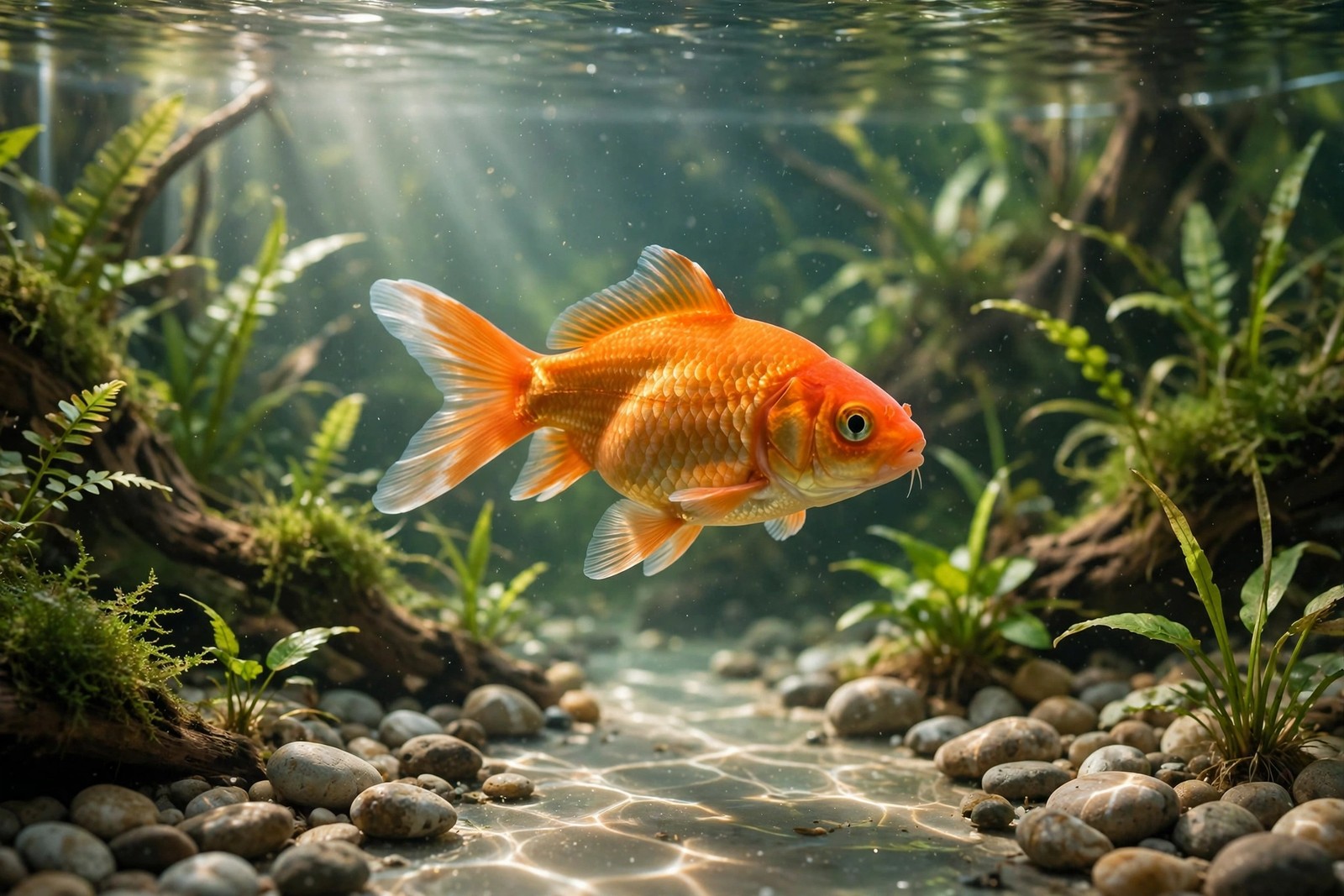
Goldfish commonly live ten to fifteen years with proper care, plenty reach twenty, and the oldest recorded goldfish lived past forty. The gap between that reality and the fairground fish that lasts a summer is not luck or genetics. It is almost entirely conditions. A goldfish is a carp, built to grow large and live long, and it only dies young when its water, space, or feeding quietly fails it.
Why Small Bowls End Lives Early
A bowl fails a goldfish in three compounding ways. Its tiny volume means waste builds up fast, and ammonia from that waste burns gills and suppresses the immune system long before the water looks dirty. It has no proper filtration, so the bacteria that should process waste have nowhere stable to live. And it gives a growing fish no room: a common goldfish can reach ten to twelve inches as an adult, so a fish that stays two inches in a bowl is not a miniature variety, it is a stunted one, and stunting shortens life. Add overfeeding, the most common owner mistake, and the water deteriorates even faster. None of this is visible drama, which is why short goldfish lives get blamed on the fish.
What Proper Care Actually Means
Long-lived goldfish share a recognizable setup. Single-tailed commons, comets, and shubunkins do best in a very large tank or a pond, while fancy varieties with rounder bodies need a spacious tank and gentler flow. Filtration should be generous for the tank size, because goldfish produce a lot of waste for their size. Partial water changes on a regular weekly rhythm keep nitrate low and conditions stable, and new water should be treated and matched in temperature before it goes in. Feeding is measured: what the fish finish in a couple of minutes, once or twice a day, with variety across quality pellets or flakes, vegetables, and occasional protein foods. Stable conditions matter as much as clean ones, so big sudden changes in temperature or water chemistry are avoided.
What Changes Across a Goldfish's Years
A young goldfish grows fast in its first two years when space and food allow, then settles into a long adult plateau. Old fish slow gradually: less frantic feeding behavior, more resting near the bottom, and sometimes a fading or lightening of color. Fancy varieties may develop swimming or buoyancy quirks as they age because of their body shape, and any fish that stops eating, develops growths, or struggles to swim normally deserves prompt attention from a vet who works with fish where one is available, alongside an immediate check of water quality, which is the first suspect in almost every goldfish problem. Testing the water whenever anything looks wrong, rather than guessing, is the habit that carries fish into old age.
A Pet Worth Recording Like One
A goldfish that lives fifteen years will move house, change tanks, and be cared for by several people, yet most keepers hold its whole history in memory. Tank size, filter setup, water test results, illnesses, and what worked belong in writing where the next keeper can find them. Keeping that running history in KinsLe's Pet Passport treats a goldfish like the long-lived pet it really is, with its records gathered in one portable packet for every tank upgrade, house move, and change of keeper.