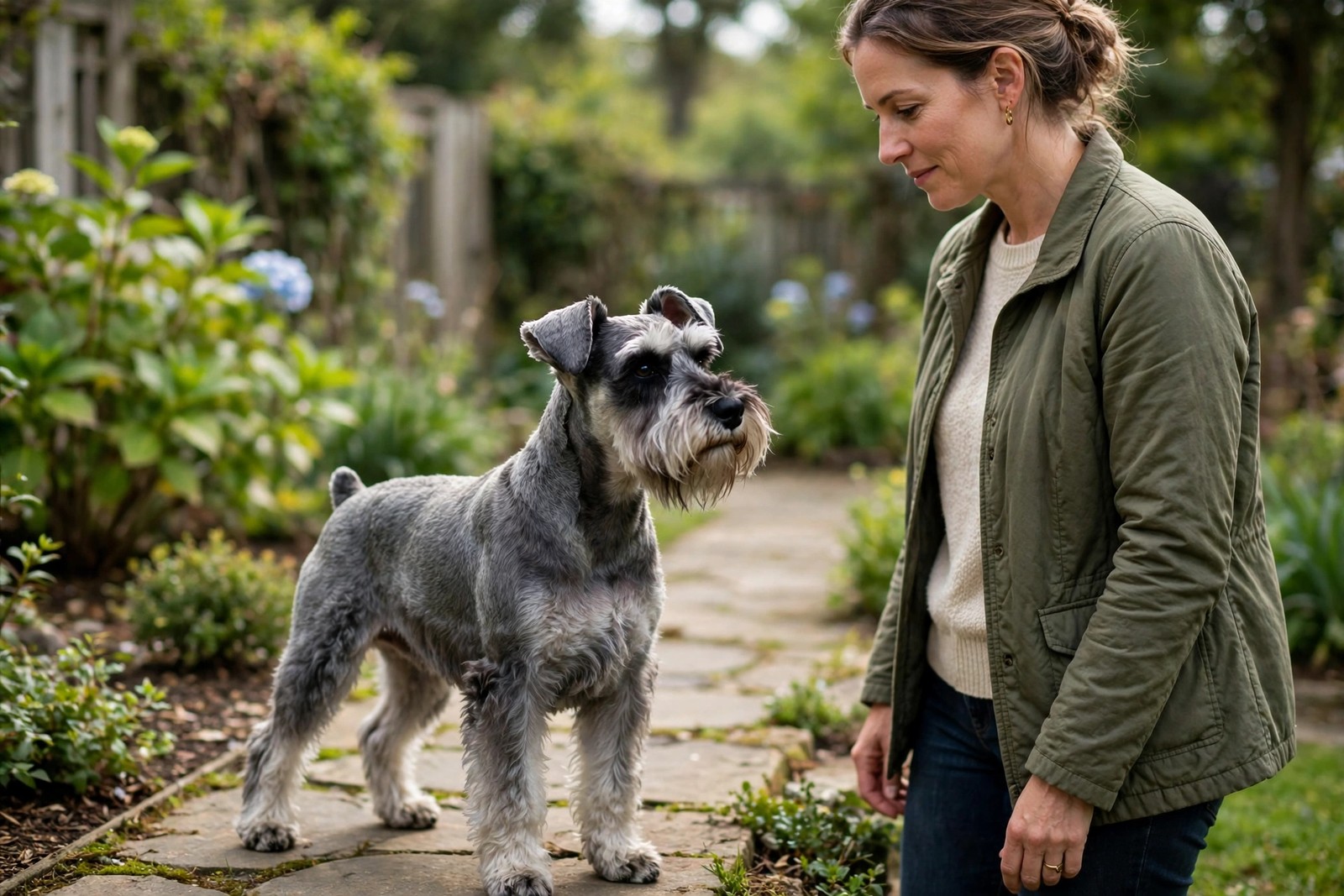
Miniature Schnauzers usually live 12 to 15 years. This is a sturdy, square little breed with a long life expectancy and an equally long list of years in which feeding habits compound. The Miniature Schnauzer's particular vulnerability is metabolic: the breed is prone to problems involving fat handling and the pancreas, which is why vets consistently give Schnauzer owners the same core advice. Keep the dog lean, keep dietary fat modest, and take digestive upsets seriously rather than treating them as a passing stomach bug. Follow those three rules and you have addressed the main breed-specific threat to the 12 to 15 year range.
Lean Weight and Modest Fat
Feed measured meals of a complete diet suited to your dog, keep treats small and counted, and be strict about the extras that quietly add fat: table scraps, rich leftovers, fatty chews and generous tidbits from visitors. A Schnauzer's beard may hide a widening waistline, so weigh your dog regularly and check ribs by hand under the wiry coat rather than judging shape by eye. Pancreas awareness means knowing the signs that deserve prompt veterinary attention in this breed: loss of appetite, repeated vomiting, a hunched or tense abdomen, obvious discomfort after eating, or unusual lethargy. Report those signs the same day rather than waiting to see whether a second rich meal settles, and tell the vet your dog is a Miniature Schnauzer, since breed context shapes the questions a vet will ask.
Eyes, Teeth and Coat Across a Long Life
Eyes deserve routine attention in Miniature Schnauzers, so keep eye checks in adult vet visits and report cloudiness, redness, bumping into objects in dim light or pawing at the face. Teeth in a small, busy mouth need regular brushing or vet-advised dental care, and mouth pain in a small dog quickly suppresses eating, which matters doubly in a breed where appetite change is also a pancreas warning sign. The wiry coat and furnishings need regular grooming as your groomer advises, and grooming doubles as a hands-on check for lumps, skin irritation or sore spots. Schnauzers are vocal, engaged dogs, so daily training, games and company are part of healthy ageing, keeping appetite, sleep and mood in their normal patterns where changes are easy to spot.
Senior Schnauzer Care
From about nine years old, treat vet visits as senior reviews covering weight, digestion, eyes, teeth and mobility, and keep a dated note of any digestive episodes, however brief, so your vet sees frequency rather than a single anecdote. Adjust portions as activity falls with age, since the pancreas and waistline rules tighten rather than relax in a senior dog. Keep ramps or steps for favourite furniture if jumping becomes effortful, and report stiffness, appetite change or new thirst without delay. A well-kept Schnauzer often stays sparky and opinionated into its teens, and early attention to small changes is how owners protect that character as well as the years themselves.
Feeding rules, digestive history and eye results gathered across 12 to 15 years are exactly the details a new carer or vet needs and memory blurs first. KinsLe's Transferrable Profiles preserves your Miniature Schnauzer's complete record with its profile, so that hard-won knowledge moves intact if care ever passes to someone new.