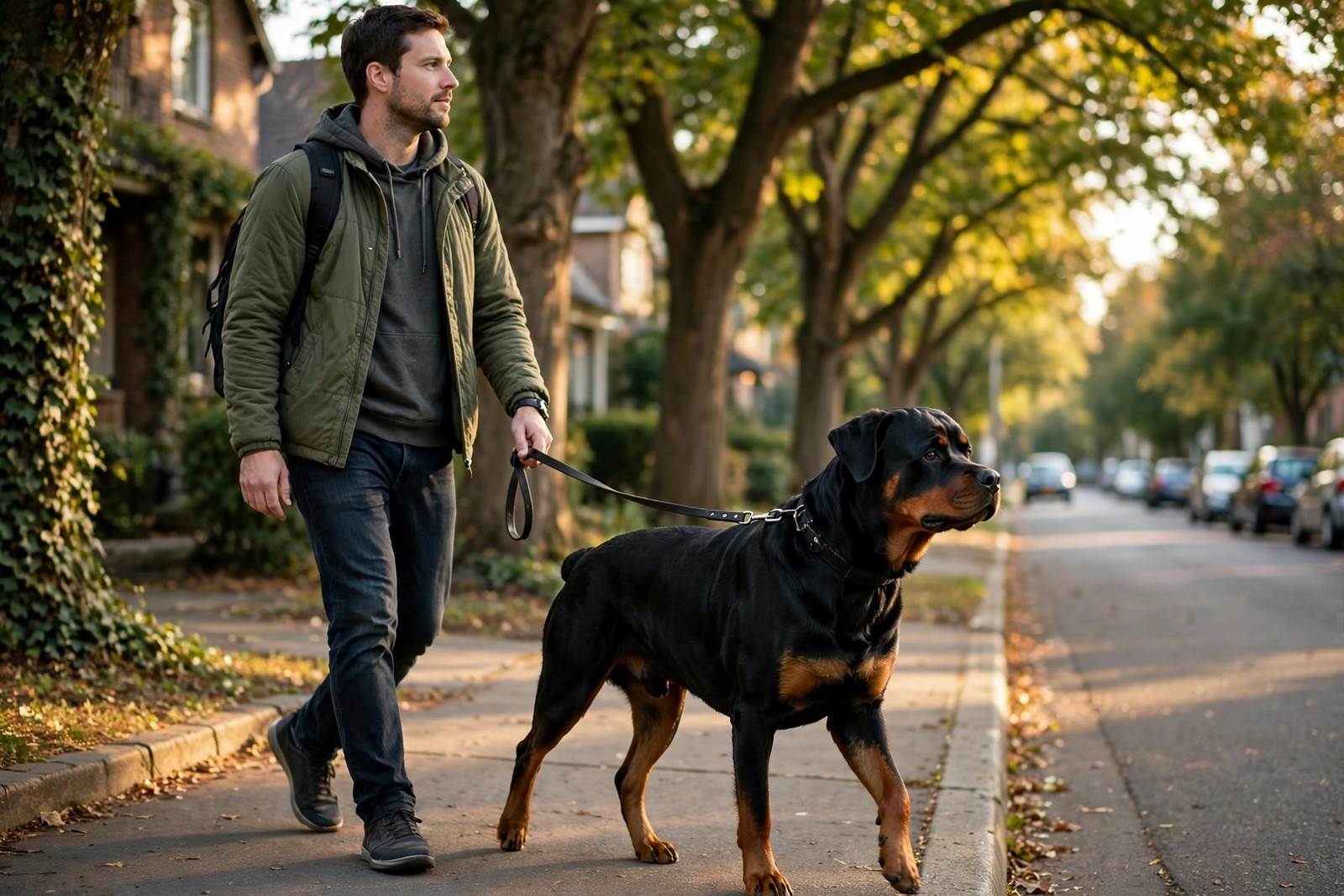
Rottweilers usually live 9 to 10 years. That is typical for a large, heavy breed, and it makes the management of each year matter more, not less. A Rottweiler may weigh 40 to 60 kilograms at maturity, and every one of those kilograms passes through the hips, elbows, shoulders and cruciate ligaments with every step, jump and stair. Owners cannot change the breed's genetics, but they control body weight, conditioning, early training and how quickly a limp or a change in stamina reaches a vet, and those four things decide how comfortable the dog's decade is.
Joints and Weight Do the Heavy Lifting
Grow a Rottweiler puppy slowly. Rapid growth on rich food loads developing joints, so feed a measured ration suited to large-breed growth, keep the puppy lean enough to feel ribs easily and limit repetitive impact, including stairs and jumping from vehicles, while the skeleton matures. In adults, weight is the daily joint medicine you control: an overweight Rottweiler's hips and elbows wear faster, and cruciate ligaments carry greater strain under extra load. Build muscle with steady walking, gentle inclines and controlled play rather than weekend bursts of hard running. Watch for the early signals of joint trouble (stiffness after rest that eases as the dog moves, bunny-hopping at a run, scuffed back nails, reluctance to climb into the car) and raise them at the next vet visit rather than waiting for obvious lameness. Heart health belongs in the same routine conversation, because the breed is one where vets like to listen carefully at annual checks and investigate reduced stamina or coughing promptly.
Training and Temperament Across the Decade
A Rottweiler is a guardian breed with a calm, confident temperament when raised well, and early socialisation shapes the adult you will live with for ten years. Puppy classes, steady exposure to visitors, traffic, livestock fencing and household noise, and reward-based training that channels strength into good lead manners all pay off for the dog's whole life. A powerful adult who pulls is a safety problem and an exercise problem, because walks get skipped when they are a battle. Keep the dog mentally occupied with scent games, training refreshers and jobs around the home; a bored guardian invents its own duties, usually at the fence line. Heat deserves respect too: a black-coated, heavy dog overheats faster than it cools, so walk in the cool of the day in summer and never push exercise in humid heat.
The Weekly Hands-On Check
Build a five-minute hands-on check into the week, on the same day, so changes are caught by comparison rather than memory. Run your palms over the ribs, spine and hips to judge condition under the short coat, look at the teeth and gums, check ears for redness or smell, feel each leg from shoulder and hip to paw for heat, swelling or soreness and watch the dog walk away from you and back, noting any unevenness. Note anything new, however small, in the dog's record with the day you found it. Lumps deserve particular respect in a large breed with a ten-year span: find them when they are small, have them assessed promptly and record what your vet advises, so a change in size or feel at the next check is a fact rather than an impression.
Senior Years Arrive Earlier in a Giant Frame
Expect senior adjustments from around seven: shorter, more frequent walks, a ramp for the car, non-slip mats on hard floors and a bed that supports elbows and hips off cold ground. Vets often suggest twice-yearly checks for older large dogs, tracking weight, heart, lumps and mobility together. In a household where several people feed, walk and medicate under vet direction, mixed messages undo good care quickly. KinsLe's Care Teams lets the household assign feeding, walking and vet-visit duties for your Rottweiler, with completed tasks marked complete with a timestamp, so nothing is doubled or missed.