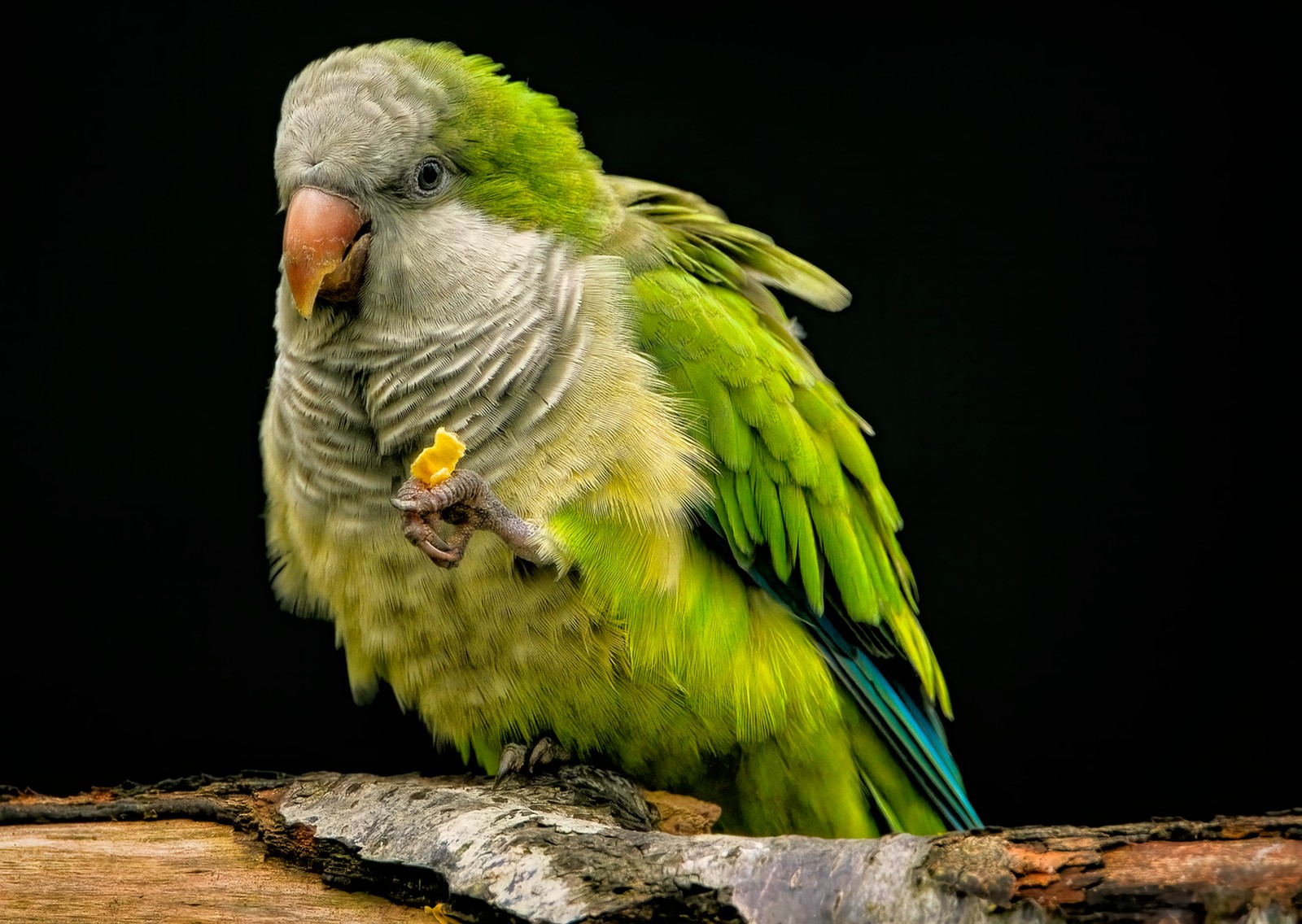
Also called a monk parakeet, the quaker parrot is a moderately loud, at times very loud, bird for its size. It will not match the ear-splitting scream of a large cockatoo or macaw, but its sharp contact calls and excited, rattling chatter carry easily through interior walls, down a hallway, and, on a still day, out of an open window to the neighbours. If you need a quiet pet, a quaker is the wrong answer; if you enjoy a talkative, busy household bird, its volume is manageable with routine.
What the Noise Actually Sounds Like
Most of a quaker's day is lower-level sound: muttering, chuckling, beak grinding, practising words, and short commentary calls while it eats, bathes, and rearranges its cage. Quakers are among the better talkers of the smaller parrots, and many chatter conversationally for long stretches. That background noise is constant rather than intense, and most owners tune it out within weeks.
The loud parts are predictable. Expect a dawn session as the house wakes and a dusk session before bed, flock behaviour left over from the huge communal nests quakers build in the wild. Expect contact calling when you leave the room: your bird is asking where the flock went, and it will repeat the call until answered or until it settles. Arrivals home, the doorbell, visitors, the vacuum, and excitement at favourite food all trigger shouting bouts that typically last minutes, not hours.
Apartment Suitability, Honestly
Many quakers live successfully in apartments, and many have had to be rehomed from them. The difference is usually the building and the routine, not the individual bird. Solid walls, a cage placed away from the shared wall, and neighbours who are home when the bird is quietest all help. Thin walls, a home worker next door, and a bird left alone and bored for ten hours a day are the combination that generates complaints.
Before committing, meet adult quakers in person rather than judging by a quiet baby in a shop, because youngsters are far quieter than the territorial, confident adult your bird becomes at one to two years. Also check local rules before buying: quakers are restricted or banned in some states and cities because escaped birds establish wild colonies, and a bird you cannot legally keep is a rehoming waiting to happen.
Reducing the Volume You Can Control
You cannot train away contact calling, but you can shrink it. Ten to twelve hours of covered, quiet sleep prevents the overtired screaming that builds in under-rested birds. A predictable routine, a midday rest period, foraging toys that occupy the beak, and answering a contact call once with a calm whistle instead of shouting back all reduce repetition. Never reward a screaming bout with instant attention and release from the cage; wait for a quiet moment, then respond, so quiet is what earns company.
Noise is a whole-household project, because one person shouting back or letting the bird up past bedtime undoes everyone else's consistency. Chosen relatives can receive profile access on KinsLe instead, under the name Family Sharing.