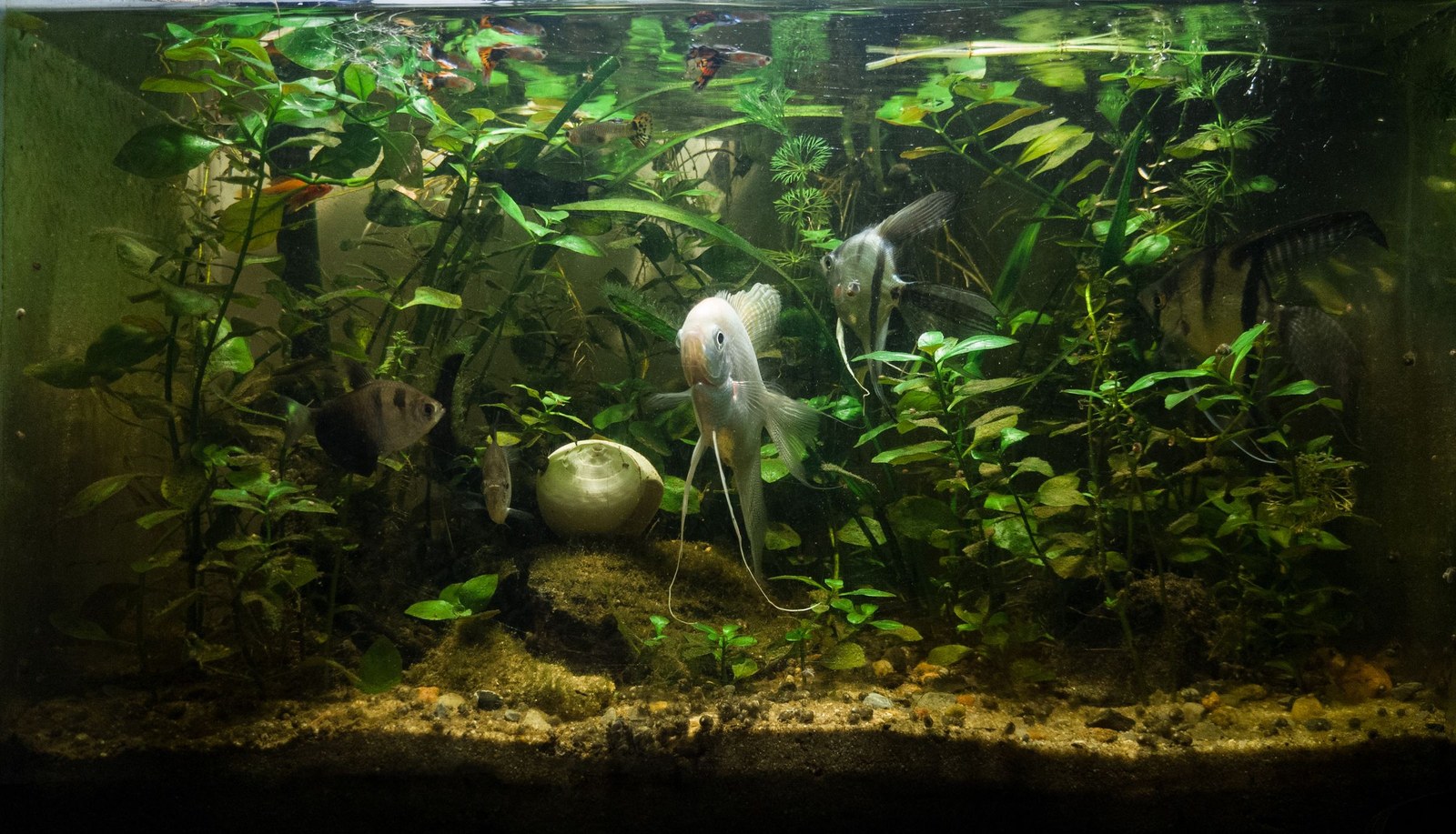
Aim for 8 to 10 hours of light a day for most freshwater aquariums, and put the light on a plug-in timer so the schedule never drifts. Consistency matters more than the exact number: fish and plants both run on day-night rhythms, and a tank that gets lit at random hours — or forgotten on overnight — stresses its inhabitants and feeds algae. A timer costs a few dollars and removes human forgetfulness from the equation entirely.
Why Consistency Beats Brightness
Fish don't have eyelids. They rest when the tank goes dark, and their stress hormones, feeding behavior, and even coloration follow a daily cycle. Lights snapping on at 6 a.m. one day and noon the next, or blazing until 2 a.m. because someone fell asleep on the couch, frays that cycle. Room light should also ramp gently — turning the aquarium light on in a pitch-black room startles fish, so many keepers let ambient light come up first. A steady photoperiod of 8 to 10 hours, starting and ending at the same times daily, is the simplest welfare upgrade most tanks ever get.
Too Much Light Is an Algae Invitation
Algae doesn't need much encouragement: excess light hours, especially combined with generous feeding, and it moves in fast — green film on the glass, hair algae on plants, or full green-water blooms. If algae is winning, the first lever to pull is duration: drop to 7 or 8 hours and hold there for two weeks before changing anything else. Placement matters too — a tank catching direct sun through a window gets hours of uncontrolled extra light no timer can fix, so shade it or move it. Splitting the day into two blocks (say, 4 hours morning and 4 hours evening, with a dark midday break) is a popular trick that fits viewing hours while keeping total exposure moderate.
Planted Tanks Get Special Rules
Live plants need enough light to photosynthesize, but brand-new planted tanks are algae magnets because the plants haven't filled in yet. Start a new planted setup at 6 to 7 hours and increase gradually toward 8 to 10 as plants establish and start outcompeting algae for nutrients. High-tech planted tanks with CO2 injection and strong lights run on tighter schedules still, and plant growth itself is your feedback: leggy, pale growth reaching for the surface suggests too little light or intensity, while algae coating the leaves suggests too much duration. Adjust in half-hour steps and wait a week between changes — plants respond slowly, and impatient tweaking makes it impossible to tell what worked.
Coverage While You're Away With Care Teams
Light schedules mostly run themselves on a timer — but vacations still need a human check that the timer is actually working, the light hasn't failed, and feedings aren't doubling up in your absence. KinsLe Care Teams let you assign those checks with timestamped completions: "confirm lights on at 8 a.m., feed once" gets ticked off by your sitter or family member, and you can see it was done. It's quiet peace of mind for a system that runs on routine. Before a trip, write the away duties down with names attached — timer verification and one feeding for your sitter, the evening light check for a housemate — in your Care Teams schedule on KinsLe, where finished tasks appear checked off for everyone watching the tank.