
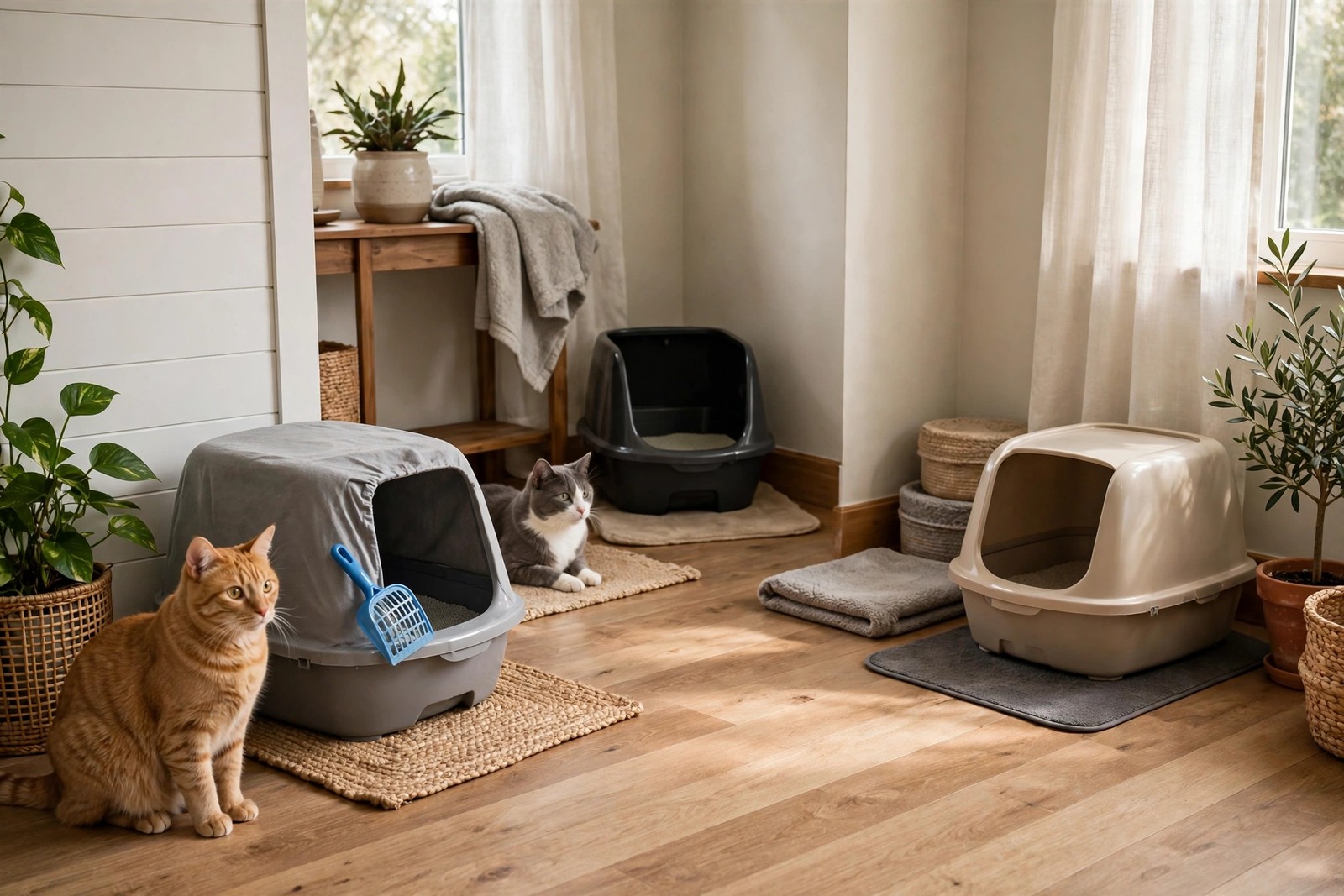
For two cats, you need three litter boxes: one box for each cat, and a spare besides. That 'n+1' rule gives each cat a clean option even if one box was just used, and it prevents the quiet competition over a single box that is a common, fixable cause of accidents around the house.
Why One Box for Two Cats Rarely Works
Cats are fastidious and territorial about toileting in ways that are easy to underestimate. Many cats prefer to urinate and defecate in different boxes. A dominant or simply more confident cat may guard the route to a single box, or ambush the other cat on the way out — behaviour owners sometimes read as play, but which can make a nervous cat decide the corner behind the sofa feels safer.
Two cats sharing one box also means it gets dirty twice as fast. A cat who steps in, finds it already soiled, and walks away to go elsewhere is not being spiteful; they are being a cat. The extra box is cheap insurance against a habit that is much harder to undo than to prevent.
Placement Matters as Much as Numbers
Spread the three boxes in quiet, separate locations rather than lining them up side by side — three boxes in a row count as one big box in your cats' minds. Good spots are low-traffic corners with an easy escape route, away from food and water bowls, and not next to noisy appliances that can startle a cat mid-use. In a multi-storey home, aim for at least one box per floor your cats use.
Avoid moving boxes around once cats are using them reliably, and if you must relocate one, do it gradually or add the new spot before removing the old. For kittens, elderly cats, or cats with mobility issues, choose boxes with a low entry side so getting in is never a barrier.
Choosing Boxes Both Cats Will Actually Use
Most cats prefer a box at least one and a half times their body length, uncovered, with unscented clumping litter a few inches deep. Covered boxes and automatic self-cleaning models suit some homes, but watch that both cats — not just the bold one — use them willingly. If one cat is avoiding a new style of box, offer the familiar style alongside it.
Keep count of what is happening in each box if you can. A sudden change — one cat using boxes far more often, straining, crying, or producing no urine — is a health flag. Difficulty urinating, especially in male cats, is an emergency that needs a veterinarian the same day.
Keeping the Whole Household in the Loop
With multiple boxes and multiple people, confusion creeps in: nobody is sure where the third box went after cleaning, or who last scooped. Write the box locations, the scooping rotation and the spare-litter spot in one household note, so nobody hunts through old messages to find them. Include which floor each box sits on and the date of the last litter purchase, details a busy household otherwise relearns after every clean.
What Family Sharing does on KinsLe is simpler: the owner gives a parent or sibling a way into the profile kept for each cat.