
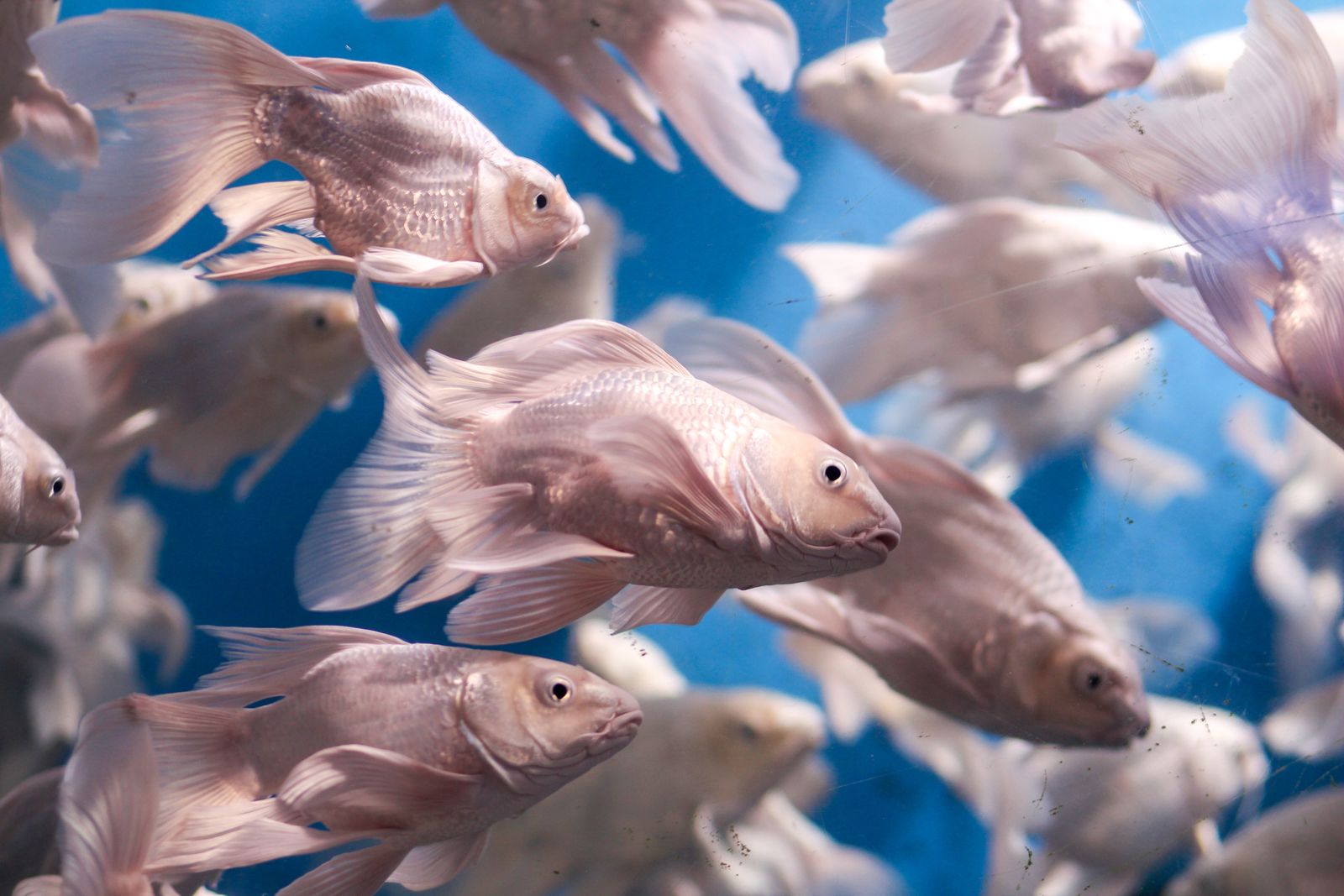
Keep most schooling species — tetras, rasboras, danios, barbs, and corydoras — in groups of six or more of their own kind. In smaller groups they hide, lose color, and sometimes nip at tank mates; in a proper school they swim together, display fully, and behave the way nature designed them to. Six is the floor, not the ceiling — bigger schools are calmer and more beautiful.
Why six is the magic number
Schooling is a survival strategy: in the wild, these fish are almost never alone, and being separated from the group triggers a constant low-level stress response. A lone neon tetra or a pair of rasboras lives in a state of alert, which suppresses their immune system, dulls their colors, and often produces the exact nipping behavior owners blame on "aggressive" fish. Six fish is roughly the point where the group reads as a school to the fish themselves — they relax, spread out, synchronize their swimming, and the stress behaviors fade. Experienced keepers treat ten to twelve as the sweet spot for the classic species.
Same species, not just same tank
The group must be the same species. Six fish made up of two neons, two cardinals, and two embers is three stressed pairs, not one happy school — similar-looking species do not school together reliably. Color morphs of one species do count: albino and standard corydoras of the same species will school, and different color varieties of the same tetra generally mix. When in doubt, count by species name on the store label, and buy the full group at once if your tank and budget allow — introducing a whole school together is far less stressful than trickling in singles.
Build the school gradually and safely
A full school is a real bioload, so plan the tank around the adult group, not the starter pair. For a new tank, add the school in two batches a week or two apart so the biological filter adjusts — test water between additions. A 20-gallon tank comfortably holds a school of ten small tetras plus bottom dwellers; a 10-gallon is honestly tight for most schooling species despite what the store display suggests. Bigger schools in appropriately sized tanks are more stable than minimum groups in minimum tanks.
The shoaling vs. schooling nuance
Strictly speaking, some popular species shoal (hang out loosely, like corydoras and many barbs) while others school (swim in synchronized formation, like rummy-nose tetras and some danios). The care rule is identical either way: they need their own kind in real numbers. The synchrony you see in a big group of rummy-nose tetras — the whole school turning as one — is one of the hobby's great sights, and it simply does not happen with three fish.
Exceptions worth knowing
A few species break the rule in the other direction: some, like certain large barbs or rainbowfish, do better in groups of eight-plus because their internal pecking order needs more members to spread out. And the rule applies per species, not per tank — a tank with six neons and six rasboras is two fulfilled schools, while a tank with three of each is two stressed trios. Count each species separately when you plan.
Ask Kinny as the School Comes Together
Building a proper school takes weeks, and questions keep surfacing along the way: whether the filter is ready for a second batch, or whether six more tetras will crowd a 20-gallon tank. Kinny, KinsLe's built-in AI assistant, takes those questions as they arise, so each stocking decision rests on the same schooling guidance you started with.
Count by species, start at six, and enjoy the difference a real school makes. Kinny on KinsLe can field follow-up questions about schooling numbers and species mixes, with replies drawn from the KinsLe Answers library.