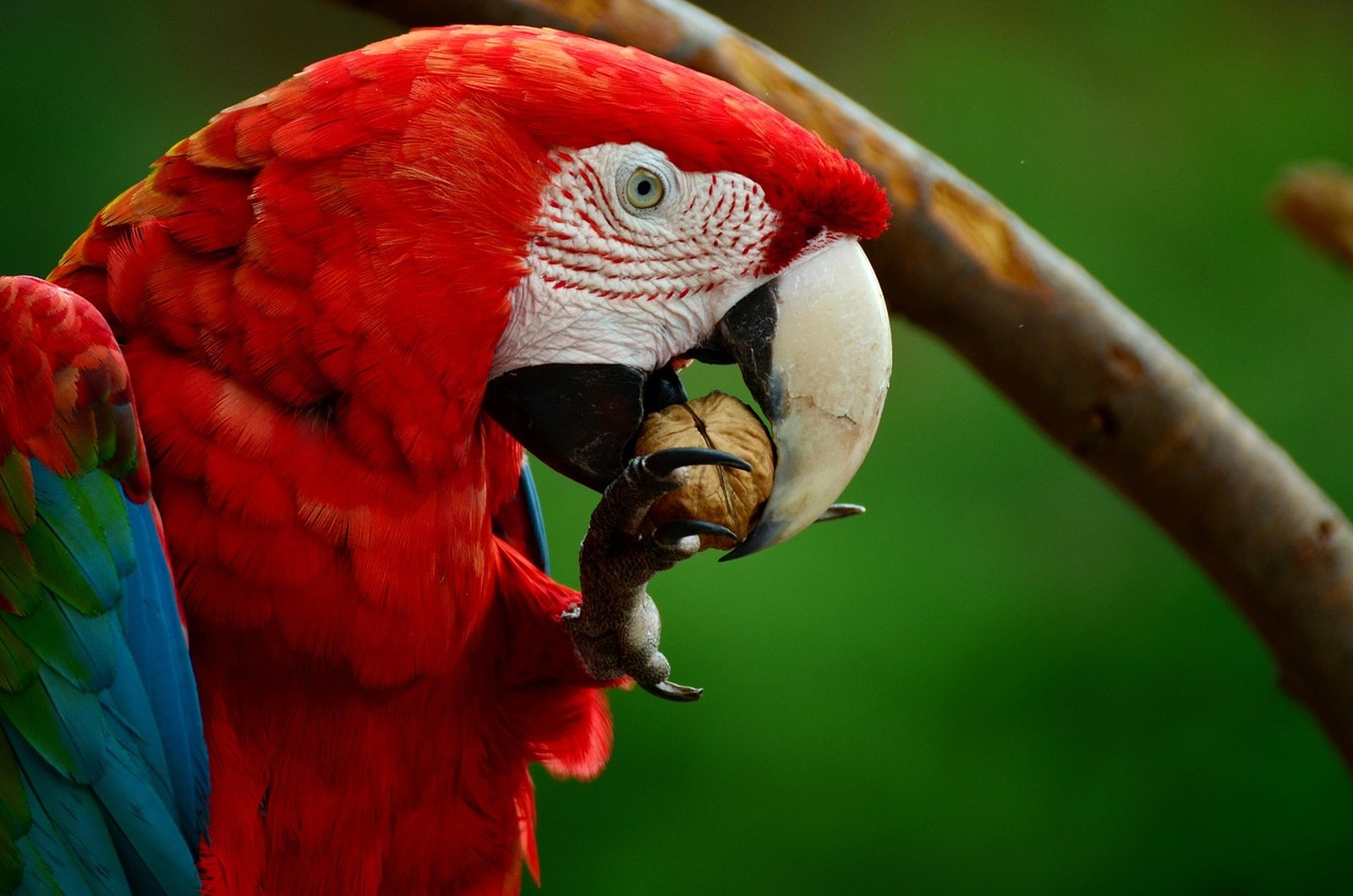
Keep a macaw and you are funding the top end of pet-bird ownership: roughly $240 to $375 a month before anything goes wrong. Every cost that applies to a small parrot is bigger here — the food bowl, the toys, the cage, the vet — because the bird is bigger, stronger, longer-lived, and more destructive than any of them.
The monthly lines
- Food, $100 to $150. Quality pellets in quantity, nuts in the shell such as walnuts and almonds as both nutrition and work, and a daily heap of fresh vegetables, fruit, and cooked foods. A macaw also wastes on a grand scale, dropping and flinging food as part of normal eating.
- Toys and perches, $60 to $100. A macaw beak is a demolition tool. Large wooden blocks, thick rope, and substantial natural perches are chewed through continuously, and replacing them is a standing cost of keeping the bird occupied and its beak in trim. A macaw left with nothing to destroy will spend that energy on your door frames, furniture, and its own feathers.
- Cage upkeep and cleaning, $30 to $50. Liners for a very large cage, cleaning supplies, replacement bowls and fittings, and a slow reserve towards repairing or eventually replacing cage parts a powerful beak bends and strips.
- Avian vet reserve, $50 to $75. Saved every month, without exception.
The numbers behind the numbers
A macaw needs an avian vet, not a general vet seeing a bird occasionally, and specialist annual checks with blood work are priced accordingly. Emergencies — a chewed cable, a toxic household item, an injured toe — are priced higher still. Start-up costs dwarf a single month: a cage big enough for a macaw to spread its wings and move freely, a play stand, and a first full health check can together exceed a year of food. Then there is home damage, the cost nobody budgets: skirting boards, window frames, and upholstery within beak range during out-of-cage time are consumables in a macaw house unless you supervise and bird-proof rigorously.
A fifty-year decision
Macaws commonly live fifty years or more. Even the bottom of the monthly range, multiplied over that lifespan, is a five-figure commitment in food alone, and it will likely span changes in your income, housing, and family. That is not a reason to walk away by itself, but it is a reason to plan: keep the vet reserve sacred, insure where suitable cover exists, and think now about who would take the bird on if you no longer could.
That long view is exactly where records stop being paperwork, and KinsLe's Transferrable Profiles lets a macaw's complete profile — its exact diet, routines, preferences, and decades of vet history — pass intact to a new owner if the bird is ever rehomed, so a fifty-year bird never has its care start again from a stranger's guesswork.