
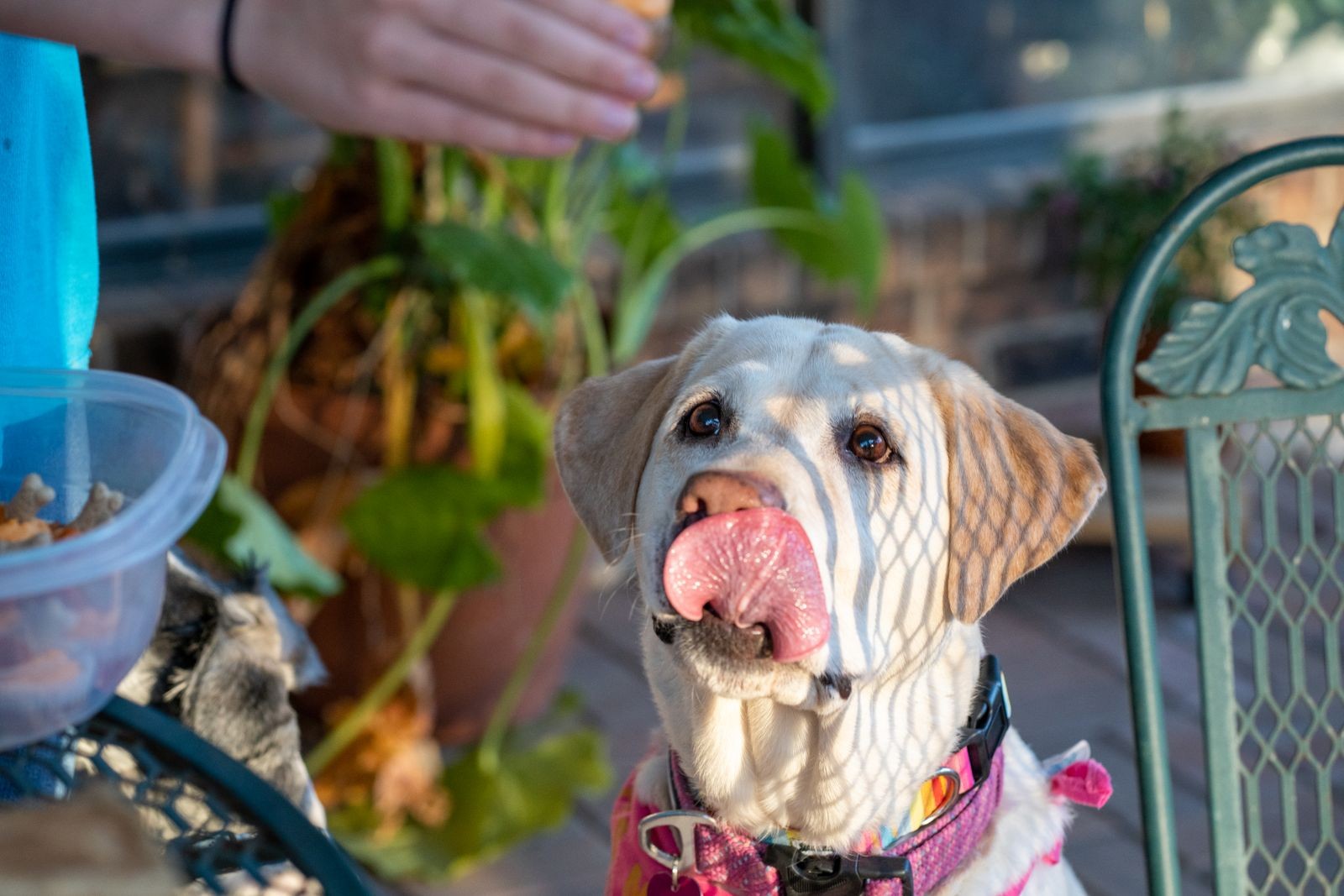
How much to feed your adult dog depends on their weight, body condition, activity, and the calorie density of their food — there is no single cup amount that fits every dog. Start with the feeding guide on the bag for your dog's ideal weight, feed that amount split into two meals for two to three weeks, then adjust up or down by about 10 percent based on whether your dog is gaining, losing, or holding steady.
Start With the Label, Then Read Your Dog
Food labels are a starting point, not a prescription. Two foods can differ by more than 100 calories per cup, so switching brands without checking calories can quietly add weight. Weigh food with a kitchen scale for the first week if you can — a heaped cup can hold 20 to 30 percent more than a level cup, especially with small kibble.
Next, learn body condition. From above, your dog should have a visible waist behind the ribs. From the side, the belly should tuck up slightly. You should feel ribs easily under a thin fat cover when you run your hands along the sides, without pressing hard. If you cannot feel ribs, or the waist has disappeared, your dog likely needs a little less. If ribs, hips, and spine feel sharp and your dog has lost muscle, they may need more — and a vet check to rule out illness.
Adjust for Real Life: Activity, Age, and Spay or Neuter
A Border Collie doing agility four days a week, a Labrador swimming daily in summer, and a senior Shih Tzu who prefers short strolls will not thrive on the same ration, even at similar weights. Active and working dogs often need more; dogs who nap most of the day need less. Many dogs need fewer calories after spaying or neutering, and seniors often need careful portions to protect joints from extra weight.
Use a simple loop:
- Weigh your dog every two to four weeks at home or at the vet
- Photograph them from above and the side in the same light monthly
- Change food by small steps only, then recheck in two weeks
- Count everything — meals, treats, chews, and table scraps all count toward the daily total
Keep treats to roughly 10 percent or less of daily calories so the main diet stays balanced.
What About Breed and Size Differences?
Small dogs have faster metabolisms per pound than large dogs, but their absolute portions are tiny, so even half a cup extra is a big deal for a 10-pound dog. Large and giant breeds do better with measured meals that support steady energy without encouraging begging-driven top-ups throughout the day. Deep-chested breeds should avoid vigorous exercise right after a large meal, so two moderate meals are usually better than one huge one.
If you feed wet food, dry food, or a mix, check the calories per can or per cup for that exact recipe — puppy, adult, senior, and weight-management formulas are not interchangeable by volume.
When Portions Alone Are Not the Answer
Sudden weight loss, ravenous appetite with weight loss, excessive thirst, vomiting, diarrhea, or a dull coat are not portion problems to solve at home. Book a veterinarian visit promptly. Thyroid issues, gut problems, parasites, and other conditions can change appetite and weight, and only your vet can diagnose the cause. Do not start a prescription diet or supplement plan without veterinary advice.
Portions raise questions between weigh-ins, too: whether ribs that feel different mean the ration should change, or how treats count on a heavy training day. Kimmy, KinsLe's built-in assistant, takes those follow-ups as they arise, with answers drawn from the KinsLe Answers library's portion guidance, so each reply fits the dog in front of you.
Whatever portion issue you bring up at a weigh-in, Kimmy in KinsLe responds with replies taken from KinsLe Answers entries about calorie density and body condition.