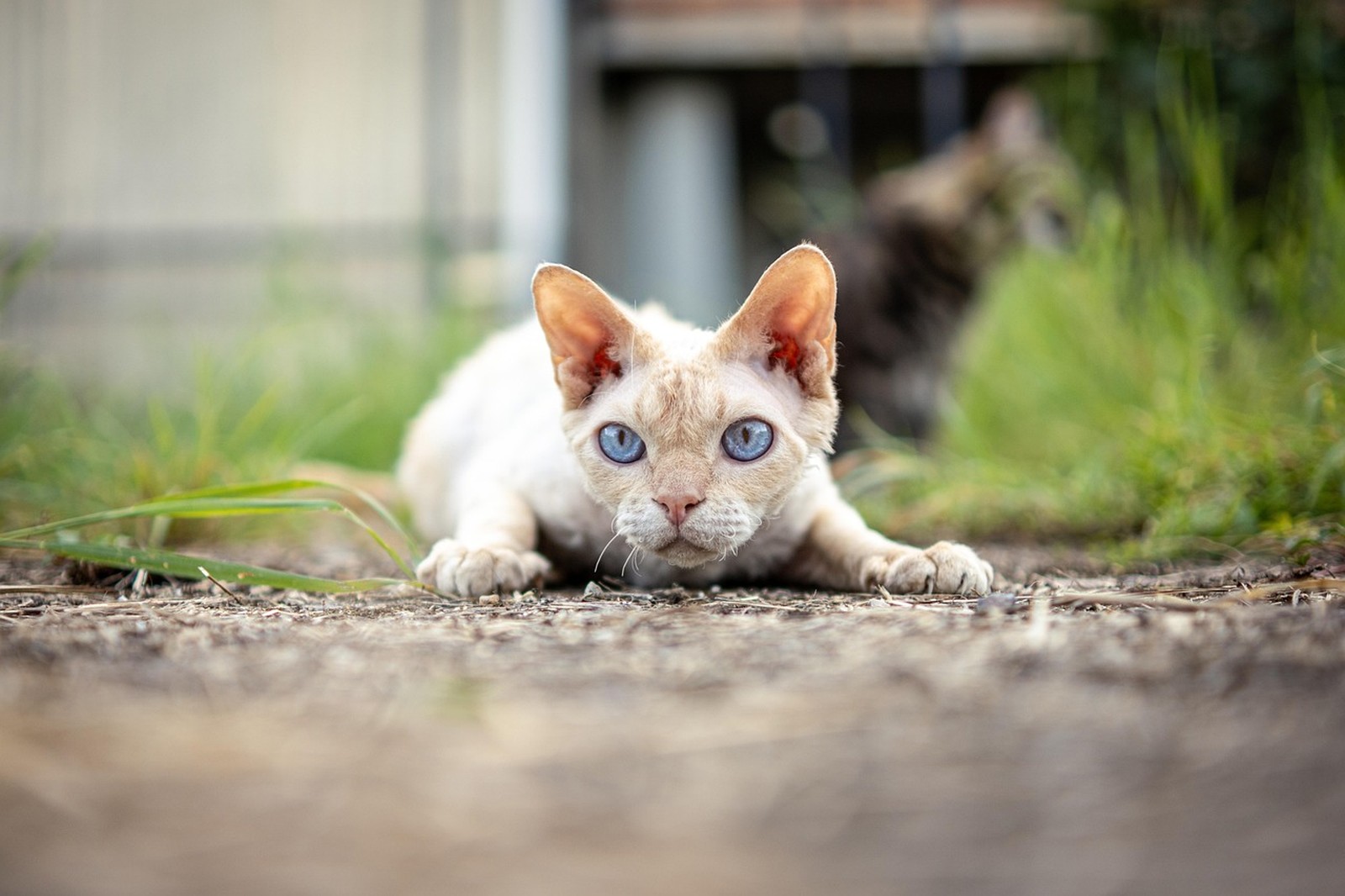
A Devon Rex needs more thought than effort. The breed's short, wavy coat is soft and fragile, with guard hairs largely absent, so the standard cat-grooming instinct, a good firm brushing, is exactly wrong here. In its place sit three jobs: very gentle weekly coat care, baths more often than most cats need, and weekly attention to those oversized ears. Get those right and a Devon is straightforward; apply longhair habits and you can damage the coat you are trying to maintain.
Handle the Waves With Fingertips, Not Force
Once a week, stroke the coat with a soft cloth or clean hands to lift loose hair and distribute oils. If you use a brush at all, choose the softest kind and barely skim the surface. Vigorous brushing breaks the delicate hairs and can leave a Devon looking patchy, and repeated friction on sparse areas, especially the chest and belly where some cats are nearly bare, can irritate skin. Shedding is light and the broken-wave coat rarely mats, so there is no detangling work to do.
Baths and Ears: The Real Schedule
With little coat to absorb it, skin oil builds up on a Devon and can leave the cat feeling greasy and the waves looking stringy. Many Devons therefore do well with a gentle bath every few weeks in warm water with a mild cat-safe shampoo; ask your vet what suits your cat's skin, and stop if bathing triggers irritation. The large, wide ears are the other priority: check them weekly for dark wax build-up and wipe the accessible outer ear gently with a damp cloth or vet-approved cleaner. A Devon who scratches its ears persistently, shakes its head, or whose ears smell should see a vet, since mites and infections both favour this ear shape.
Small Details That Protect a Fragile Cat
Devon whiskers and eyebrows are curly and brittle and snap easily, so feed from a wide, shallow dish that does not bend them, and expect a few broken whiskers as normal wear rather than damage you caused. Trim claw tips every couple of weeks, and feel the skin during coat care for the dryness or rash this thin-coated breed can develop. A Devon who suddenly loses coat in patches needs a vet visit, not extra bathing. With several small jobs running on different cycles, KinsLe's Care Teams keeps a Devon on track by letting you schedule the weekly ear check, the regular bath, and the coat session as separate assigned duties, each logged when done.