
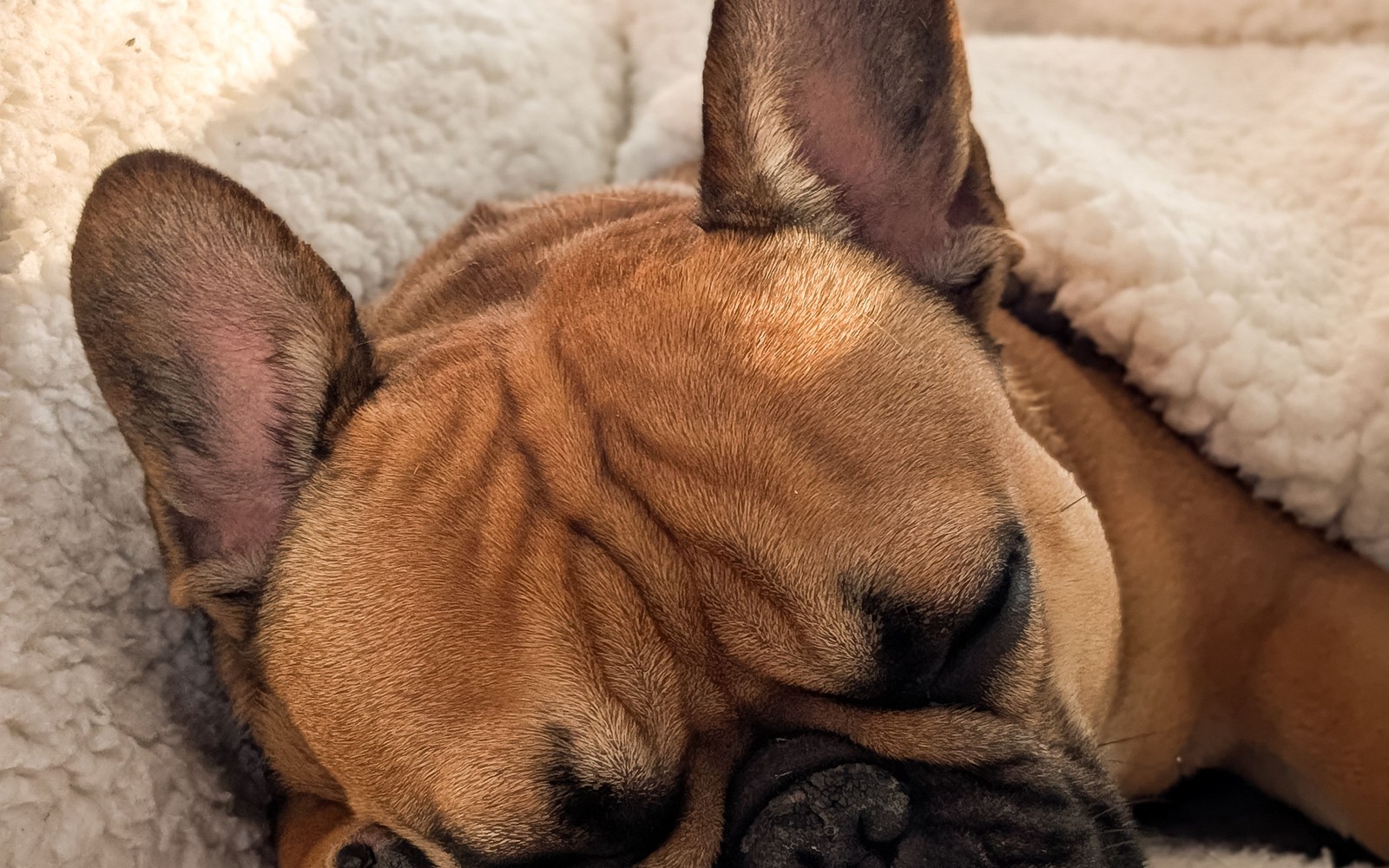
A very young puppy sleeps a great deal — often 18 to 20 hours a day in the first weeks, in short bursts scattered through the day and night — because that is when growth happens, learning consolidates, and a brain processing an entirely new world recharges. An overtired puppy is rarely a calm puppy: expect zoomies, extra biting, and frantic behavior from a puppy who actually needs a nap, just like an overtired toddler.
What normal puppy sleep looks like
Very young puppies typically play or explore for 30 to 60 minutes, then crash hard wherever they are — mid-toy, mid-room — for an hour or two. As they grow toward adolescence, total sleep gradually reduces and stretches get longer, especially overnight, but teenagers still need far more rest than adult dogs. Individual variation is wide: larger, fast-growing breeds may seem especially sleepy during growth spurts, and a big day of visitors or a first puppy class can mean an extra-long recovery nap the next day. Puppies also dream. Twitching paws, soft whimpers, and rapid eye movements under closed lids during sleep are normal. There is no need to wake a dreaming puppy unless they seem genuinely distressed on waking.
Creating sleep your puppy can actually get
Give your puppy a quiet, comfortable nap spot — a crate with the door open, a bed in a low-traffic corner — and protect it. Teach children and visitors that a sleeping puppy is not available for cuddles. In busy homes, scheduled enforced naps work wonders: after a play and toilet session, settle your puppy in their sleep spot with a chew and let household noise drop around them. A loose daily structure helps sleep happen before exhaustion does:
- Alternate active periods with planned rest, not constant stimulation
- Keep exciting play earlier rather than right before family bedtime
- End the day with a calm wind-down: last toilet trip, quiet stroking, lights low
- Keep the sleeping area comfortably cool and draft-free, with water available nearby for older puppies
If your puppy only sleeps when the house is silent, gradually keep normal low-level sounds during naps so they learn to rest through real life.
When sleep is a sign to check in
Sleeping a lot is normal for puppies; sleeping differently is worth noticing. Contact your veterinarian if your puppy is hard to rouse, skips meals because of sleepiness, seems weak or wobbly when awake, or if sleep changes come with vomiting, diarrhea, coughing, or not drinking. A puppy who cannot settle at all — pacing, panting, and restless night after night — also deserves a conversation with your veterinarian or a qualified trainer, since discomfort and anxiety both disrupt rest. Also note that puppies who are kept going all day by a busy household can mask tiredness until they suddenly melt down in the evening. If the witching hour is wild in your home, more daytime naps, not more exercise, is usually the fix.
Balancing play, training, and naps
Sleep questions keep pace with growth: how long an eight-week-old should nap between play bursts, whether a teenager who crashes after puppy class needs still more rest, when broken nights stop being typical. Each new stage brings its own version of the question, and the right rest total shifts as the puppy grows. Households learn to spot drowsiness early and settle the puppy before tiredness turns into zoomies and biting. Put a follow-up question to KinsLe's Kimmy as each stage arrives; she answers using the KinsLe Answers library.