
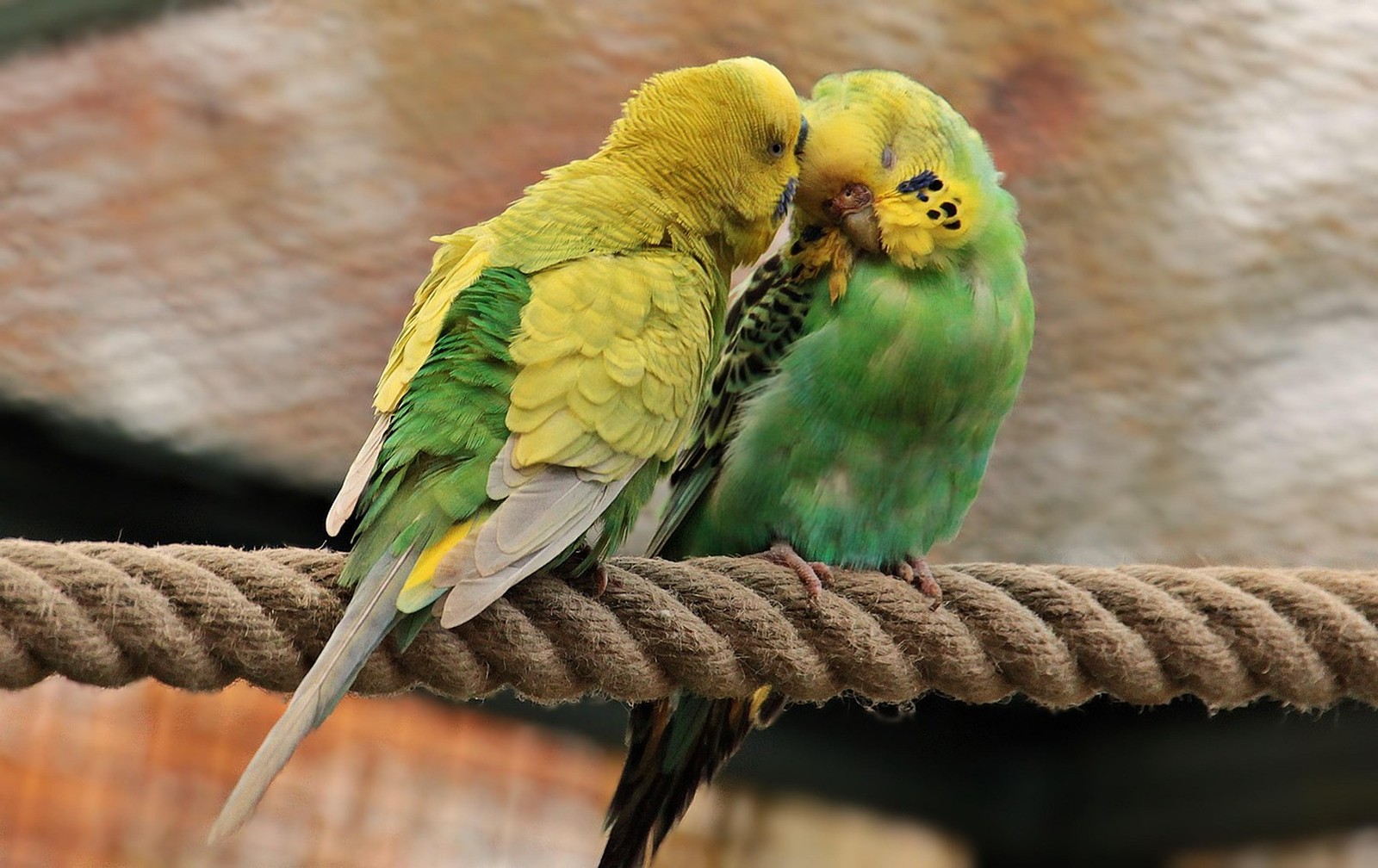
Budgies are flock birds through and through, and social time is a daily requirement rather than a treat. A budgie kept on its own needs at least three hours of genuine interaction spread through the day — talking, training, sharing out-of-cage time — and ideally spends most of its waking hours in a room where household life happens around it. A lone budgie left in a silent spare room for the working day, however clean the cage, is a lonely budgie.
The single budgie: you are the flock
With no bird companion, your budgie bonds to people, and the commitment is closer to a small dog's than many buyers expect. Direct interaction should include conversation at close range, short training sessions built on millet rewards, supervised flight time in a bird-safe room, and simply being included — cage near the desk while you work, perch at the table while you read. Background company from a radio or television fills silence but does not replace interaction; budgies respond to being spoken to, not just to noise.
If your working life means long empty days, the honest answer for a single budgie is usually a second budgie. Two birds introduced properly will chatter, preen, and play together all day, which no human schedule can match.
The pair: less dependent, not no-effort
A bonded pair entertains itself for much of the day, so the pressure on your time drops — but it does not vanish. Paired budgies still need daily human contact to stay hand-tame: a short session of talking, target training, or hand-fed treats for each bird, plus regular supervised time out of the cage. Skip it for a few weeks and many paired budgies quietly revert to preferring each other and treating hands as suspicious. Daily health checks matter too, and they are far easier on birds used to being handled — look at the cere, vent, and feet, and note who is eating.
What good social time actually looks like
Spread contact across the day in the budgie's natural rhythm: lively interaction in the morning, gentle company during the midday rest, and another active session in the late afternoon. Teach step-up, recall to the hand, and simple target work in five-minute bursts; mental engagement tires and satisfies a budgie in a way passive sitting does not. Rotate toys weekly, offer a foraging tray, and let the bird watch household activity from a play stand.
Watch for the signs of too little company: constant loud flock-calling when you leave the room, frantic over-bonding to a mirror or a single toy, lethargy and silence in a normally chatty bird, or feather-damaging behavior. Any of these, alongside a drop in appetite or changed droppings, also warrants an avian vet check rather than assuming loneliness is the whole story.
Dividing the morning chat, the afternoon flight session, and the evening check between family members in KinsLe's Care Teams, with each duty timestamped when done, keeps a budgie's social hours steady through busy weeks.