
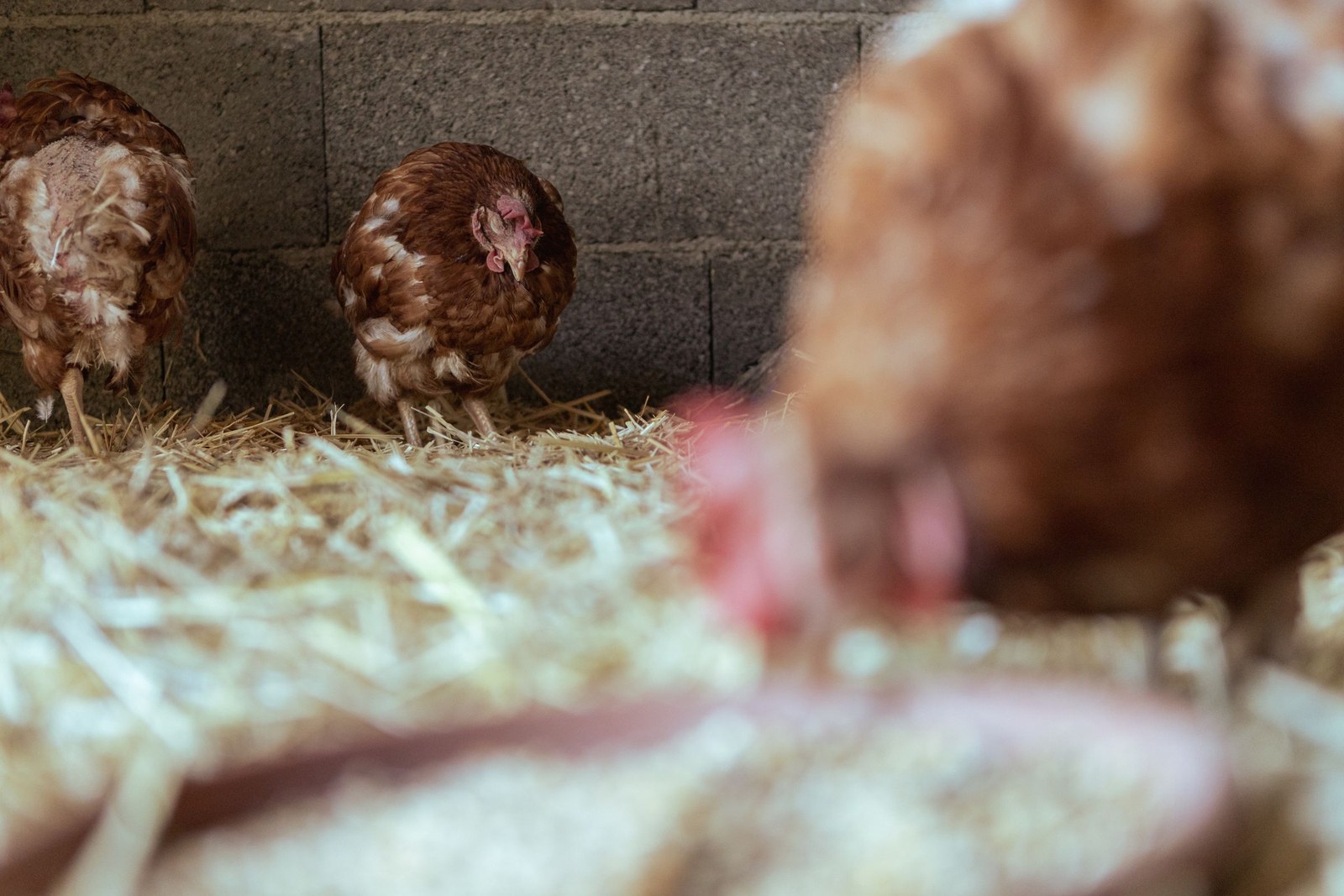
Clean a chicken coop on two rhythms: spot-clean droppings and refresh bedding about once a week, and do a fuller cleanout every few months — more often for a crowded coop, less often if you run a well-managed deep-litter system. If you can smell ammonia at chicken height, you are overdue, whatever the calendar says.
The Weekly Routine
Once a week, scrape or scoop the heaviest droppings, especially under the roosts where most manure lands overnight. Dropping boards or trays under roosts make this a five-minute job and keep the rest of the bedding cleaner for longer. Top up bedding — pine shavings, chopped straw, or similar dry material — so the floor stays dry and cushioned. Check nest boxes at the same visit. Soiled nest bedding means dirty, sometimes inedible eggs, so refresh it whenever it looks damp or messy, and replace any cracked or broken eggs you find. Top up dust-bathing areas, too: hens keep feathers and skin healthier when they can dust-bathe regularly. Wash waterers weekly as part of coop care, and scrub feeders when they get damp or caked. Cleaning the living space but leaving a slimy waterer undermines the whole job.
The Deep Clean, Every Few Months
Every few months — typically at a season change or when bedding is spent — do a full cleanout:
- Move the hens to a secure run or temporary pen
- Strip all bedding and droppings, and compost them away from the coop
- Sweep or scrape floors, roosts, and nest boxes clean
- Wash surfaces if needed, let everything dry completely, then lay fresh bedding
That drying step matters. Putting fresh bedding into a damp coop traps moisture, and moisture plus droppings is what creates ammonia and frostbite risk in winter. Ventilation deserves equal attention at cleanout time: vents high in the coop let moist air escape without drafting directly on roosting hens. A coop can have immaculate bedding and still harm birds if it is sealed up damp. Inspect while you clean — look for mite hiding places in roost joints and nest boxes, mouse holes, damp corners, and worn latches a predator could work loose. Cleaning day is your best early-warning system.
Deep Litter: The Managed Exception
The deep-litter method deliberately builds up bedding over months, adding fresh material and turning it so the lower layers compost in place. Done well in a spacious, well-ventilated coop, it can be cleaned out only once or twice a year. Done badly — too many birds, too little fresh bedding, poor ventilation — it becomes exactly the ammonia problem cleaning is meant to prevent. If the smell stings your eyes, the method is not working in your coop, whatever the theory says. Whatever system you use, wear a mask when handling dry, dusty bedding and droppings, wash hands and boots afterwards, and keep children out of the dustiest part of the cleanout.
Coop Questions? Take Them to Kimmy
A cleanout settles the bedding and raises fresh questions in the same visit. The litter under the roosts may smell sharp two weeks after a full refresh, one corner may stay damp, or the nest boxes may seem to need fresh bedding sooner than expected. Questions like those — about bedding depth, vent placement, or how often to refresh a crowded coop — are follow-up questions you can bring to KinsLe. Whether the question is about a weekly bedding refresh or a seasonal deep cleanout, put a follow-up question to KinsLe's Kimmy; she answers using the KinsLe Answers library.