
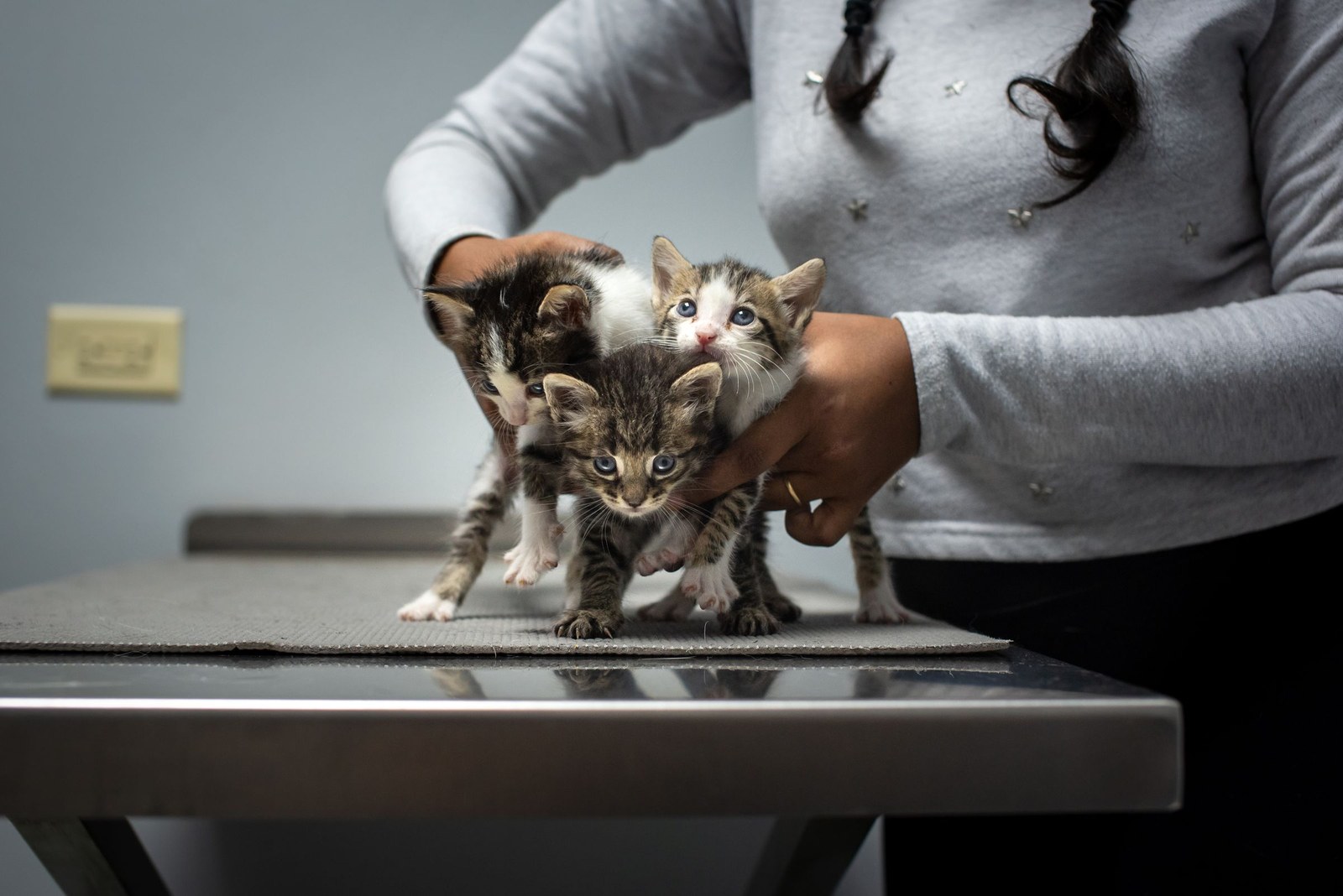
Kittens typically visit the vet every few weeks through the early months — commonly every three to four weeks from around six to eight weeks of age until about four months old — for a series of booster vaccines and growth checks, then again as they approach their first birthday. Your veterinarian sets the exact schedule for your kitten, and the series matters: one visit alone does not build full early protection.
Why It Is a Series, Not a Single Shot
A nursing kitten receives antibodies from her mother, and those maternal antibodies protect her — but they also interfere with vaccines. As the antibodies fade at an unpredictable rate over the first few months, boosters are timed to catch the window when each vaccine can take full effect. Skipping or stretching the series too far can leave a gap in protection, which is why vets would rather see a kitten several times in her first months than once.
At each visit your vet is doing more than vaccinating. Expect a weigh-in to confirm steady growth, a check of eyes, ears, teeth, heart, and lungs, discussion of parasite prevention and deworming, and a chance to raise feeding, behavior, and litter questions while they are still small questions.
A Rough First-Year Rhythm
Exact products and timing vary by clinic and by whether your kitten will go outdoors, but the shape of the year usually looks like this:
- Six to eight weeks: first exam and first core vaccine in the series, plus a general health and parasite check.
- Every three to four weeks after that: booster visits continuing the core series, with growth and development checks each time.
- Around four months: the series typically completes, and rabies vaccination is given where required or recommended.
- Around five to six months: many owners schedule the spay or neuter conversation and procedure in this window, guided by their vet.
- Approaching one year: a follow-up visit with adult boosters as your vet advises, and a transition plan to adult food and annual checkups.
Treat this as a map, not a prescription — an indoor-only kitten in one region and a barn kitten in another may legitimately have different plans.
What to Bring and What to Ask
Bring any paperwork from the breeder or shelter — prior vaccine dates, deworming history, microchip details — because your vet will build the schedule from what has already been done. Ask what each vaccine covers, which additional vaccines your kitten's lifestyle makes sensible, what reactions are normal in the 24 hours after a visit (mild sleepiness is common), and what would warrant a call.
Also use these visits to ask about microchipping if it has not been done, and to confirm the contact details on the chip record are yours.
Keeping Records You Can Actually Find Later
Every one of those visits generates paperwork, and it gets asked for again — by a new vet, a sitter, a groomer, a boarding facility. Pet Passport on KinsLe is the records packet for exactly this: vaccines, medications, allergies, and documents kept together in your kitten's profile and shareable with vets or sitters when they need them. Instead of digging through a drawer of folded receipts, you share one complete packet. For every booster in that first-year series, the Pet Passport packet on KinsLe holds the visit date, vaccine given, and weight recorded, so a sitter or new clinic sees the complete history at a glance.