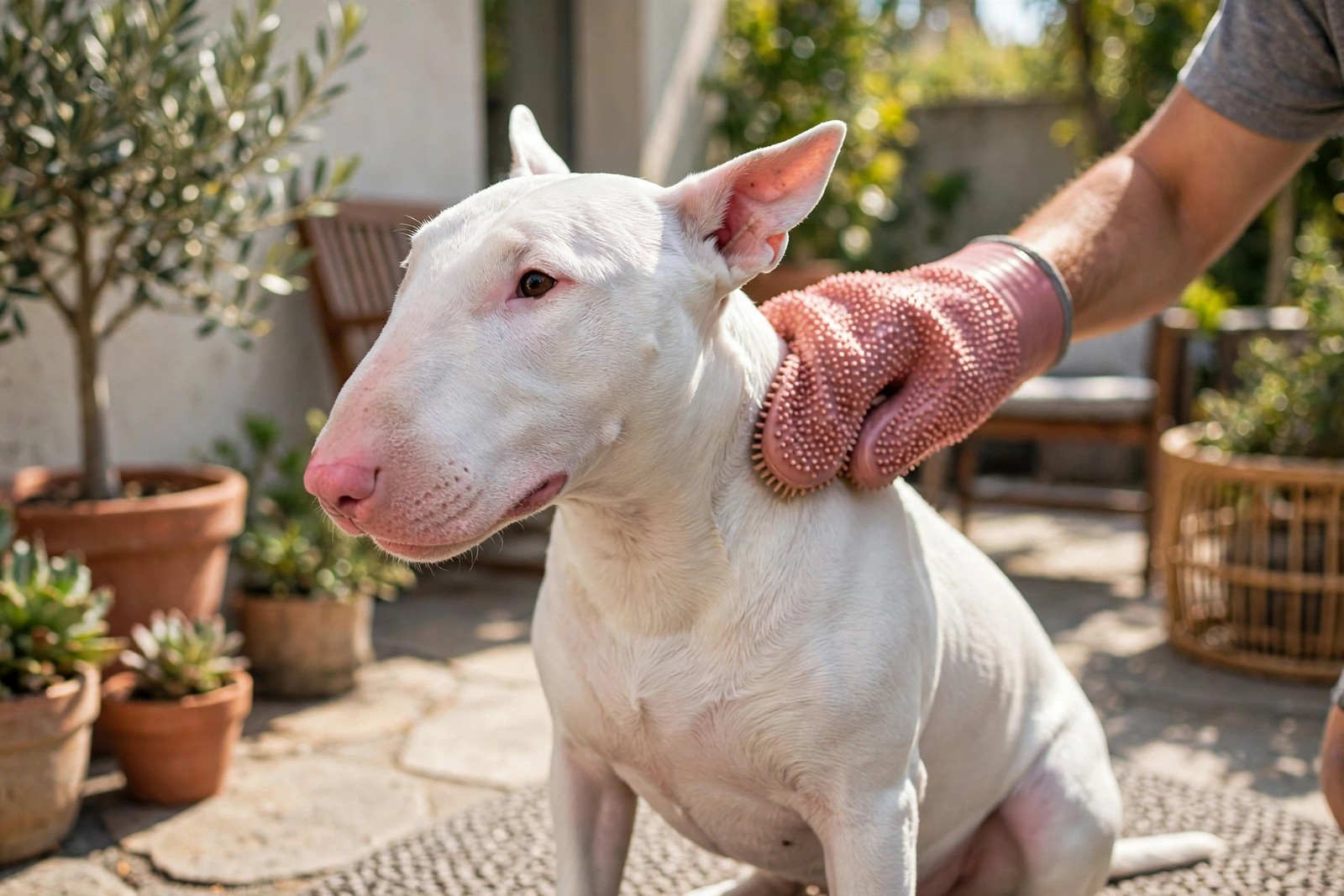
Five to ten minutes, once a week
A Bull Terrier is one of the easiest coats in the dog world to keep. The hair is short, flat and close, with a distinctive harsh texture and a natural gloss, and it asks for one brief session a week: a rubber grooming mitt or soft bristle brush worked over the whole dog for five or ten minutes lifts the week's loose hair, spreads coat oils and keeps the shine that a healthy Bull Terrier should show. There is nothing to trim, nothing to strip and nothing that can mat.
Shedding is moderate and year-round, with slightly heavier spells as the seasons change. During those spells a second quick mitt session in the week noticeably reduces the short, stiff hairs that work their way into upholstery and are oddly hard to remove once there.
Bathing: less is more on this skin
Bull Terriers, particularly white ones, are known for skin that reacts easily. Frequent bathing is one of the commonest ways owners accidentally create the itching they were trying to fix, because shampoo strips the short coat's limited oils and leaves the skin dry and reactive. Bathe when the dog is genuinely dirty or smelly — for many Bull Terriers that means every month or two, sometimes less — using a mild dog shampoo, rinsing extremely thoroughly and drying fully, including in the groin and armpits where damp sits.
Between baths, a wipe with a damp cloth handles most dirt. If your Bull Terrier is scratching, check the obvious first: a recent bath, a new product, a new food or a freshly washed bed, before assuming the skin itself is the problem. Persistent redness, hot spots, hair loss in patches or a dog worrying one area raw are veterinarian territory, not grooming-shelf territory.
The sun, the pink skin and white coats
White Bull Terriers and pale-skinned dogs generally can sunburn, and the exposed places are exactly where the coat is thinnest: the nose, the ear tips, the belly and any sparse patches. A dog that lounges in strong sun can come in with pink, tender skin, and repeated burning is a genuine health concern rather than a cosmetic one. Provide shade, bring the determined sunbather in during the fiercest hours and raise recurring redness, thickened skin or sores that do not heal with your veterinarian promptly.
That weekly brush doubles as your early-warning system: on a coat this short, your hands will find lumps, ticks, thorn scratches and sore patches immediately, long before they would be visible on a long-coated breed.
Nails, ears and the egghead details
The jobs that actually fill a Bull Terrier's grooming list are nails, ears and teeth. Nails grow steadily and a dog exercised on grass or soft ground will not wear them down, so trim every few weeks and listen for clicking on hard floors as your reminder. Ears are open and upright, so they stay fairly clean, but check weekly for wax build-up, redness or the head-shaking that suggests irritation, and wipe the visible outer ear only.
Teeth deserve routine brushing because this breed, like many terriers, can build tartar quietly. While you are close to that famous egg-shaped head, check the eyes for discharge and the tight skin around the muzzle for trapped dirt after meals, especially in dogs that eat enthusiastically, which is most of them.
Short sessions still deserve a slot
The risk with an easy breed is not doing the routine badly but letting it evaporate: the coat looks fine, so the week becomes a month, and nails and skin checks slide with it. Anchor the session to a fixed moment and keep it pleasant and brief, because a Bull Terrier that enjoys its ten minutes will present itself for them. In KinsLe, Care Teams can list that one weekly Bull Terrier session — brush, skin scan, ear glance — as a recurring duty, small enough that whoever is free can take it without the job ballooning.