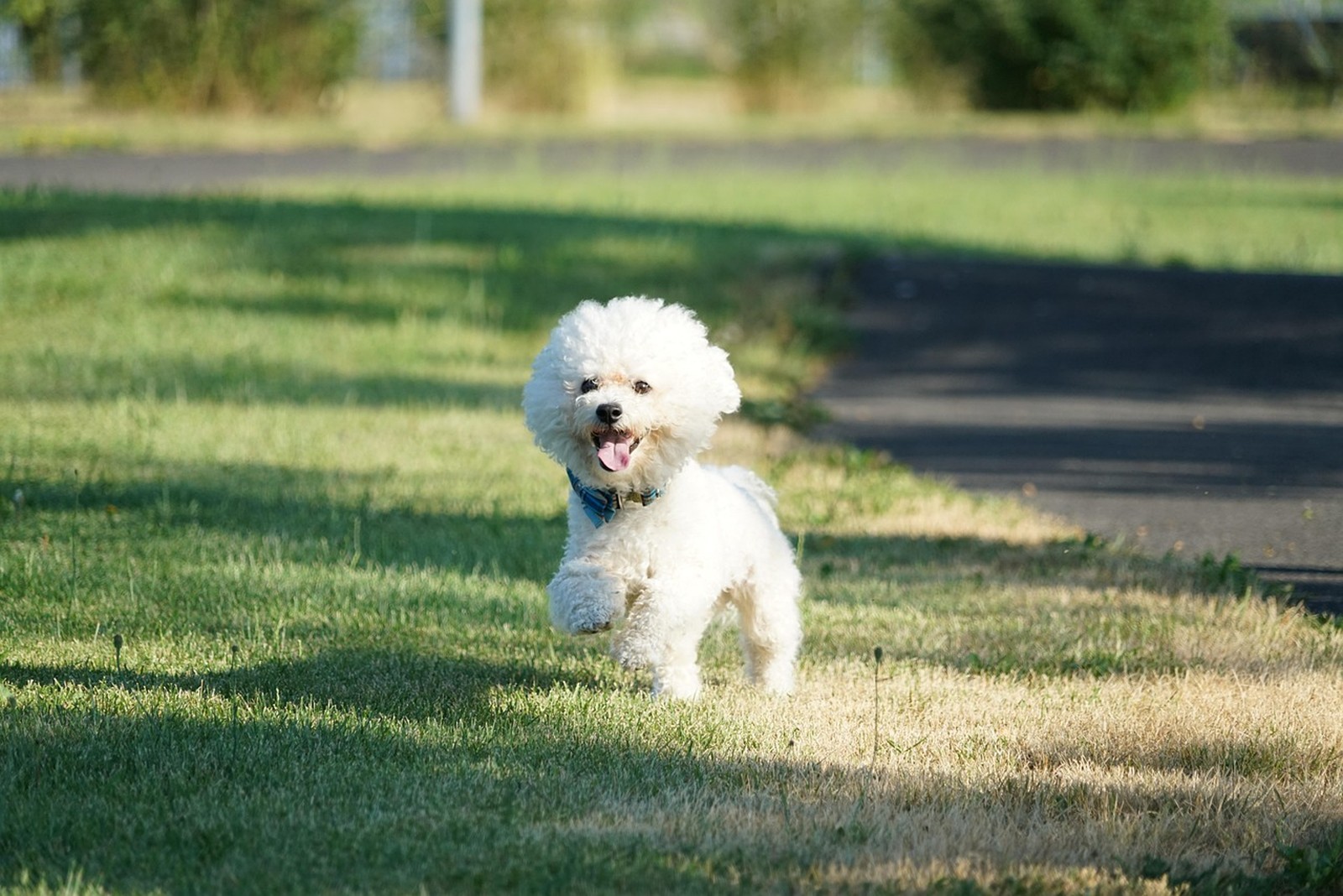
A Bichon Frise should be brushed most days — daily if you can, three or four times a week at the absolute minimum — and professionally groomed every four to six weeks without fail. No common breed punishes a skipped grooming schedule faster, because the Bichon's soft, curly double coat grows continuously and barely sheds: the hair that would fall out of another dog stays caught in the curls, where it wraps, tangles, and felts into mats against the skin.
The Home Routine: Brush, Then Prove It With a Comb
Work in sections with a slicker brush, lifting the coat and brushing from the skin outward — groomers call it line brushing — then run a metal comb through the same section. The brush makes the coat look done; the comb tells you whether it is. Where the comb glides, move on; where it snags, tease the knot apart with fingers and brush tips rather than dragging, which hurts and teaches the dog to dread the table. Spend your extra attention where mats always start: behind the ears, in the armpits, on the chest where a harness sits, around the collar line, and in the longer furnishings on the legs.
Five to ten minutes most days beats an hour once a week, because a Bichon's tangles compound — a small snarl on Monday is a felted patch by the following Monday, and a heavily matted coat often leaves the groomer no humane option but to clip it right off and start again.
The Professional Clock: Every 4–6 Weeks
Book the full groom — bath, blow-dry, clip or scissor tidy, nails, ears — on a four-to-six-week cycle, and book the next appointment before you leave the salon so the interval cannot drift. Between visits, bathe at home every two to four weeks if the white coat picks up dirt, but always brush and comb fully before the bath: water and shampoo tighten existing tangles into solid mats, and drying a matted Bichon multiplies the problem you were trying to wash away. Wipe the face and eye area daily with a damp cloth; tear overflow on white fur stains rust-red and stays damp against the skin if ignored, and any heavy staining, gunky discharge, or sudden change is a vet conversation rather than a grooming one.
Puppies and Coat Change
Expect a rough patch at roughly six to twelve months, when the soft puppy coat gives way to the denser adult coat and matting speeds up noticeably — many owners briefly shorten the clip through this stage while keeping the home brushing daily. Starting table manners early matters more than technique: a Bichon groomed calmly every day as a puppy is an easy adult client, and this breed will be visiting groomers its entire life.
All of which makes the choice of groomer a real decision, not a nearest-pin decision — you want someone who grooms curly, continuously growing coats regularly and will keep a four-to-six-week rhythm. KinsLe's Pet Services Directory helps you find local groomers and pet-care businesses near you, so your Bichon's standing appointment sits with a professional who knows exactly what this coat does between visits.