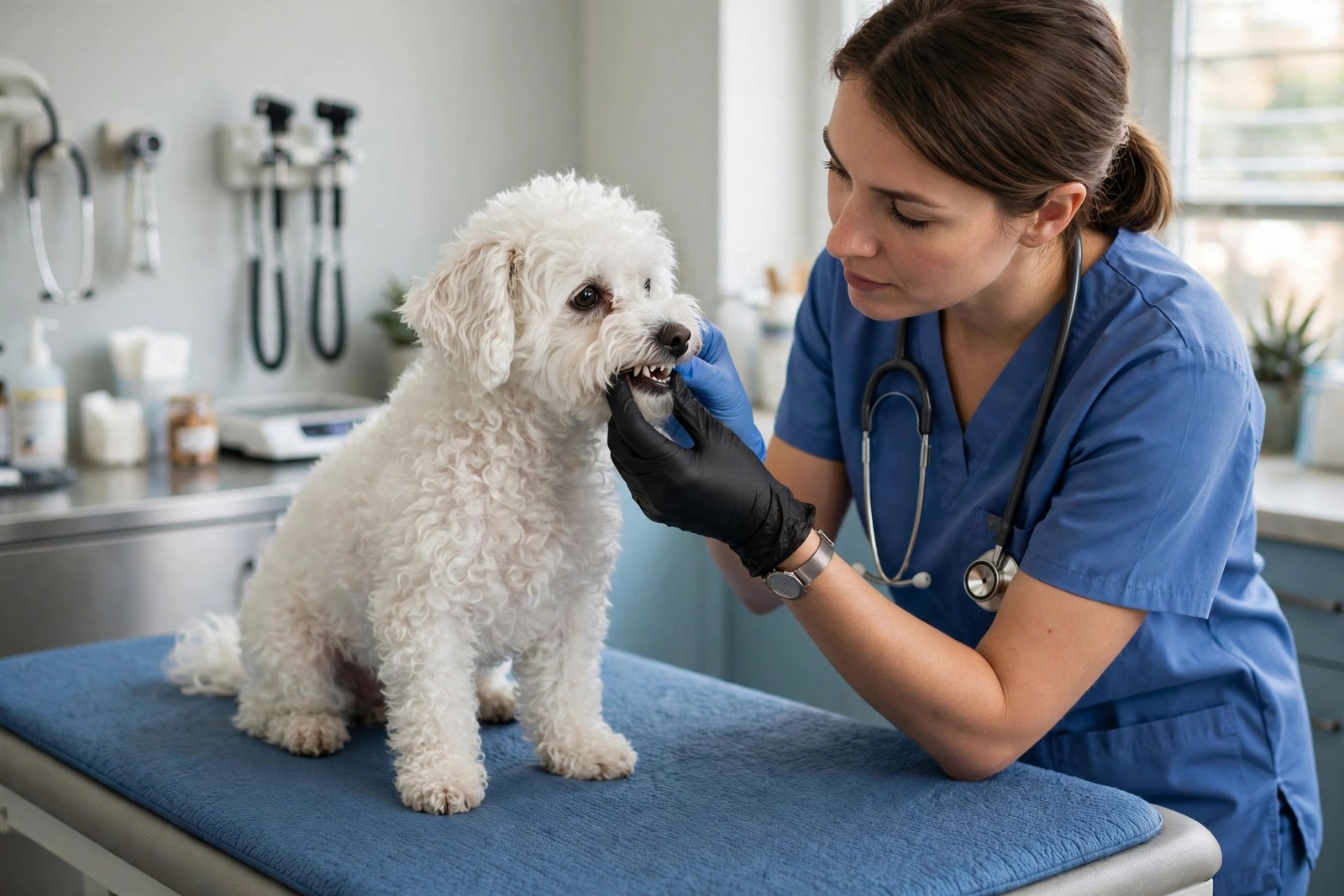
A Yearly Checkup Suits a Healthy Adult Bolognese
An adult Bolognese in good health needs one full routine checkup each year. Puppies should visit every few weeks in their first months while vaccinations, growth, teething, and weight are followed closely, and a senior Bolognese should be seen twice a year. This is a long-lived little breed, which is a gift, but it also means more years in which teeth, knees, eyes, heart, and weight need watching, and twice-yearly visits in old age catch slow changes while they are still small.
The annual exam covers heart and lungs, abdomen, coat and skin, eyes, ears, joints, and weight. In a Bolognese, two areas deserve particular time: the mouth, and the kneecaps.
Teeth Are the Bolognese Appointment Within the Appointment
Small toy breeds fit a full set of teeth into a small jaw, and crowding lets tartar build quickly along the gum line, especially on the back teeth you rarely see at home. Ask your vet to lift the lips and examine the whole mouth at every checkup, and to tell you plainly whether brushing at home is holding the line or whether a professional cleaning needs to be scheduled rather than discussed again next year.
Between visits, watch for the quiet signs of dental discomfort in a Bolognese: eating more slowly, favouring soft food, dropping kibble, bad breath that is new, pawing at the mouth, or becoming less keen on chew toys she used to love. Any of those earns an earlier appointment, because a dog this size feels dental pain keenly and often simply eats less rather than complaining. Puppy visits should also confirm that baby teeth have fallen out on schedule, since retained baby teeth in toy breeds trap debris against the adult teeth beside them.
Knees, Hips, and the Occasional Hop
Bolognese can be prone to kneecaps that slip out of place, which owners often notice as a brief skip or hop on a back leg that then returns to normal. Mention every episode at the checkup, even the ones that lasted two seconds, and note roughly how often it happens. Your vet can grade how stable each kneecap feels during the exam and advise whether monitoring, weight control, or referral is the right level of response for your dog.
Weight ties directly into knee comfort. A Bolognese carrying extra ounces is asking small joints to do outsized work, and the fluffy white coat hides those ounces beautifully. Weigh your dog at home regularly, learn from your vet what her ribs and waist should feel like, and treat unexplained gain as a topic for the next visit rather than a mystery.
Eyes and Life Indoors at Face Height
As a close companion who lives at face height on sofas and laps, a Bolognese's eyes are easy to observe daily. Redness, watery discharge, cloudiness, or new tear staining that mats the facial hair should be raised at the checkup, and squinting or pawing at an eye should be seen the same day.
The Senior Bolognese: Twice a Year, Gently Tracked
In the senior years, twice-yearly visits let your vet follow weight, dental health, knee comfort, heart sounds, and any screening results as a gentle trend. Bring notes on appetite, water intake, sleep, toileting accidents in a previously reliable dog, and whether she still seeks out her usual laps and games, because those quality-of-life details shape senior care decisions.
Keeping that long life documented in one place makes every handover between clinics simple, and KinsLe's Pet Passport holds your Bolognese's dental history, weights, and screening notes together in a single packet that fits the way a small companion dog actually moves through the world.