
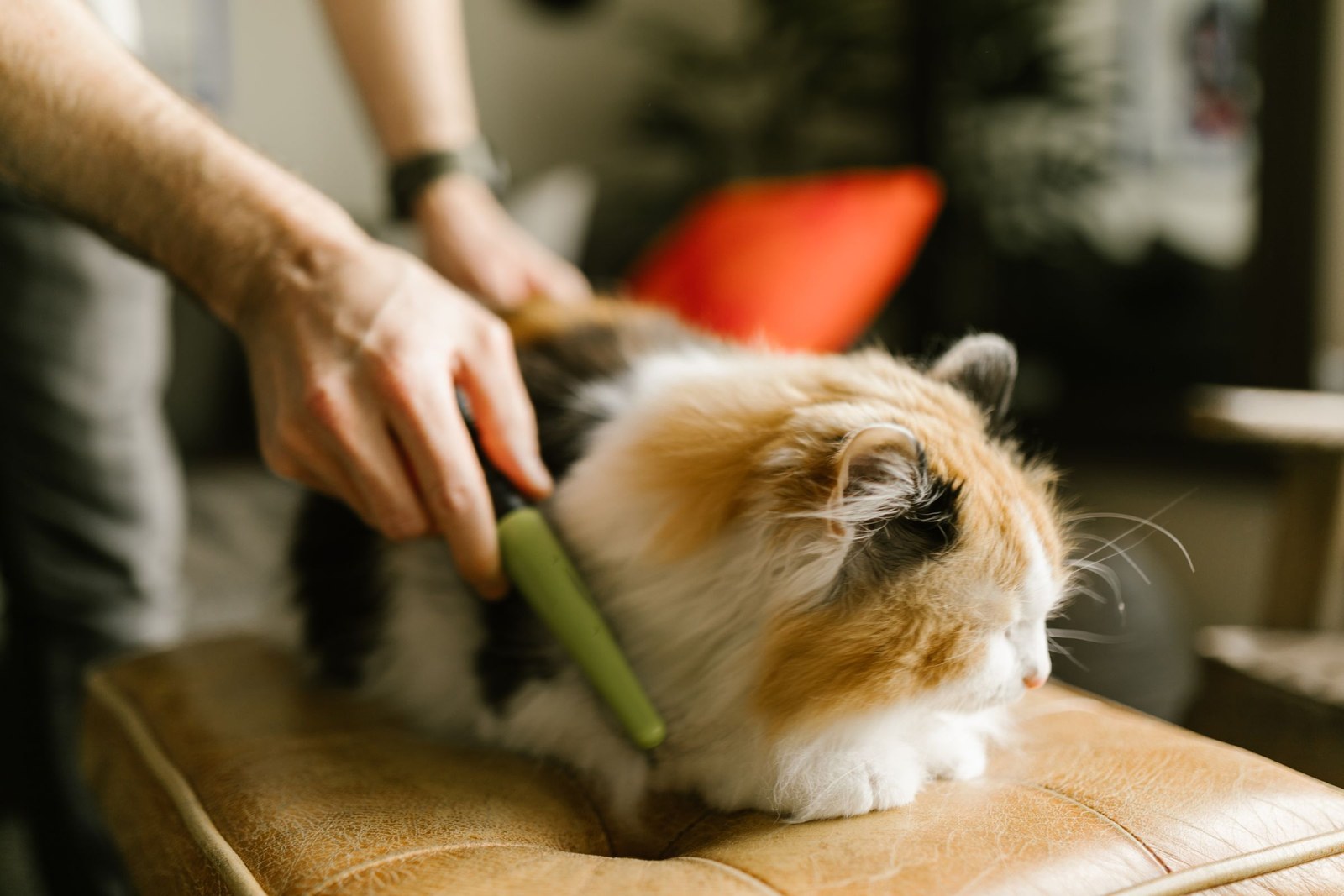
Once or twice a week is plenty for most short-haired cats. A five-minute session with a soft bristle brush or rubber grooming mitt lifts loose fur, spreads natural skin oils, and gives you a quick chance to check for fleas, dry patches, or lumps — long before that fur ends up on your sofa, your black trousers, and every cushion in the house.
Why Short Hair Still Needs Brushing
Short does not mean maintenance-free. A domestic shorthair, a British Shorthair, or a sleek Siamese still sheds year-round, and swallowed loose hair is a common trigger for hairballs. Brushing removes that hair on your terms instead of your cat's. It also keeps skin healthier, because the gentle massage encourages circulation and lets you spot early changes — a tick after a garden visit, a scratch from a play fight, or a patch of flaky skin that is worth mentioning at the next vet visit.
Think of it as a health check disguised as fuss. Cats who are brushed regularly tend to tolerate handling better too, which makes vet exams, nail checks, and travel a little less dramatic for everyone.
A Routine Your Cat Will Tolerate
Pick a calm moment — after a meal or during that sleepy evening sprawl works better than mid-zoomies. Let your cat sniff the brush, then start where most cats enjoy contact: cheeks, chin, and the top of the head. Move to the back and sides in the direction the fur grows, using light pressure. You should never need to press hard; the brush does the work.
- Keep the first sessions to two or three minutes and build up slowly
- Pair brushing with a small treat or calm praise so it predicts something good
- Stop while your cat is still relaxed, not after they have had enough
- Use a rubber mitt for cats who dislike a traditional brush — it feels more like stroking
If your cat walks away, let them. Forcing a session teaches them to hide when the brush appears. Tomorrow is fine.
When to Brush a Little More
During spring and autumn coat changes, or if your cat is shedding heavily onto furniture, step up to three short sessions a week for a few weeks. Senior short-haired cats also benefit from a bit more help, because arthritis can make it harder for them to twist and groom their back and hips themselves. Kittens are the opposite case: keep it very brief and playful so they grow up seeing the brush as normal.
Watch the skin as you go. Redness, bald patches, excessive dandruff, or sudden heavy shedding that is not seasonal are not a brushing problem to solve at home — book a vet check and describe what you have noticed.
Brushing Questions Worth Asking as They Come Up
A weekly rhythm is easy to state and harder to apply to the cat in front of you. Is twice a week enough once the spring shed starts coming out in handfuls? Should an older cat who grooms less often get shorter, gentler sessions instead? What changes when your cat tolerates the mitt but bolts from the bristle brush? Put them to Kinny, the built-in AI assistant in KinsLe, as they arise, and think through the session length and frequency that fit this cat.
It is a small habit with an outsized payoff: less fur, fewer hairballs, and a cat who actually comes over when they see the brush. A shedding season, a senior cat who grooms less than before, or a cat who bolts at the mitt — Kinny inside KinsLe answers follow-up questions about each case, using the library behind KinsLe Answers.