
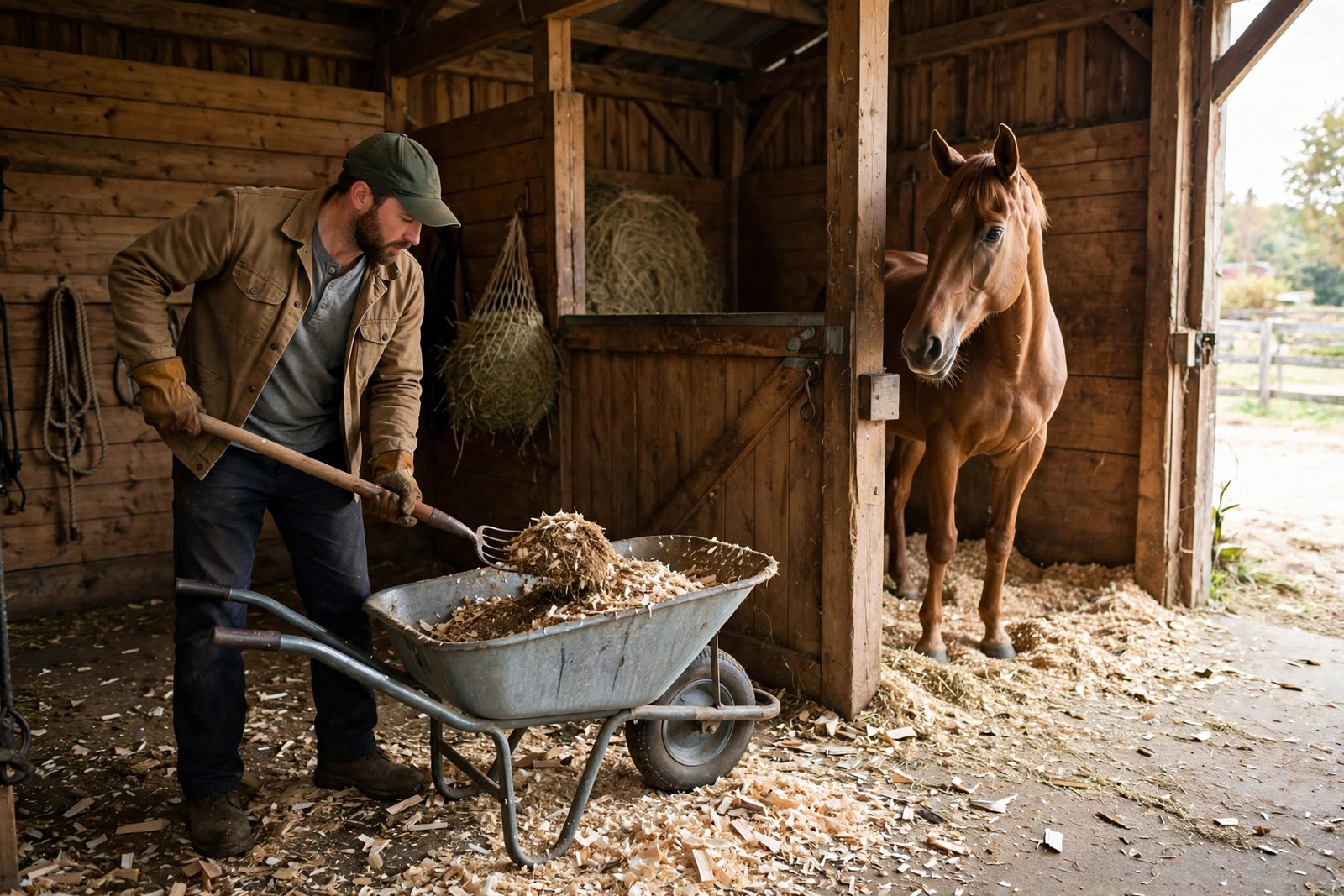
Clean your horse's stall at least once a day — picking out droppings and removing wet bedding — and give field shelters regular manure removal too. Horses spend hours standing and lying in these spaces, breathing whatever rises from the bedding, so stall hygiene is respiratory health, hoof health, and comfort all at once. A skipped day happens; a skipped routine shows up quickly in smell, flies, and feet.
Why Daily Mucking Out Matters
Urine-soaked bedding releases ammonia, which irritates horses' airways and eyes — and yours, at mucking-out height. Horses in poorly ventilated, high-ammonia stalls are set up for respiratory irritation, which matters most for horses already prone to equine asthma. Wet bedding left underfoot also softens hooves, encourages thrush, and stains and irritates skin where a horse lies down. Manure left in the stall attracts flies in summer and means the horse is standing and lying in bacteria all night.
Deep-litter systems exist, but they are a deliberate method with active management — not simply leaving a stall uncleaned — and most leisure horses live on daily full or partial muck-outs with fresh bedding added regularly.
A Practical Daily and Weekly Rhythm
Daily, sift droppings and obvious wet patches, bank or level the bedding, and check the waterer while you are in there. A thorough job on a single stall takes most people ten to fifteen minutes once the routine is grooved. Weekly, strip wet spots more deeply, disinfect periodically if a stall changes occupants or a horse has been ill, and wash buckets and feed tubs. Periodically, pull mats if you use them and clean underneath — what collects under mats is an ammonia source owners forget.
Field shelters need attention too, especially in winter when horses spend long hours inside them. Remove manure build-up, keep the floor as dry as drainage allows, add bedding or stone dust where it gets boggy, and clear manure around hay and water areas outside where horses congregate.
Signs You Need to Clean More Often
- Ammonia smell hitting you when you open the door in the morning
- Bedding that looks dry on top but is wet underneath
- Horses reluctant to lie down, or coming out with stained, irritated hocks
- Increased coughing at rest in the stall, or more flies than neighboring stalls
- Thrush odor when you pick feet, in a horse bedded on wet ground
Horses in for box rest or illness need more frequent picking-out through the day, since they are in the stall around the clock producing waste in one place.
Bedding Choices and Quantity
Straw, shavings, pellets, and other beddings all work when managed well; the right choice balances dust (low-dust options suit sensitive airways), absorbency, cost, disposal, and whether your horse eats his bed. Depth matters: too thin and urine pools and hocks get sore, too extravagant and daily cleaning takes forever. Aim for a dry, springy bed with banks around the edges if your barn uses them.
Handing the Job Over Clearly When You Travel
Stall cleaning is exactly the kind of chore that gets done differently — or half-done — when someone covers for you. KinsLe's Care Pass is a temporary, scoped link you can share with whoever is covering the barn while you travel; the recipient needs no account or app, and it can spell out how often to muck out, where bedding and tools live, and what to do with waste, right alongside feeding and turnout instructions. Care Pass on KinsLe gives your neighbor minding the stalls across a long weekend time-boxed access limited to the daily muck-out, bedding and tool locations, waste disposal, and evening turnout.