
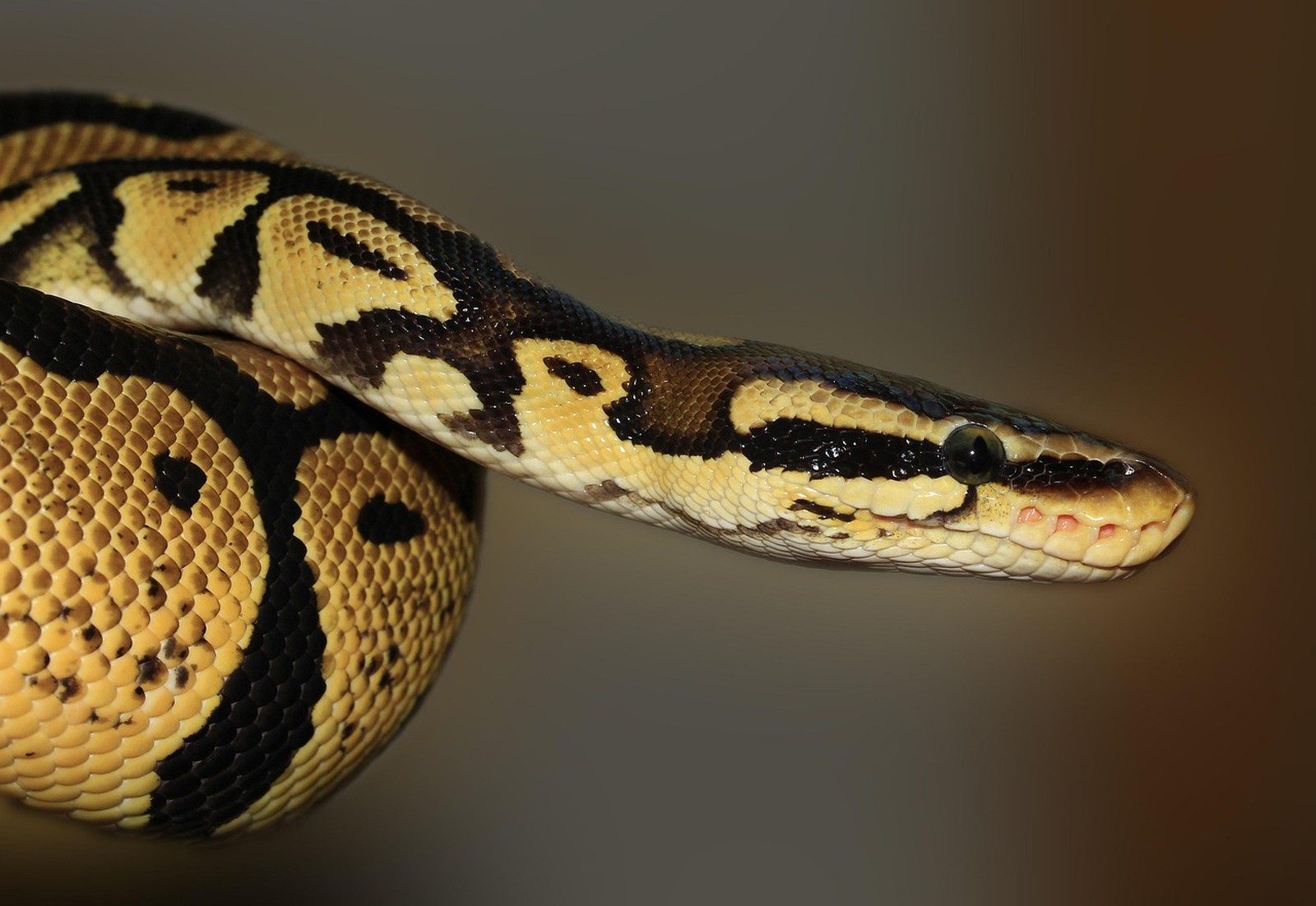
Young ball pythons generally eat about once a week, juveniles every seven to ten days, and large adults every two to four weeks — ball pythons are famously light eaters compared with other snakes. Match the prey to the snake: an item about as wide as the widest part of its body, or roughly ten to fifteen percent of its weight for growing animals, leaves a slight, temporary bulge after swallowing.
Feeding by life stage
Hatchlings start on pinky or fuzzy mice, or rat pups, offered every five to seven days once they have shed and settled in. As your python reaches a year and several hundred grams, weekly appropriately sized rats suit most snakes, and rats are the better long-term staple since adult ball pythons outgrow mice. Adults over three years old often thrive on a small-to-medium rat every two to three weeks. Gravid or breeding females follow their own pattern and commonly refuse food for stretches — another reason schedules flex.
Body condition beats the calendar
Check the shape, not just the date. A healthy ball python has a softly rounded, triangular cross-section. If you can see a sharp spine ridge, it may need slightly bigger or more frequent meals; if the scales spread apart with visible fat along the back — keepers call it "sausage body" — stretch the interval. Weigh your snake monthly on a kitchen scale; steady tracking catches slow weight loss during a hunger strike long before it becomes dangerous.
Why ball pythons skip meals
Refusals are almost a rite of passage with this species. Common triggers include:
- An approaching shed, when cloudy eyes dull appetite.
- Cool temperatures or low humidity throwing off digestion.
- Breeding season, especially for adult males in winter.
- A hide that feels too open, or handling too close to feeding day.
Fix the environment first — two snug hides, a warm side around the high eighties Fahrenheit, and quiet evenings — then offer again in a week. Don't offer daily; repeated presentations stress a fasting snake further.
Build a simple feeding log
Write down the date, prey type and size, whether it was eaten, sheds, and monthly weights. Patterns in that log tell you more than any single refused meal: a snake that eats every eighteen days in winter and weekly in spring is showing you its rhythm. Bring the log to vet visits — it is exactly what a reptile vet will ask about first.
Follow-Up Questions Between Meals
Is this rat pup the right width for your snake now, or a step too big? Has a refusal lasted long enough to stretch the next offer, or should the interval stay put? Put questions like those to Kimmy, the built-in AI assistant on KinsLe, as they arise, and settle the sizing and spacing call for this particular snake rather than guessing from the calendar alone. Kimmy on KinsLe can answer follow-up questions about prey sizing and meal spacing for this snake, with replies drawn from the KinsLe Answers library.